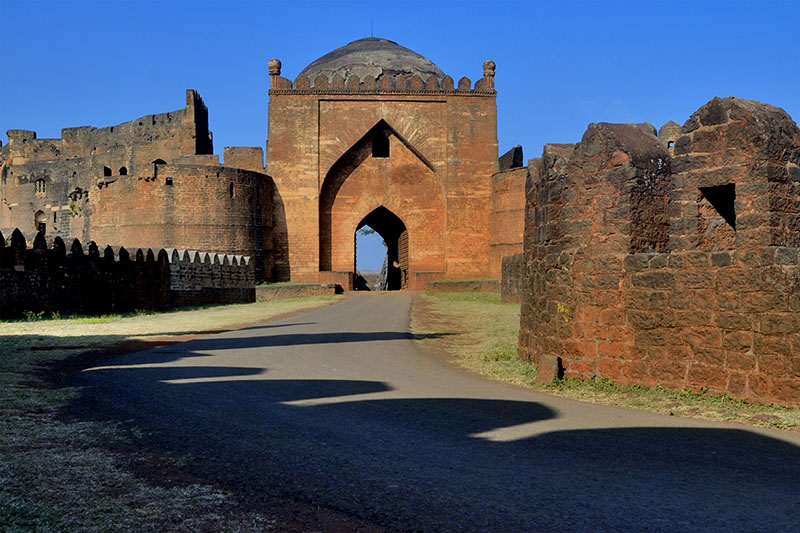
Muslim kingdom of the northern Deccan in India, founded in 1347 by Zafar Shah, a soldier in the service of Muhammad bin Tughlaq of the Delhi Sultanate, who seized Daulatabad (near present-day Aurangabad) in rebellion and ascended the throne as Ala-ud-Din Hasan Bahman Shah. At its height the kingdom spanned south-central India, across areas of present-day Maharashtra, northern Karnataka, Telangana, and northern Andhra Pradesh, with its capital at Ahsanabad (present-day Gulbarga) and later Muhammadabad (present-day Bidar), both in present-day Karnataka. It vied for control of the Deccan with the Vijayanagara kingdom and the Gajapatis of Odisha. The sultanate declined in the late fifteenth century, splintering into the successor states of Bijapur (ruled by the Adil Shahis), Ahmadnagar (ruled by the Nizam Shahis), Golconda (ruled by the Qutb Shahis), Berar (ruled by the Imad Shahis) and Bidar (ruled by the Barid Shahis).
More Definitions
Sri Lankan Civil War
Violent conflict from 1983 to 2009 between the Sinhala-majority Sri Lankan government and the Liberation Tigers of Tamil Eelam (LTTE),…
Mangalesha
Mangalesha (r. 598–610 CE) was a king of the Badami Chalukya dynasty, which ruled over parts of present-day Karnataka and…
Khanzada Begum
Khanzada Begum (b. c.1478; d. 1545) was the elder sister of the Mughal emperor Babur. She finds mention in his…
The Partition
The division of British India in 1947 into India and Pakistan, spurring a great migration of people from and to…
Raja Purna Varma
Raja Purna Varma (b. n.d. ; d. n.d.) was a local ruler, who is referenced in the chronicles of the…
Kalinga War
A war fought between the independent kingdom of Kalinga and the Mauryan empire under Ashoka, which ended in 261 BCE,…
Malik Ambar
Malik Ambar (b. 1548; d. 1626) was a military leader and prime minister of the Ahmednagar Sultanate in the Deccan…
Mughal empire
Persianate Muslim dynastic empire covering, at its largest, most of South Asia, founded in 1526 by the Central Asian Timurid…