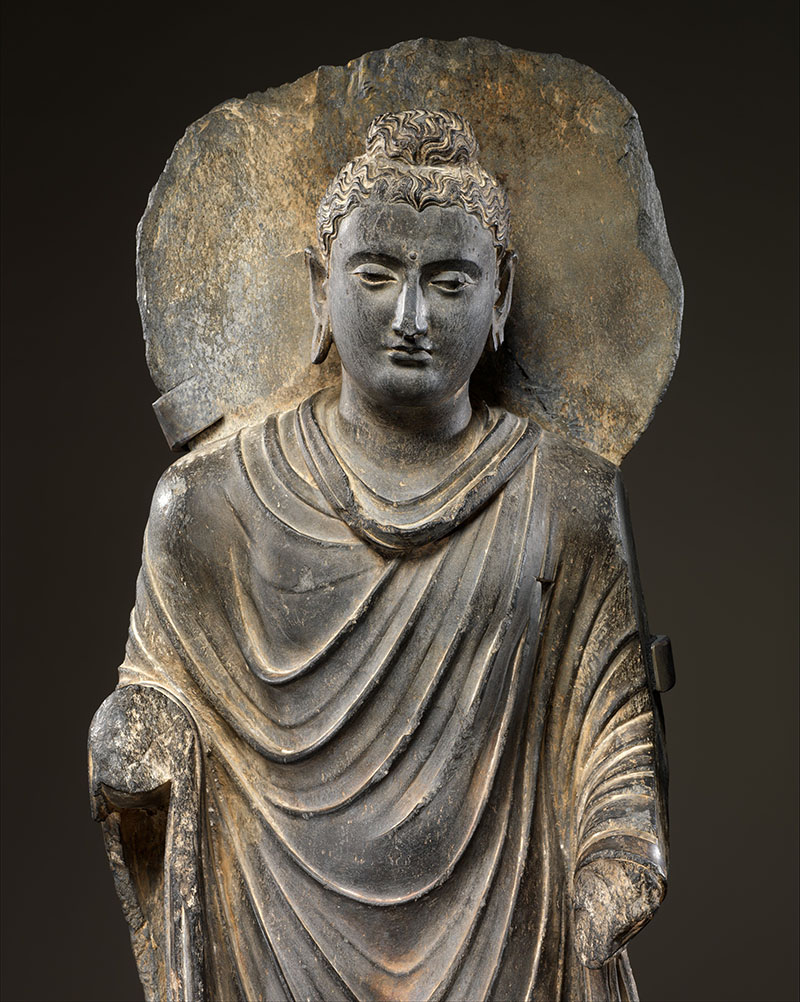
Siddhartha Gautama (b., d. likely fifth century BCE), most commonly known by the epithet ‘Buddha’ (Pali, ‘awakened one’), was a monk and religious teacher, and the founder of Buddhism. Born in Lumbini in present-day southern Nepal to a chief of the early historic Shakya clan, he left home at the age of twenty-nine to become an ascetic. After years of wandering and penance, he is said to have attained enlightenment at Bodh Gaya in present-day northern India; he died at the age of eighty in Kushinagara (present-day Kushinagar in northern India). Inscriptions on Ashokan pillars, dated to the third century BCE, provide the earliest evidence of the use of the epithet Buddha; the pillar at Lumbini is also the first reference to the Buddha as Shakyamuni (‘monk of the Shakyas’). Information about his life comes from diverse hagiographies, the earliest contained in the Pali Tipitaka, dated between the fifth and first centuries BCE; significant later works are the Sanskrit Buddhacharita and Lalitavistara — both dated to the second century CE. Scholarly consensus has deemed the Shakyas a Kshatriya clan who spoke an Indo-Aryan dialect. However, recent linguistic studies suggest they may have been a clan of Dravidian heritage that did not adopt the caste system, proposing that the Buddha spoke both Middle Indo-Aryan and a Dravidian mother-tongue. Also: Siddhattha Gotama (Pali).
Buddha
Link copied!