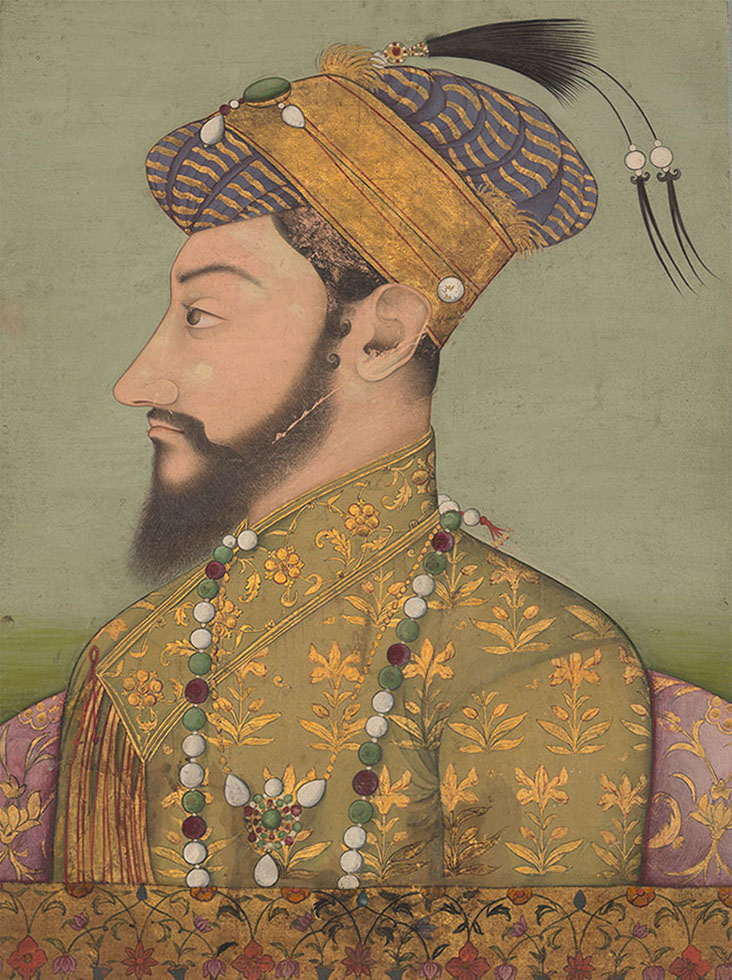
Aurangzeb (b. 1618; d. 1707) was the sixth Mughal emperor of India. He succeeded his father Shah Jahan, and ruled between 1657 and 1707. His reign was marked by extensive territorial expansion, Islamic orthodoxy and cultural austerity. His reign also saw the construction of mosques and memorials such as Moti Masjid in Delhi, Badshahi Mosque in Lahore and Bibi ka Maqbara in Aurangabad.
More Definitions
William Morris
William Morris (b. 1834; d. 1896) was a British textile and interior designer, writer and socialist activist popularly associated with…
Guru Nanak
The first of the ten Sikh gurus, Guru Nanak (b. 1469, d. 1539) was the founder of Sikhism. Born in…
Charlotte Canning
Charlotte Canning (b. 1817; d. 1861) was an artist and the wife of Charles Canning, the first Viceroy of India.…
Albert H Longhurst
Albert H Longhurst (b. 1876; d. 1955) was a British archaeologist and art historian specialising in the arts of southern…
Muhammad
Muhammad (b. c. 570 CE; d. 632 CE), was the founder of Islam and is considered by Muslims to be…
Olivia Arthur
Olivia Arthur (b. 1980) is a British photographer known for her portraits of women across Europe as well as Saudi…
Simhavishnu
A Pallava ruler who reigned during the latter half of the sixth century in present-day Tamil Nadu. The Pallava Dynasty…
Jaykumar Shankar
An artist specialising in handpainting monochrome photographs. In addition to his own practice in New Delhi, he has also collaborated…