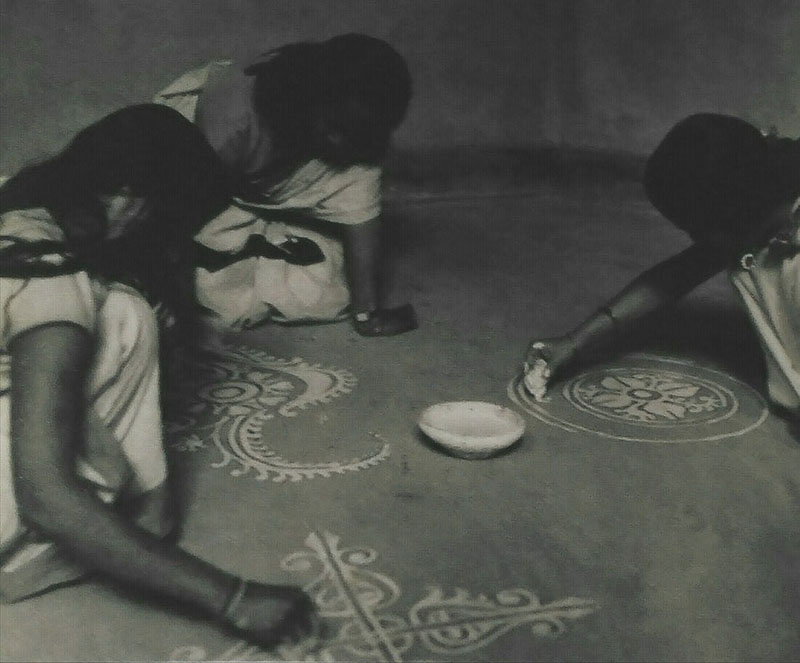
A ritual Bengali practice of making designs and paintings featuring religious motifs and patterns, typically made in white using a pigment derived from rice powder. It is traditionally made by women during festivals and ceremonies. From the Sanskrit alimpana, meaning “to plaster” or “to coat with.”
More Definitions
Karva Chauth
A Hindu festival, it is primarily celebrated by women in northern India during the Hindu month of Kartika. On this…
Abhishekam
The ritual anointing or bathing of an idol with offerings such as milk, honey, sugar and water. It is practised…
votive object
An object that is ritually offered or sacrificed to a deity, typically to mark the fulfilment of a vow, express…
Utsavamurti
Processional idol in Indian temples, usually made of metal. During temple festivals, a representation of the temple’s central deity/deities is…
Lai Haraoba
A music and dance festival associated with the Meitei people of Manipur, which celebrates the Umang Lai (sacred groves and…
Chaitra Parva
An important festival in Odisha, it translates to "the festival of the month of Chaitra" and is celebrated by the…
Rudraksha
Deeply grooved ritual bead derived from the cleaned, dried pit of the fruit of the blue marble tree (Elaeocarpus angustifolius…
Pradakshina
A ritual act in Hinduism, Buddhism, Jainism and Sikhism, it is a clockwise circumambulation in which a devotee takes a…