-
ChicagoMwangi, Wambui wa. "Brave New Worlds: An Interview with Artist Sahej Rahal." Impart Perspectives, April 21, 2026. https://imp-art.org/perspectives/interviews/brave-new-worlds-an-interview-with-artist-sahej-rahal/
-
MLAMwangi, Wambui wa. "Brave New Worlds: An Interview with Artist Sahej Rahal." Impart Perspectives, Apr. 21, 2026, https://imp-art.org/perspectives/interviews/brave-new-worlds-an-interview-with-artist-sahej-rahal/. Accessed 16 Oct 2026.
-
HarvardMwangi, W.w. (2026) Brave New Worlds: An Interview with Artist Sahej Rahal, Impart Perspectives. Available at: https://imp-art.org/perspectives/interviews/brave-new-worlds-an-interview-with-artist-sahej-rahal/ (Accessed: 16 October 2026).
Brave New Worlds: An Interview with Artist Sahej Rahal
Rahal describes himself as a storyteller, inviting viewers on world-building journeys that combine Indian folklore, science fiction, and AI-inspired simulation to experiment with time and reality.
By Wambui wa Mwangi
Link copied!
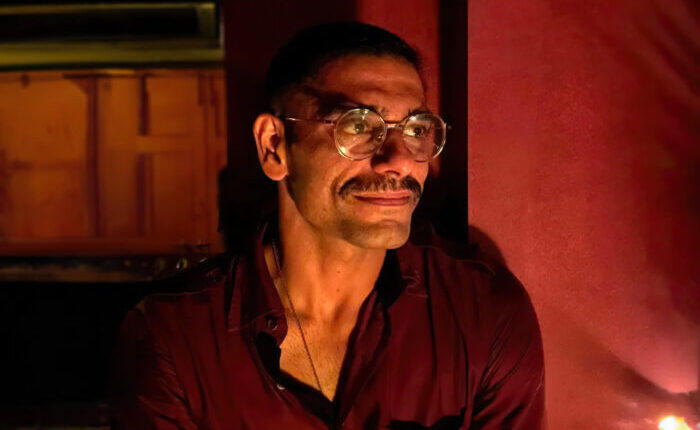
Artist Sahej Rahal. Credit: Nihar Desai
Imagine the world has ended. You find yourself in a boundless space where sea organisms and other fantastical creatures surround you. You do not inhabit a body but rather drift through this alien environment; an unembodied form of consciousness. You meld with one of the many strange life forms you encounter, using its body and senses to chart your path across different portals, navigating this “new world” and connecting with other entities along your journey. This is how playing artist Sahej Rahal’s video game Distributed Mind Test (DMT) feels like. It’s not a game about combat or conquest, but about shared experiences.
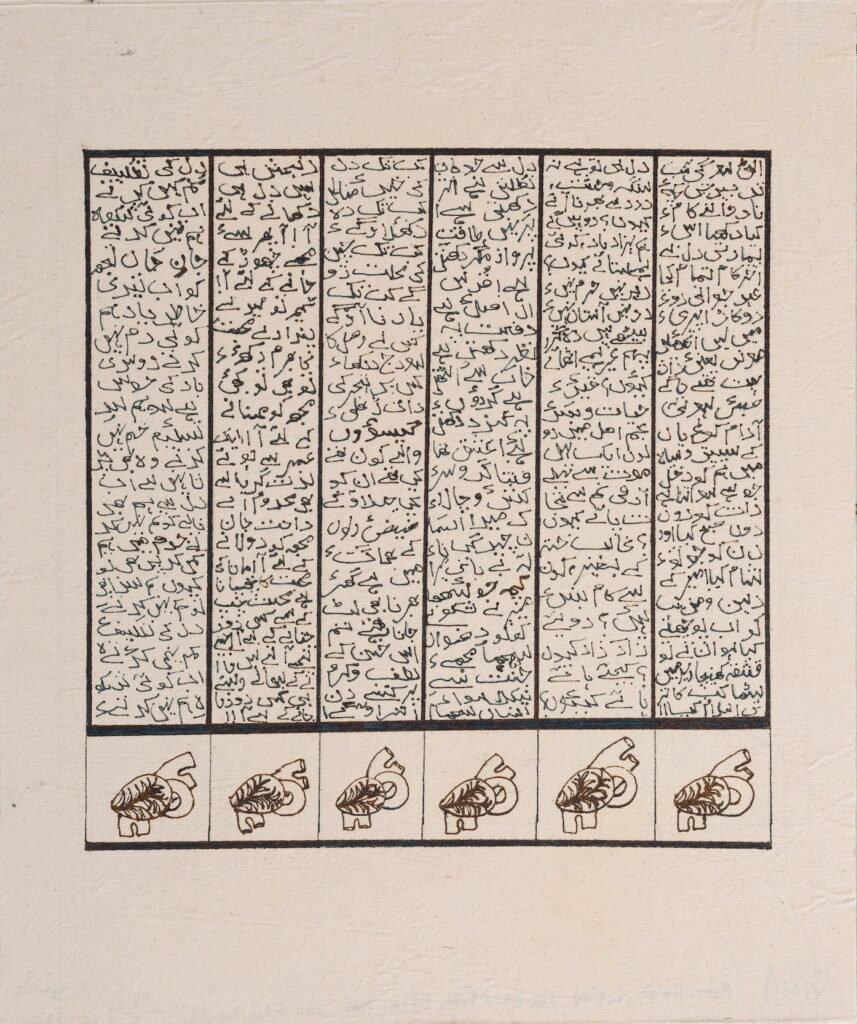
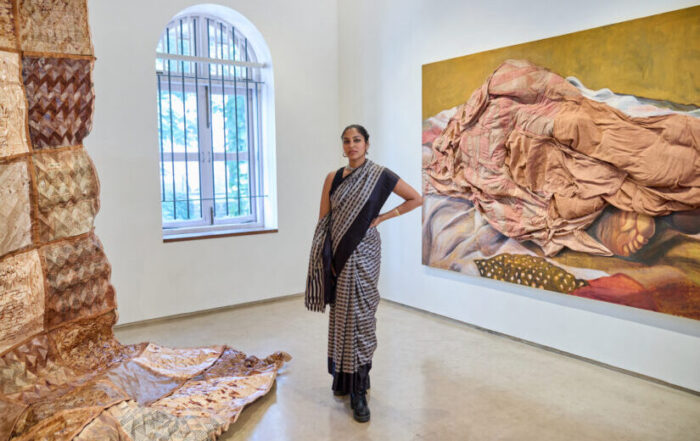
Rahal describes himself as a storyteller. His work is largely embedded with (counter) narratives of perceived futures and pasts, centred around speculative storytelling. This year, at Europe’s oldest public art exhibition, Sonsbeek (July-October 2026), his interactive art installations will be framed in the context of memory as contested, selective, and vulnerable to being reconstructed and reimagined. At his ongoing Prague exhibition, Beyond the City of Time, which runs till May 10, 2026, key works from his evolving oeuvre appear: from the drawing series The Book of Missing Pages (2018-2023) inspired by the 14th century Arabic manuscript “Kitab al-Bulhan” (Book of Wonders) to the virtual landscapes of Anhad (The Unscalable, 2023) and Atithi (2025), and the cooperative multiplayer world of Distributed Mind Test (DMT, 2023). At the exhibition, Rahal combines Indian folklore, science fiction, and AI-inspired simulation to experiment with time and reality. Back in 2024-2025, Rahal’s solo exhibition Wayfinder, at the Nairobi Contemporary Art Institute (NCAI), had also challenged viewer’s conventional understandings of reality by creating a speculative universe constructed through sculptural characters in DMT, interactive games, and select drawings from The Book of Missing Pages.
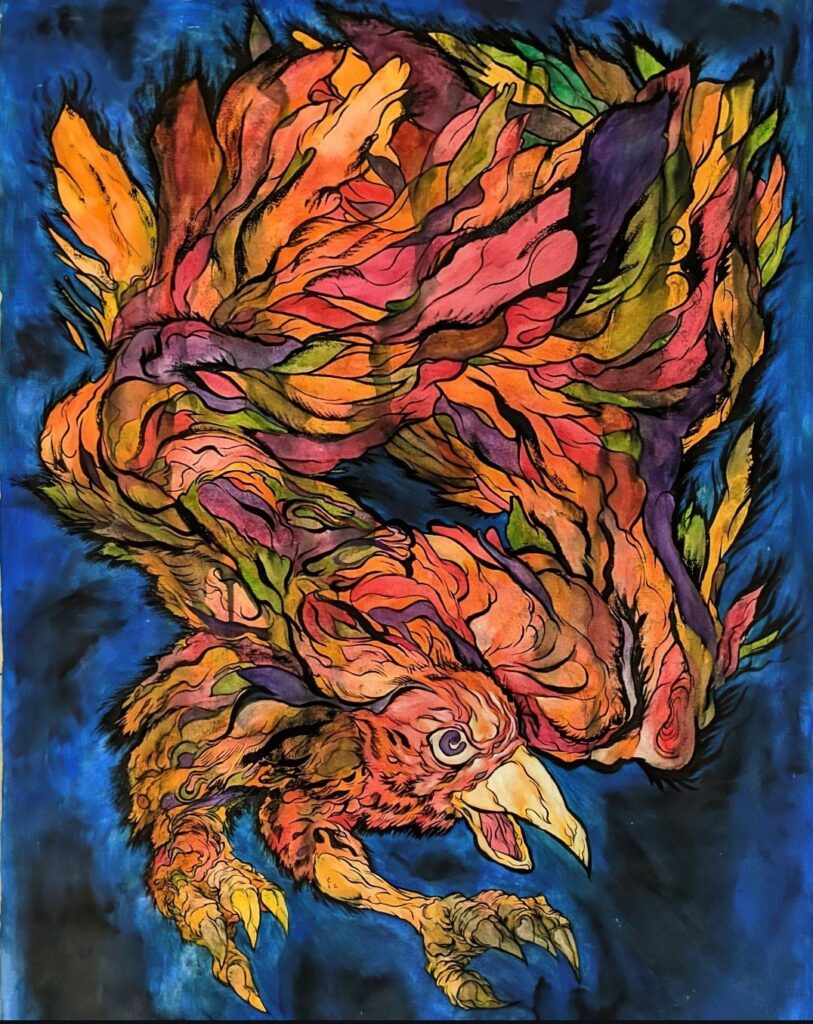
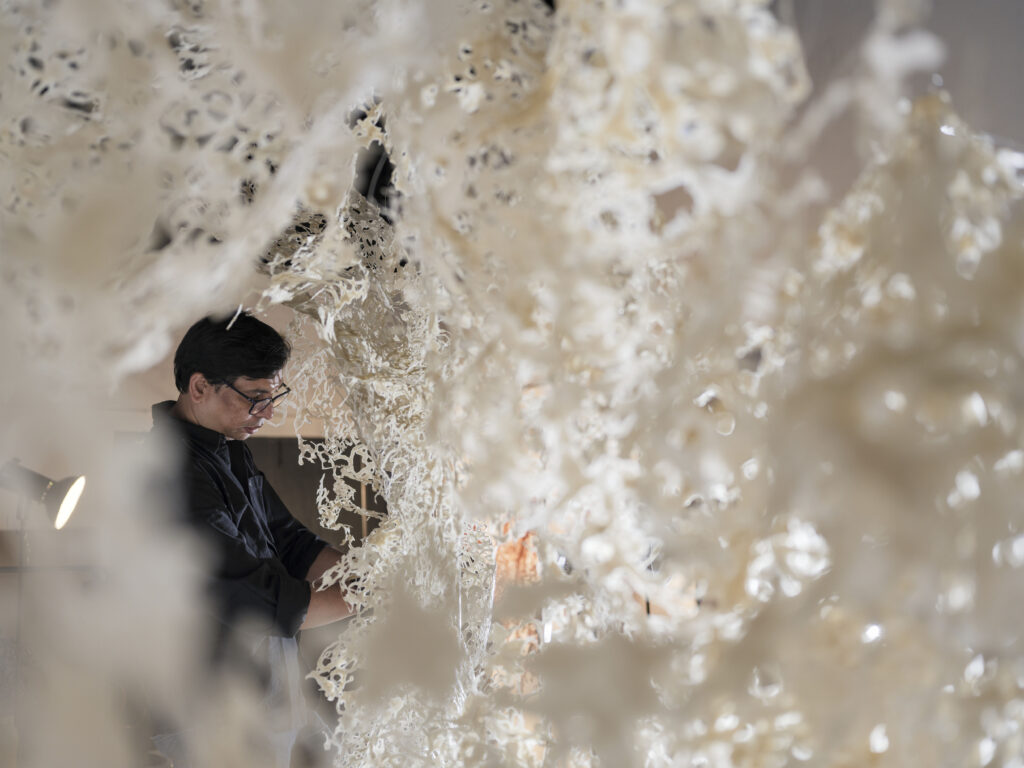
Rahal expresses his ideas through divergent methods, utilising painting, drawing, sculpture, video games (simulated using AI), gaming engines, and digital code. He has also utilised live performances in the past to explore speculative premises but it is a technique he no longer employs. His current practice involves repeatedly mining AI-driven speculative narratives, mythological texts, and cosmological theories to talk about the state of the world.
According to him, human intelligence (and body) is indeed limited, and when the endpoint is achieved, we can collude with AI to better understand the world around us, decode it, and then produce new forms of knowledge. Mythology and cosmology, he reminds us, are not new to the human experience; since time immemorial, we have relied on ancient accounts of the world beyond and before us, such as the Bible, fantastical fiction, or classical manuscripts. Rahal’s curiosity, speculation, and drive to question the status quo creates not just playgrounds of inquiry, but spaces of resistance. Through his artistic practice, he invites viewers on world-building journeys; to imagine what it means to co-create, not only with other people, memories, mythic forms, but also with machines. In doing so, he opens up new ways of sensing agency, Divinity, Self, and the presence of the Other.
Wambui wa Mwangi: The Wayfinder exhibition at Nairobi was your first time exhibiting in Africa. So much of your work invites us to rethink the world through play, speculation, and non-verbal exchange. What role do relationships with collaborators — like the exhibition’s curator Don Handa — play in enabling these kinds of cross-cultural artistic dialogues?
Sahej Rahal: Don wrote to me on Instagram, and I’m going to be forever grateful that he did. Not only was it the reason that I showed in Nairobi, but it was also the start of one of my most cherished friendships. My primary reason for going to Nairobi was curiosity; I had only read and heard about it in stories and through friends I met in shows and residencies organised in Europe. From these exchanges, I found that our histories and cultures mirror each other in peculiar ways. However, I felt there was a scope for deeper dialogue, and I wanted to have these conversations in person.
Mwangi: Many of your works seem to imagine alternate or ideal worlds that challenge how we live, govern, or even perceive reality.
Rahal: Yes, but one that we are creating together collectively. The physical manifestations of my artistic practice — be it sculptures, paintings, or video games — are essentially fragments. Everyone pieces them together in their own ways as they engage with the works and weave in their own narratives. They bring their own lived experiences, dreams, and imaginations. So, the cosmology [of my work] is always unfinished; in a state of constant ‘becoming’.
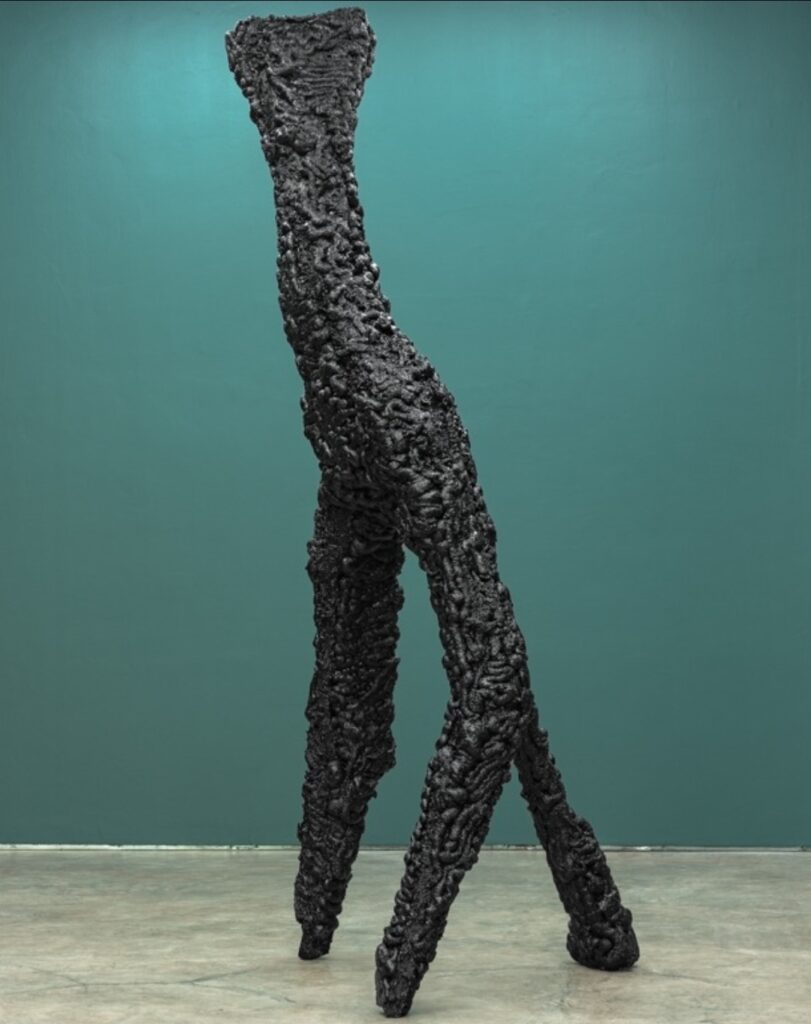
Mwangi: What role does speculative thinking, especially that which looks beyond our current time, play in shaping your practice?
Rahal: Speculative thinking, or storytelling, in its more primal form, is perhaps our first piece of technology — before the hammer, the halberd, or even the stone-carved hand axe; we had stories that have carried us through civilisational cycles. They tell us what we were, and what we might become. Through the work I’m making, I’m interested in how we can shape those yet-to-come versions of tomorrow collectively.
Mwangi: Do you do a lot of historical or conceptual groundwork before making your pieces? Do you see history itself as a kind of playground in your work, a site where meaning can be reimagined?
Rahal: As far as making itself goes, what I’ve realised about my process is that if I do a lot of research beforehand, I end up in a rut. What works for me is to just take whatever idea has been pinching me for a bit and run with it, sketch around it, or prototype a sequence based on it. And once I have something that feels substantial, then I take a step back and read about it or look up how other people have engaged with similar threads of thought. I think this process allows me to hold myself creatively in a way that is unique and not get bogged down by the historical or broader conceptual weight of an idea. I’d like to think history turns into a playground because of this approach.
Mwangi: Mythology and cosmography have long offered alternate ways of sensing reality, of imagining divine forms. Your drawings allude to this ancient Book of Wonders, where depictions of earthly and celestial worlds sit side by side. Do you believe in the Divine? Or perhaps in something else — a presence, a logic — that transcends the material?
Rahal: I do believe in a personal God because it gets me through the day. In my work though, I’m more interested in the myriad conceptions of God or the Divine. Essentially, “God” is the name we give to the aspects of existence or states that are unknowable to us, and the ways we have imagined “God” or named the Divine opens up the entire breadth of human imagination to artistic explorations.
Mwangi: Anhad merges AI with musical composition; AI becomes a kind of host or vessel for culture. What possibilities do you see for AI as a medium in the future of art-making?
Rahal: Personally, I’m not so interested in the way AI is being used in art. I feel the images that are being made by Midjourney, Dall-e, etc, are very similar. However, I am interested in the narratives that are being spun around these technologies by the people pushing them on us and, by extension, on how we understand the creative act and human intelligence itself. The AI simulations that I make are geared towards testing the limits of those narratives, and hopefully carving a space for alternate ones where they rupture.
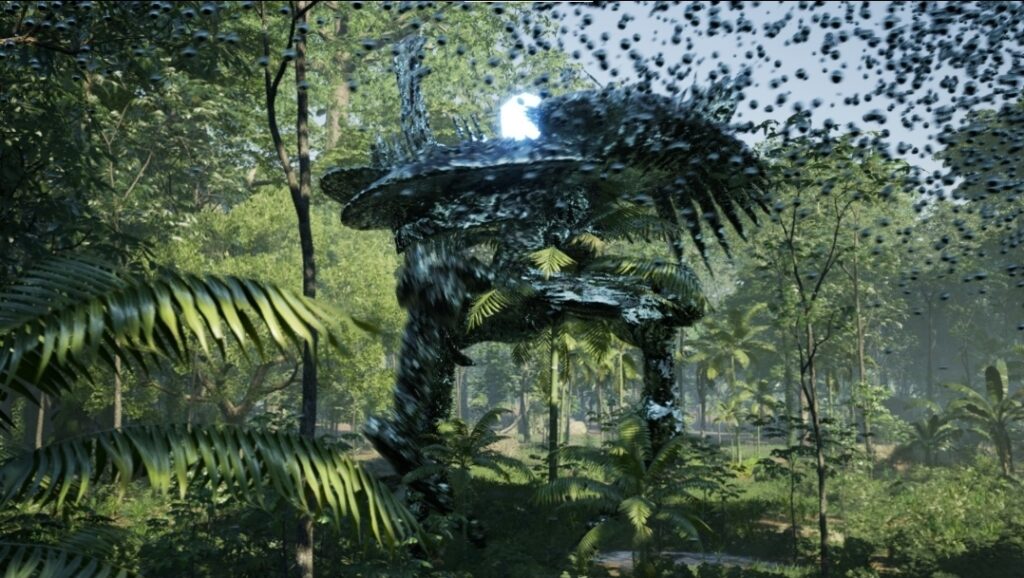
Mwangi: Your project, DMT, invites participants into a post-apocalyptic scenario, not just as players, but as co-creators shaping the world. Do you see human participants in your work playing a god-like role? In your view, is there agency in imagining and building worlds differently, especially when there’s so much injustice in it?
Rahal: While developing DMT, I had this idea of players being ‘impulses of thought’, igniting a decentralised intelligence within the protagonist creature. When you described them as god-like, it reminded me of this idea that Julian Jaynes had proposed in The Origin of Consciousness in the Breakdown of the Bicameral Mind. He speculated that consciousness was a relatively recent development, emerging within the last few thousand years, and prior to this, humans operated with a “bicameral mind,” which was characterised by auditory hallucinations that they believed were commands from gods or divine beings. This theory suggests that consciousness arose from the breakdown of this bicameral structure, through a process driven by language and social complexity.
Mwangi: How important is physical or emotional resonance to you — the idea that people don’t just witness your worlds but inhabit them, leave traces in them? What do you hope lingers with the participant once they leave the gallery space?
Rahal: One way of playing DMT is to think of it as a game of democratic thought, where democracy isn’t a form of social organisation but a collective act of cognition; where we think a world into existence, together; where there is no ‘failure state’. In the game, there are multiple ways of winning. With each new way of playing that participants come up with, a new ‘win-state’ is unlocked. Given these tools, I’m interested in what games people come up with in DMT.
Mwangi: We’re living in a time when AI simulations are being used in real-world security and warfare scenarios, their logic now shaping national defence and global conflict. Your practice, by contrast, uses AI and game design to invoke mythological beings, speculative rituals, and dreamlike logics. Do you ever worry that mythology — especially in the digital age — feels too far removed from people’s lived realities? Or is that distance part of the point?
Rahal: AI, or at least what is being described as artificial intelligence right now, is to my mind essentially a marketing gimmick. What makes me say this is the fact that the origins and machinations of our intelligence are entirely occluded to us on a fundamental level. We do not know what or where thought comes from in our minds. It is one of those final frontiers of human curiosity that has stumped psychologists, neuroscientists, and philosophers.
There is a myth-making at play here. However, it is the kind you will find in advertising, where miracle cures are offered in the form of credit cards, fairness creams, and supercars. The way AI is marketed to us is that it is the collective repository of all kinds of human knowledge that can somehow help us navigate the chaos of the world without anxiety, without insecurities — and yet, feeling vulnerable is fundamental to what makes us human.
First published: April 21, 2026