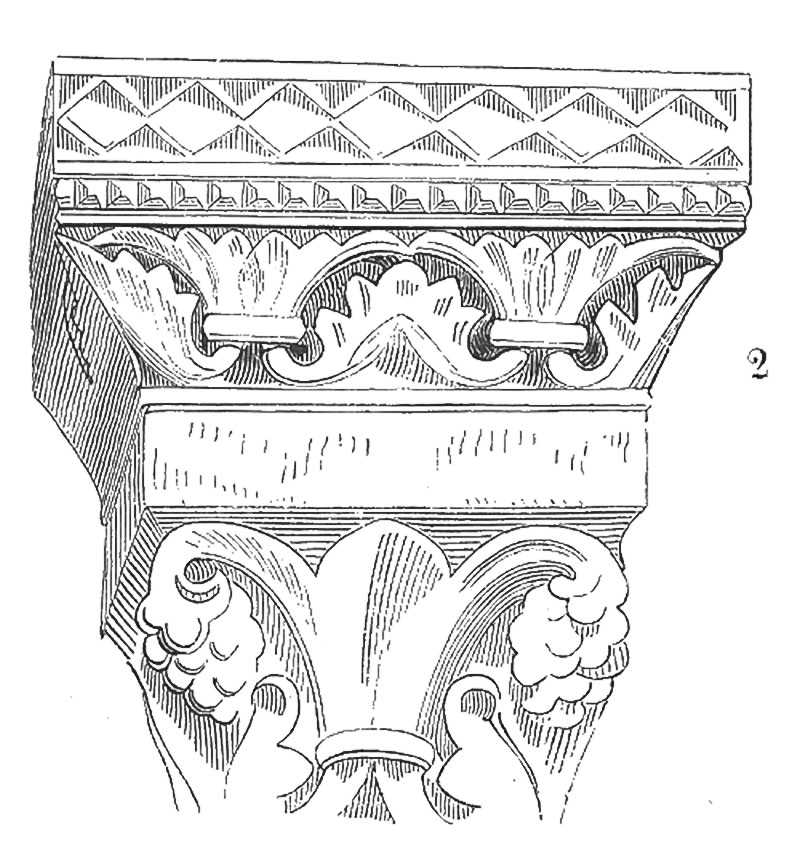
In architecture, a wide slab at the top of a load-bearing column, forming the uppermost section of the capital and helping transfer the weight of the supported beam or arch to the column’s shaft. In freestanding columns the abacus may be mounted with decorative or emblematic sculptures. From the Ancient Greek ábax, meaning ‘slab’.
More Definitions
Cushion Capital
In architecture, it is a type of crown, which is the top-most part of a column, pillar or pilaster. It…
Shala
Derived from the Sanskrit word broadly meaning "house" or "shelter", shala may refer to a covered pavilion, often oblong; a…
vimana
Shrine enclosing the inner sanctum or garbhagriha in the Dravida-style Hindu or Jain temples of South India; multi-shrine complexes may…
Stupi
A bulbous structure that is the apex of a temple and placed on the roof. Also known as the kalasha,…
Mandapa
A pillared hallway characteristic of Dravida temple architecture, used for rituals, gatherings and marriage ceremonies. A temple may have one…
Pindika
Sanskrit for 'stool' or 'pedestal', it is the platform on which idols are installed in the garbhagriha or innermost sanctum…
Peristyle
A row of pillars surrounding an enclosed space or enclosing an open space, taking the form of a porch or…
ridge beam
Longitudinal beam along the top of a pitched or vaulted roof. The ridge beam is a load-bearing structural member of…