-
ChicagoImpart Encyclopedia of Art. "Nirmal Toys." March 9, 2026. https://imp-art.org/articles/nirmal-toys/.
-
MLA"Nirmal Toys." Impart Encyclopedia of Art, Mar. 9, 2026, https://imp-art.org/articles/nirmal-toys/.
-
HarvardImpart Encyclopedia of Art (2026) Nirmal Toys. Available at: https://imp-art.org/articles/nirmal-toys/ (Accessed: 17 October 2026).
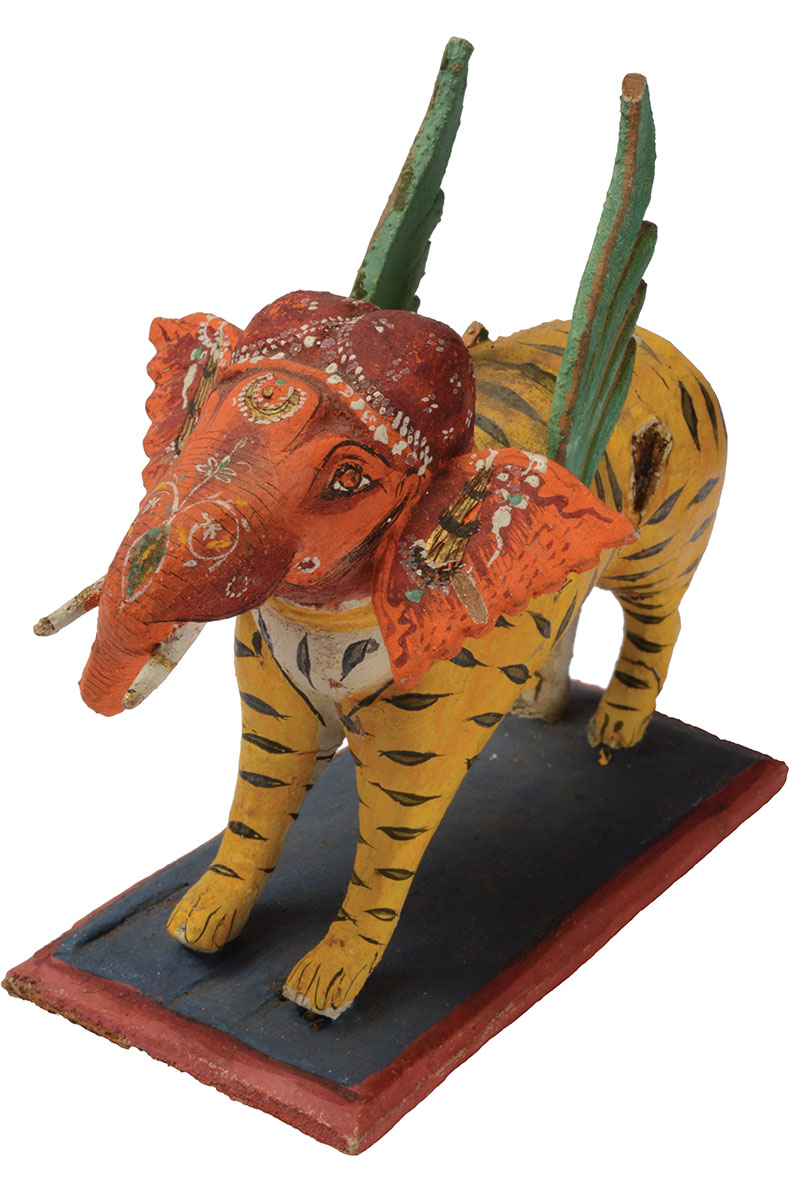
Painted wooden figures made by the Somakshatriya subgroup of Naqqash artisans in the southern Indian state of Telangana, Nirmal toys are named for their centre of production. They are made from the wood of the poniki, or white catamaran tree (Givotia rottleriformis) and usually depict animals, fruits and vegetables, or Hindu deities.
Historical background
Communities that bear the name Naqqash are found in several Indian states today, including Andhra Pradesh, Odisha and Rajasthan. The title may have been imported to medieval South Asia as a courtly designation from Persia — where the Arabic naqqash designated a variety of artists or artisans employed by the Timurid (c. fourteenth century CE) and later courts, including painters, calligraphers and sculptors.
Accounts of the arrival of the Somakshatriya Naqqash artisans in Telangana vary. According to some, a seventeenth-century general named Nimmal Naidu brought the artisans from Rajasthan to the town of Nirmal, where he helmed a weapons foundry; several sources also attribute the founding and naming of the town to Naidu. According to the Somakshatriyas themselves, they migrated to Nirmal from Mughal-ruled Rajasthan when it was under Vijayanagara rule (1336–1646 CE). They claim to have originally been military personnel who also made weapons, vehicles, and armour. Nirmal remained a site for weapons manufacture until the annexation of the princely state of Hyderabad in 1948. Other Naqqash artisans here produce paintings on lacquered boards of poniki or teak wood, a craft known as Nirmal painting.
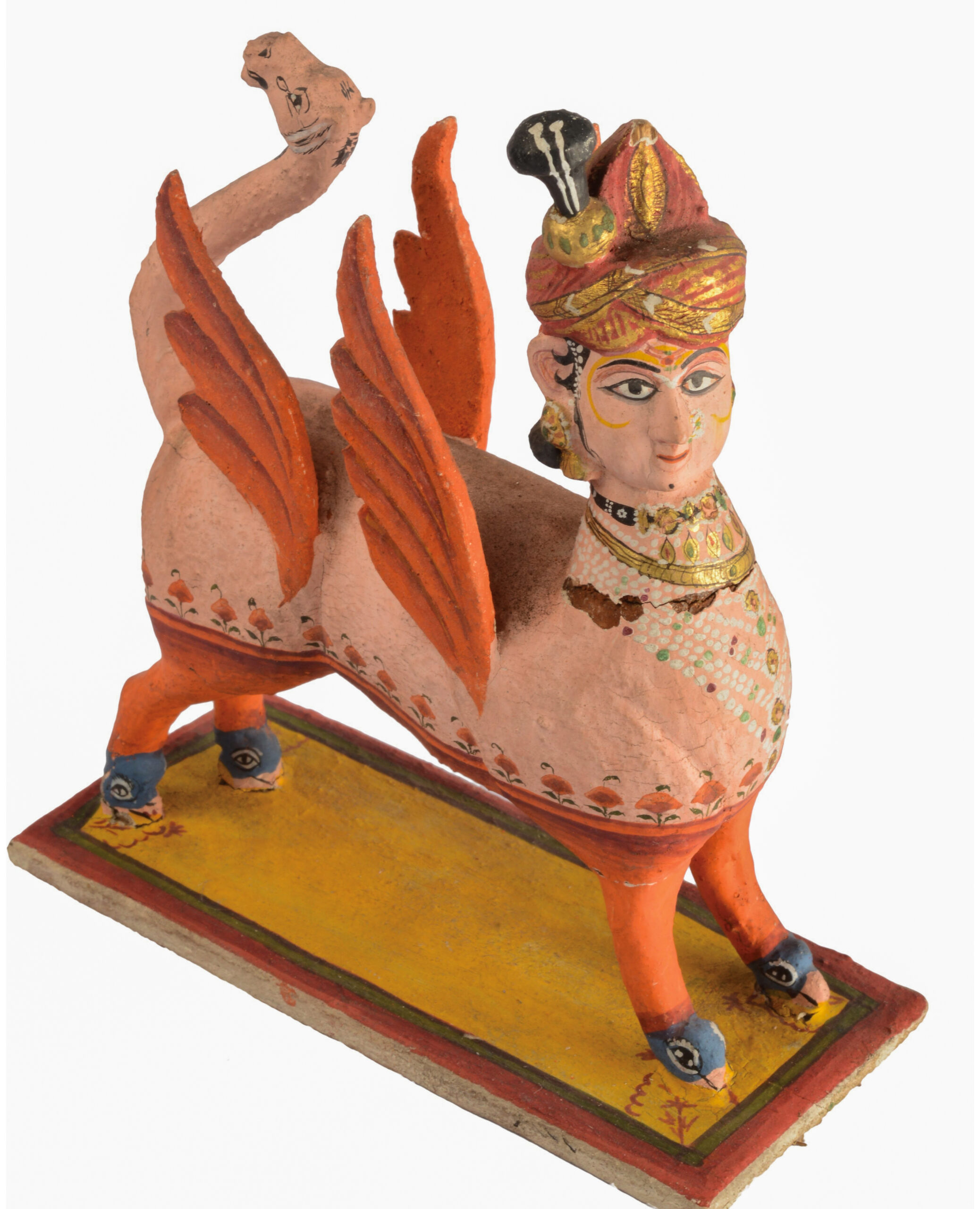
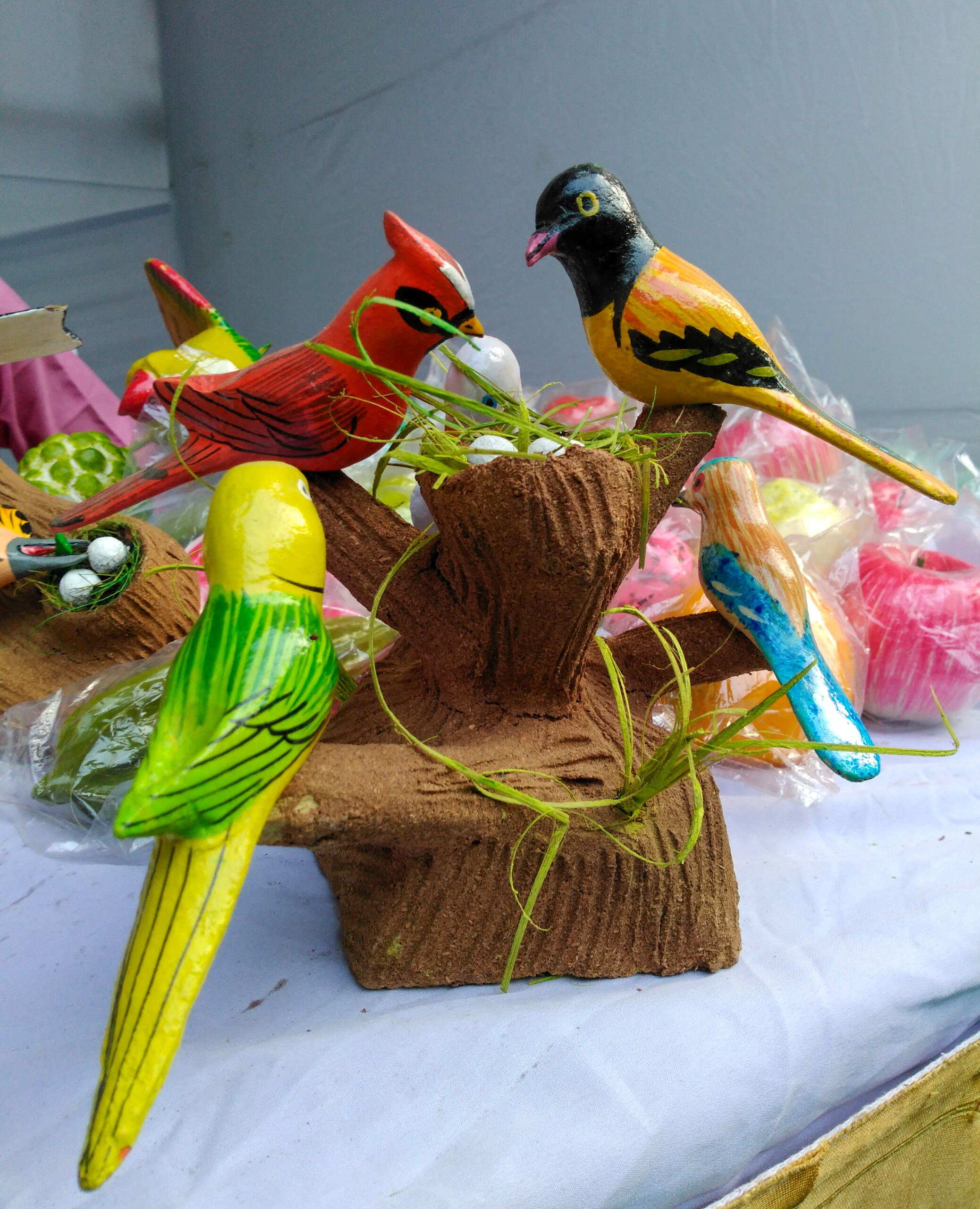
With the annexation of Hyderabad, the artisans of Nirmal lost both the patronage of the Nizam and their traditional client base. Since 1955, they have made their living primarily through the state-funded Nirmal Toys and Arts Industries Cooperative Society. Today most artisans in Nirmal work at the Society; some, primarily women, work at home.
Process
Nirmal toys range from small figurines to life-size figures. The principal raw material is the wood of the poniki tree, prized for its softness and gathered by the artisans themselves from the local forests of the surrounding Adilabad district. Under current laws, they are only allowed to gather fallen trees. The wood is sun-dried before cutting it into rough blocks, and again after; this reduces its weight and helps protect it from decay and pests. The sawdust from the cutting is blended with tamarind seed powder and water to make lappam, a coating and adhesive that is used at subsequent stages of the process.
The toys are often made of more than one piece, stuck together with lappam. The artisan uses a file (aakurai) and a carving tool (shanam) to create the toy figure. Finer details, such as beaks or horns, are attached via small holes made with a drill (tochan), into which lappam is filled using bamboo twigs. The assembled figure is then coated with a layer of finer lappam to prevent cracks, and left to dry for a few more days. To stabilize the joints, artisans use bits of cotton cloth coated with lappam. Once they have dried, the figures are smoothened with sandpaper and prepared for painting.
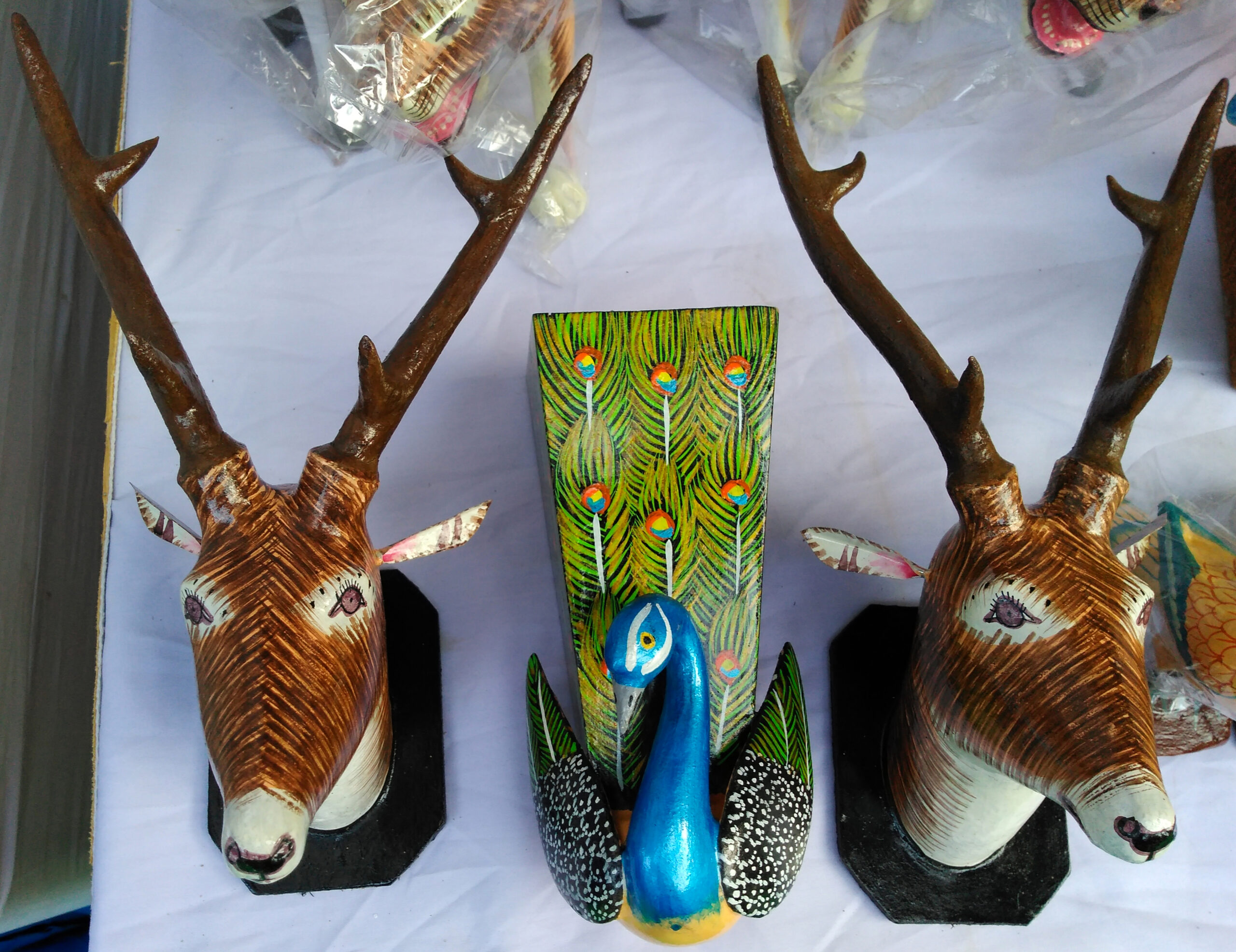
The figures are coated with a solution of water, glue, and silt (usually from the Godavari river, and known as suddamatti), applied with squirrel-hair brushes, to create an even surface and prevent over-absorption of colour; followed by a layer of white paint. Artisans once used plant- or mineral-based pigments to paint the toys; today enamel paints are used. Finer details such as the eyes, fur, and tail are painted towards the end. The figures are finished with a coating of groundnut oil, which lends shine and preserves the paint. In an attempt to appeal to the buying public, artisans have broadened the variety of designs in recent years.
Contemporary trends
Nirmal toys received a Geographical Indication tag in 2008. The craft, however, is in decline. Recent reports by journalists claim the number of families who still make Nirmal toys has reduced from two hundred to forty. Artisans claim they rarely make a profit from the trade and women artisans are often forced to take up additional jobs. Deforestation and the expansion of reserved forests have made it costly and difficult to procure poniki wood, and the toys have few buyers. In recent years, the state government and NGOs have instituted courses in Nirmal painting and toy making for the general public, with artisans as teachers.
First published: 9 March 2026
Image Gallery
Bibliography
Bose, Chandan. Perspectives on Work, Home and Identity from Artisans in Telangana: Conversations around Craft. Switzerland: Palgrave Macmillan, 2019.
“G.I. Application Number 91.” Geographical Indications Journal, no. 24 (August 1, 2008): 75–86. https://search.ipindia.gov.in/GIRPublic/Application/Details/91.
Murali, Bhavana. “Once upon a Toy Town.” People’s Archive of Rural India, June 3, 2016. Accessed December 29, 2022. https://ruralindiaonline.org/en/articles/once-upon-a-toy-town/.
Ranjan, Aditi, and M. P. Ranjan. Handmade in India: Crafts of India. New Delhi: Mapin, 2007.
Santosh, Padala. “Covid Leaves Nirmal Toymakers Broke.” Telangana Today, June 10, 2021. Accessed December 29, 2022. https://telanganatoday.com/covid-leaves-nirmal-toymakers-broke.
Singh, S. Harpal. “From the Toyland of Andhra Pradesh.” The Hindu, February 21, 2011. Accessed December 29, 2022. https://www.thehindu.com/features/kids/From-the-Toyland-of-Andhra-Pradesh/article15453561.ece.
Telangana Tourism. “Nirmal Toys.” Accessed December 29, 2022. https://www.telanganatourism.gov.in/partials/about/arts-crafts/nirmal-toys.html.
Feedback