-
ChicagoImpart Encyclopedia of Art. "Kundan Jadau." April 21, 2022. https://imp-art.org/articles/kundan-jadau/.
-
MLA"Kundan Jadau." Impart Encyclopedia of Art, Apr. 21, 2022, https://imp-art.org/articles/kundan-jadau/.
-
HarvardImpart Encyclopedia of Art (2022) Kundan Jadau. Available at: https://imp-art.org/articles/kundan-jadau/ (Accessed: 16 October 2026).
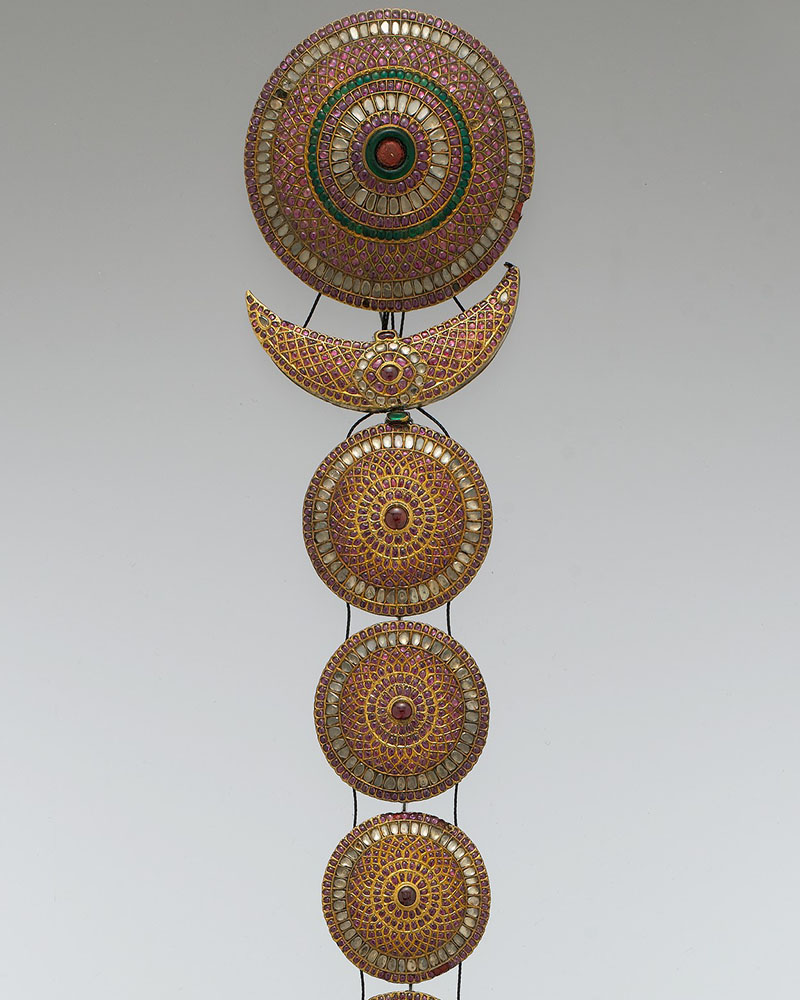
Originating in the courts of Rajasthan and Gujarat, kundan is a form of jewellery making involving a gem set with a gold foil between the stones. This technique of setting gold around the stones in kundan is called jadau – derived from the word jad, meaning “to embed”. Though the art form may have originated under Rajput rule, kundan found great patronage amongst the Mughals. This craft is closely linked to another jewellery making craft known as meenakari, where pieces of kundan jewellery carry meenakari work on their reverse side. Kundan jewellery often uses 24-karat pure gold.
The process of making kundan jewellery begins with ghadayi, the process of making the framework of the jewellery piece known as the ghat. This is commonly made of 22-karat gold. Thin gold strips are prepared from a rolling machine and then shaped according to the design using tweezers and other fine tools and set on a wax board. Individual pieces may be soldered together to form a complete piece of jewellery. The black residue left due to the soldering process is cleaned with mild chemicals. This is followed by khudayi, the process of engraving the pattern on the front or back (or both) of the jewellery piece. The gold dust produced during this process gets recycled. This is followed by enamelling, or meenakari, where different coloured enamels are filled into the engraved surface. The final process is jadai, where gemstones are set by inserting a gold foil between the stones and their mount. An additional gleam is provided by placing a silver foil under the stones, and 24-karat gold foil is hammered and set into the sides of the gemstones as a grip. When crafted in 22-karat gold, kundan jadau jewellery does not have meenakari work on its reverse side, as it adds to the dullness.
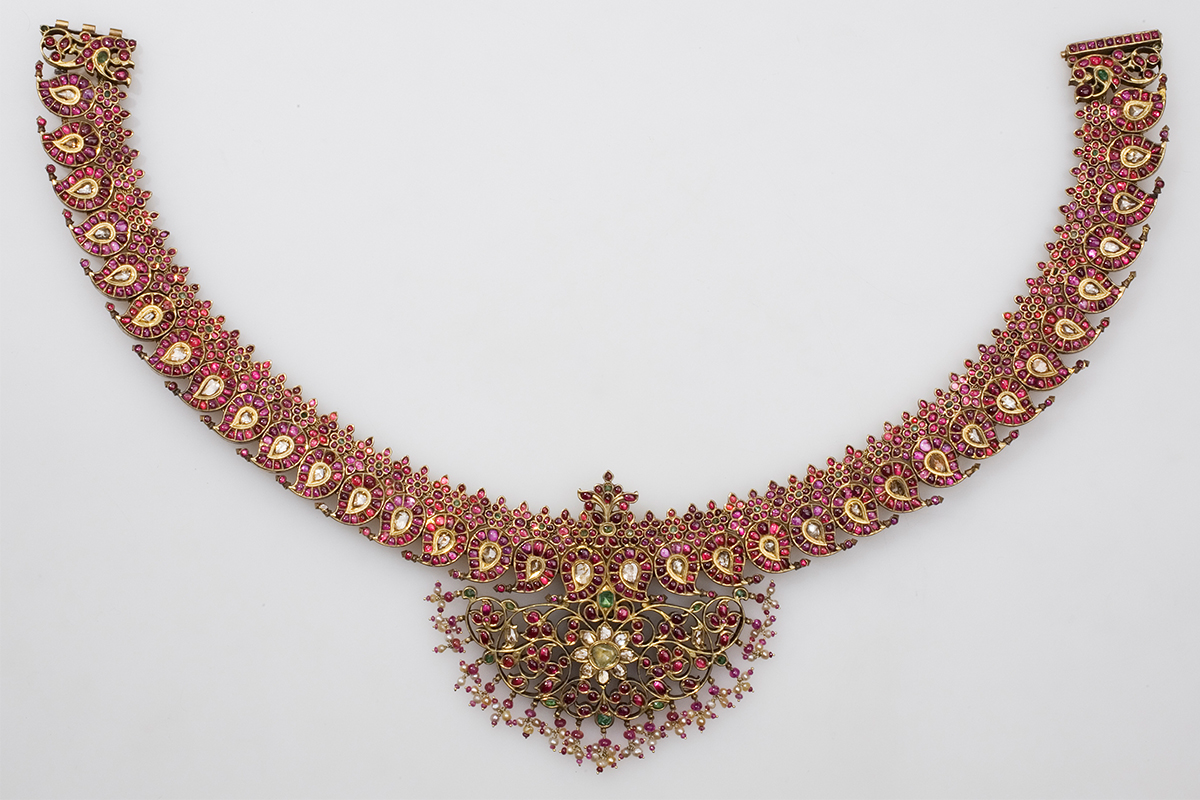
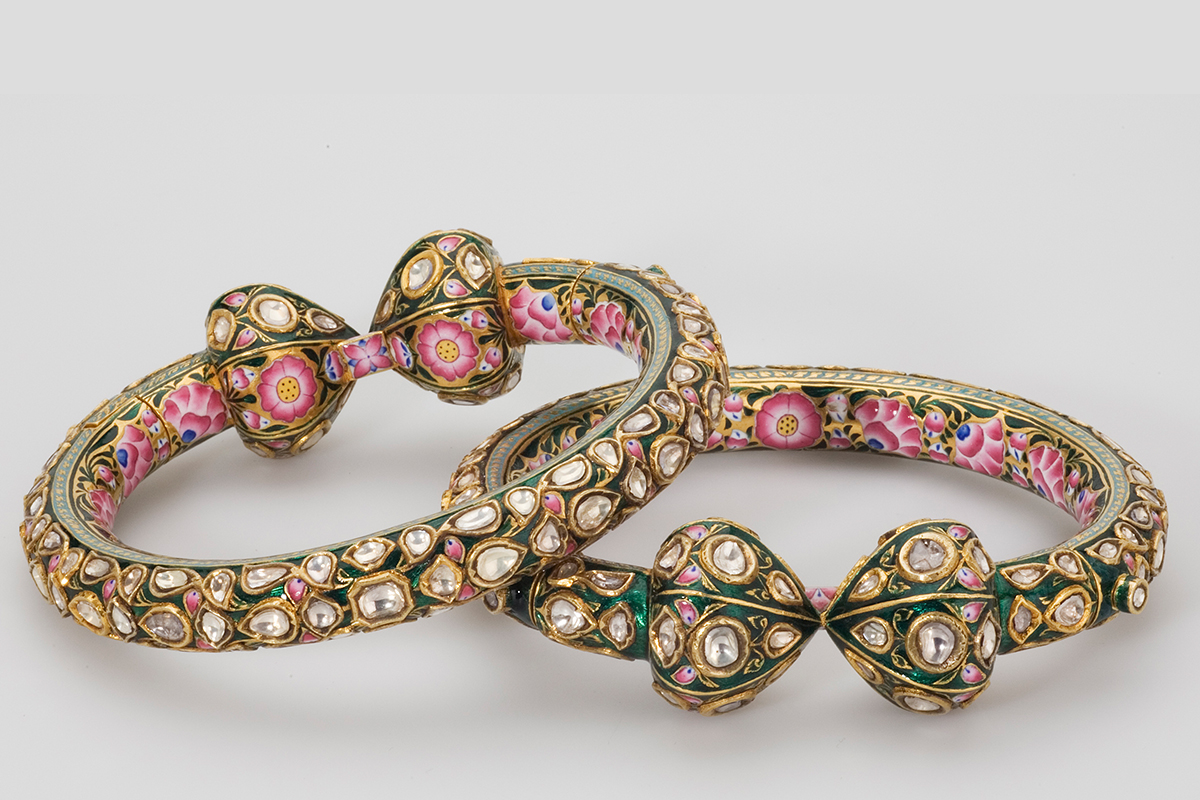
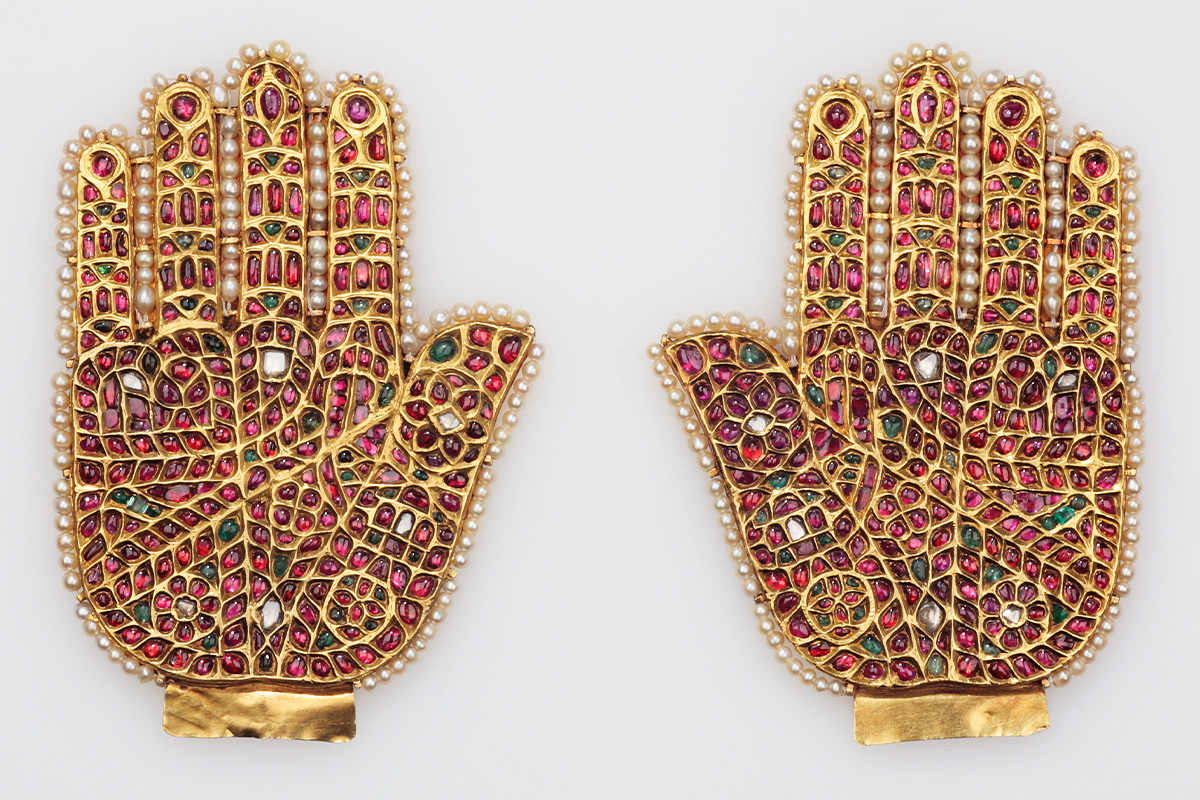
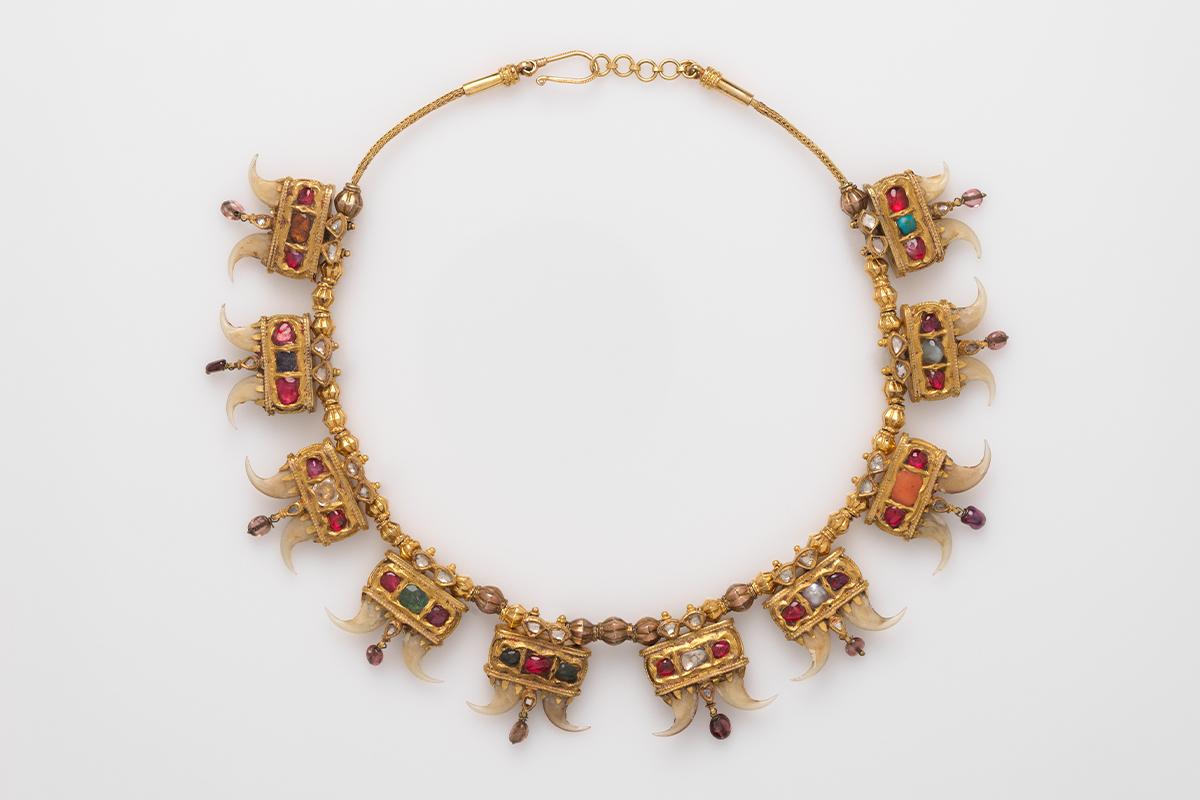
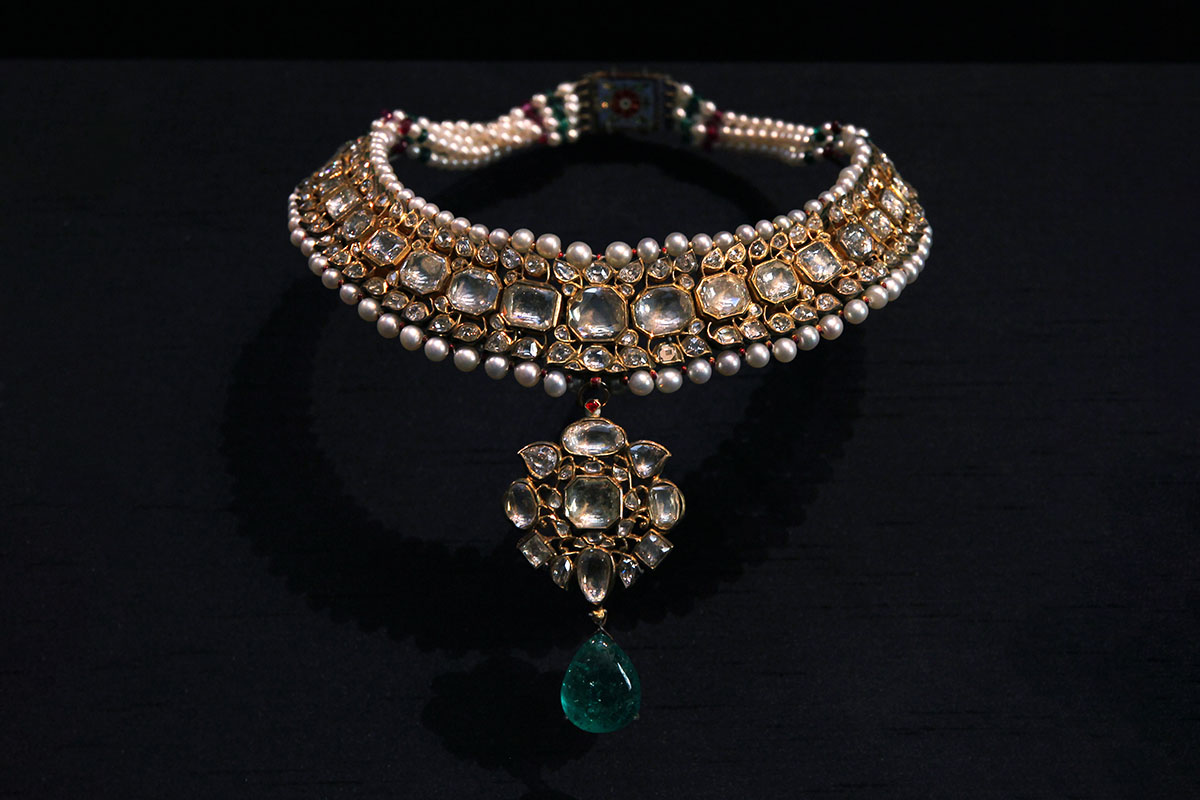
Earlier, specific craftspersons were responsible for different stages of jewellery-making: for example, chiterias were responsible for creating the design, the ghariyas were involved in the engraving and finally the goldsmith who worked on the gold framing. Now, the commercialisation of the craft has led to its wide availability but also to reduced craftsmanship in order to accommodate the demands of the market; at times a single person does the work of three. Jaipur remains an important centre for kundan jadau jewellery.
First published: 21 April 2022
Image Gallery
Bibliography
Gambhir, Sakshi. “Kundan-Meena Jewelry, Jaipur.” D’Source. Accessed November 19, 2021.
https://www.dsource.in/resource/kundan-meena-jewelry-jaipur/place
Shekhawat, Sunita. “Kundan jewellery: The history and intricate craft behind the bridal favourite.” Interview by Hasina Khatib. Vogue, August 16, 2019.
https://www.vogue.in/fashion/content/kundan-jewellery-history-technique-sunita-shekhawat-interview
Tyagi, Amar. Let’s Know Handicrafts of India. United Kingdom: IBS Books, 2008. https://www.google.co.in/books/edition/Let_s_Know_Handicrafts_of_India/eggCrlgpYMIC?q=kundan+jewellery&gbpv=0#f=false
Utsavpedia. “Jadau.” Accessed November 19, 2021.
https://www.utsavpedia.com/attires/jewelry/jadau/
Feedback