-
ChicagoJoshi, Namrata. "Staying Indie: An Interview with Filmmaker Anurag Kashyap." Impart Perspectives, March 31, 2026. https://imp-art.org/perspectives/interviews/staying-indie-an-interview-with-filmmaker-anurag-kashyap/
-
MLAJoshi, Namrata. "Staying Indie: An Interview with Filmmaker Anurag Kashyap." Impart Perspectives, Mar. 31, 2026, https://imp-art.org/perspectives/interviews/staying-indie-an-interview-with-filmmaker-anurag-kashyap/. Accessed 16 Oct 2026.
-
HarvardJoshi, N. (2026) Staying Indie: An Interview with Filmmaker Anurag Kashyap, Impart Perspectives. Available at: https://imp-art.org/perspectives/interviews/staying-indie-an-interview-with-filmmaker-anurag-kashyap/ (Accessed: 16 October 2026).
Staying Indie: An Interview with Filmmaker Anurag Kashyap
Cinephile-turned-director Anurag Kashyap mulls over the highs and lows of his career spanning 28 years and what it means to be an "indie" filmmaker in India.
By Namrata Joshi
Link copied!
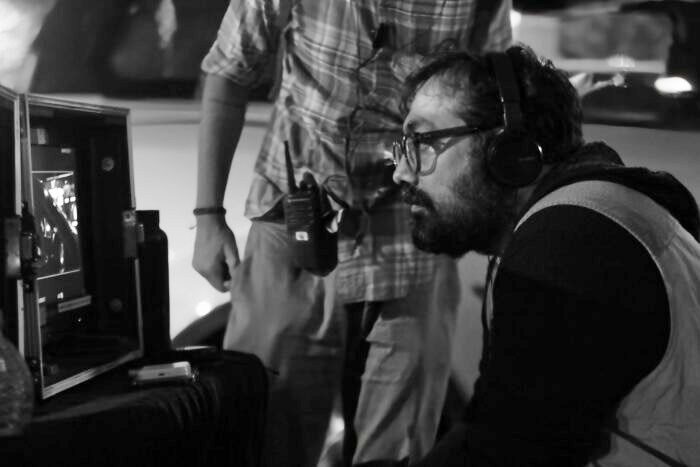
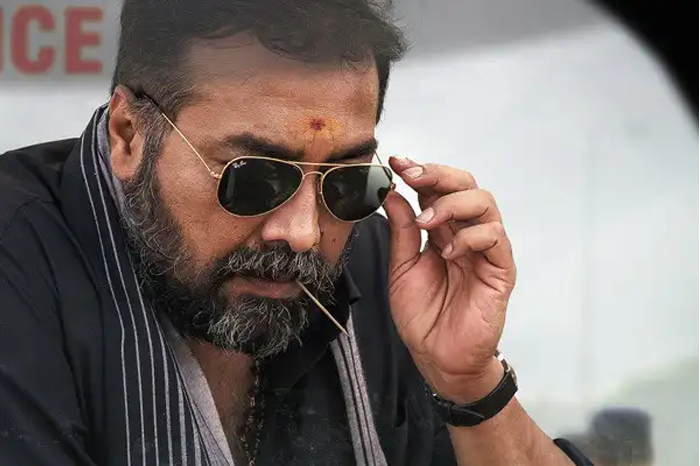
Filmmaker Anurag Kashyap. Courtesy Shubhra Shetty
Despite a successful 28-year-long career behind him, Anurag Kashyap admits he is feeling a bit lost. In the time he’s been around, there’s been a clear shift in the kind of films being produced and patronised. The audience has grown more fickle, even as costs increase and film financing options shrink. Technology has played a starring role in the tectonic shifts in how films are made and consumed, and the threat of AI looms large.
Having moved to Bengaluru, Kashyap is taking a breather from directing films. He has been reading, writing, introspecting, and playing character roles in South cinema to “ensure a regular income.” He also admits that he is trying to get over the poor audience turnout for his film Nishaanchi (2025). He mulls over the whys — perhaps the strategy of not releasing the two parts together backfired; maybe it had to do with the double bill’s inability to come out of the shadow of his landmark Gangs of Wasseypur 1 & 2 (2012). Such conjectures aside, Kashyap’s laudable support of a bunch of new independent films, such as Raam Reddy’s Jugnuma and Varsha Bharath’s Bad Girl, opening in the theatres at the same time, ironically, may have taken the attention away from his own work. While Nishaanchi is streaming now on Amazon Prime Video, his previous film, the festival favourite Kennedy (2023), was released in India on ZEE5 on February 20, 2026, three years after its world premiere.
In 2026, he is awaiting the release of Shaneil Deo’s Telugu-Hindi bilingual Dacoit: A Love Story on April 10, in which he plays a cop, and his Kannada acting debut in Sujay Shastry’s 8. At a time when chips are down, clad in a white, Bela Tarr T-shirt, Kashyap reflects on what it means to make films in India.
Namrata Joshi: After stepping away from directing, you are taking up acting roles. Do you enjoy it?
Anurag Kashyap: I don’t enjoy acting, but I can act. I’ve done a lot of theatre. I understand what it is all about. But I don’t have the discipline of a regular actor, the way they get into it. I have an understanding of the medium, which I use to my advantage. I understand emotions. I know how to connect to characters. Theatre creates that grounding, which also helped me deal with actors as a director. Not telling them how to act, but drawing out performances. Given a choice, I would rather be on a set making a movie.
Joshi: You have often been seen as a driving force and an influential voice in India’s independent cinema landscape. Yet, of late, you appear to be battling a crisis of faith.
Kashyap: There’s a kind of disquiet among a lot of my contemporaries. A lot of filmmakers’ projects are finding an audience on OTT platforms. But the audience that’s coming to the theatres has changed. All the good films that I have gone to see of late, theatres have been distressingly empty. There was a big audience for the anime film Demon Slayer (2025), but no one went to see One Battle After Another (2025), in which I think [director] Paul Thomas Anderson has really upped his game. Another great film was Park Chan-wook’s film, No Other Choice (2025). He is a filmmaker who is still using long shots, transitions, and movements. Old cinephiles like me are loving the film but, as such, there was no hype for it.
Everybody’s talking about how people are watching films mainly on their phones. Somebody sent me a research study by Cornell University that shows that the average shot length has gone down from 12 seconds to about 2.5 seconds. As an actor I’m going for shoots where people edit on set, while taking the shots. The whole shooting style is changing.
Joshi: How do you see yourself responding to the changes in filmmaking?
Kashyap: Do you change with the changing times? I don’t think I can adapt to it. I still want the story, the subject to dictate how scenes are shot. For me cinema is love; it’s not a job. I’m not going to do things that are not coming from within me. I can’t do fast cuts; I can’t do spectacle, mythology. I do not want to cater to the same OTT audience, doing those true crime stories that everybody watches. I don’t see myself directing for a while.
Joshi: At one point in time, the entry of Hollywood studios and the streamers was looked at with a lot of hope and optimism, especially by independent filmmakers. Your own Sacred Games (2018-19) set a trend…
Kashyap: If you look at all the great shows, they have all been acquired by the platforms, not produced by them. The actual shows are made by independent production houses. Globally, Apple, HBO, and Hulu are investing in the creation of original shows but that’s outside India. Netflix India is being run now by a whole bunch of people who have only done television, and have no film experience.
If I look back at my own work, I don’t think I’d be allowed to make those shows, those films now. They wouldn’t get past the Censor Board. Even something as recent as Kennedy — it was actually cleared three years ago but no one knew what to do with it. It’s not like the past, when somebody would take a chance and say, “let’s go and make this film.” Like when a UTV Spotboy would let me go ahead and make something like Dev D (2009), even when they were not sure of it. There aren’t producers who are willing to take those chances anymore. The way Maximum City was dropped [by Netflix], I didn’t see it coming… I was lost. Things have been going steadily downhill for indie filmmaking in India, I think.
Joshi: You supported Natesh Hegde’s Vaghachipani, which was screened at the Berlinale 2025, and Anuparna Roy’s Songs of Forgotten Trees, which won the Orizzonti Award for Best Director at Venice International Film Festival 2025. You have consistently helped young talent over the years even while battling adverse circumstances yourself. Why?
Kashyap: I think all of us [who do this], somewhere deep down, are connected with one common purpose — to help cinema survive this phase. The idea is to support the kind of cinema we believe in, that needs to be seen. We used the blog Passion for Cinema to support the cause of alternate voices, for the kind of films that mainstream media would not talk about. Now, we are supporting them by getting them seen. Let’s see how long we can do it. Sometimes, we come in at the last stage, to gather funds for post-production costs when the film is nearly complete. Sometimes, a bunch of us filmmakers will raise money together for a project we love, like Pokhar Ke Dunu Paar (2022).
When filmmakers come together like this, I don’t feel alone. Kiran Rao boarded Humans in the Loop (2024), Vikramaditya Motwane, Nikkhil Advani, Jim Sarbh helped Sabar Bonda (Cactus Pears, 2025). There’s Guneet Monga. Not all films speak to everyone. Very rarely there’s something like Stolen (2023), where four of us [Advani, Motwane, Rao, and Kashyap] got together. Look at the number of people who came together for Baksho Bondi (Shadowbox, 2025). It’s beautiful, this kind of collaboration. Of people coming together to empower a film, and help it see the light of the day.
Joshi: What do you see as the biggest threat to meaningful cinema?
Kashyap: Somebody sent me a script written by Chat GPT. The prompt was to write a film script in the “Anurag Kashyap style.” I read it. It was absolutely not me. But people think, “how can it not be you? Technology can’t go wrong.” One has to either catch up or continue to do one’s own thing, which becomes increasingly difficult.
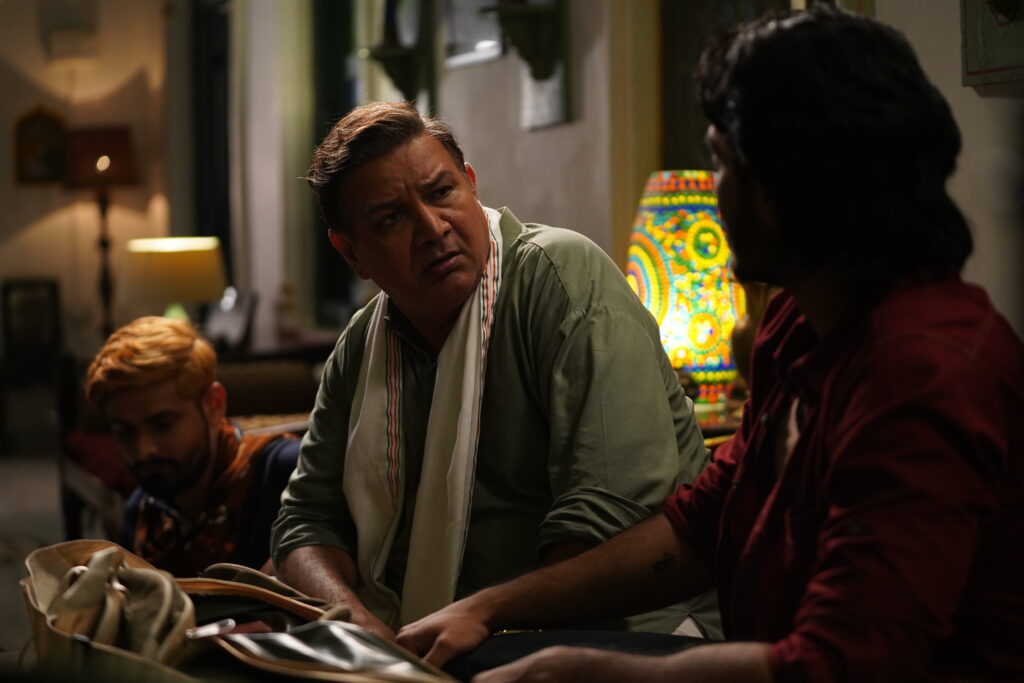
Many studios are shutting down or are being sold because they can’t keep up. Warner Bros is on the verge of being acquired despite making two path-breaking movies in 2025 — Sinners and One Battle After Another. That’s heartbreaking. Closer home, the Tamil indie Bad Girl (2025) found love everywhere in the world but no one came to the cinemas in India. Filmmaker Vetrimaaran had to shut down his production house, Grass Root Film Company, soon after the film’s release. I think he had made this ironic comment at that time that all the woke people won’t otherwise come, see, and support a film like Bad Girl but if we had put some misogyny in it, they’d have come to get outraged over it.
But it’s not just film viewing habits that have changed, or what people want to make… the costs have also increased. They changed because OTT came in. They escalated the costs. I made Mukkabaaz (2017) for Rs 4.5 crore. Today, if I remake the film in exactly the same way, it won’t cost less than Rs 15-16 crore.
Joshi: Are things a bit more hopeful in the South though? Does the environment support auteurship and original stories?
Kashyap: No, I don’t think so. Very few filmmakers have that singular voice. The actors in the South speak the local language, and everyone is steeped in the culture. Sometimes, they may translate on a wider level.
Malayalam cinema gave lots of big hits in 2025 — Lokah, Empuraan. Now that they have seen the possibility of making 200 crores, people are going to target that. They’re making a lot of investigative or action thrillers. Corruption in the police is another formula they have discovered. This is what destroys indie cinema. When these massive tentpole blockbusters happen anywhere in the world, the producers and studios start aiming for that. That’s when singular voices start to disappear.
In Hollywood, the filmmakers we call auteurs are able to make films because they’re supported by actors. Lynne Ramsay can make Die My Love (2025) because Jennifer Lawrence wants to. One Battle After Another (2025) happens because Leonardo DiCaprio and Sean Penn come on board. Imagine, if that film was pitched to anyone in India! Nobody would do it. Martin Scorsese had told me that he is able to make films because he gets support from Robert De Niro and Leonardo. Even when they’re not in the film, actors come and help them. [Alejandro González] Iñárritu, after winning two Oscars, was able to make his next film [Digger, releasing on October 2, 2026] because Tom Cruise made a deal with Warner Bros. He wanted to work with him.
Joshi: Is everyone playing safe here in India?
Kashyap: Not everyone, but most of them are. But a good thing in Malayalam cinema was that their actors were taking risks. Fahadh Faasil was not playing safe, Mammootty was not playing safe. I’m saying pre-Lokah. Even the makers of Lokah were not playing it safe. The success took them by surprise. It’s how Stree (2018) took everyone by surprise, and then it spawned a massive movie franchise. Everybody is making their own cinematic universes now.
Joshi: How do you see your own career trajectory in an industry driven by the box office?
Kashyap: I’ve always felt like an outsider. I’ve never felt like an insider. I’m very happy with that. I’m not really troubled by it. I don’t have a problem with mainstream cinema, but as long as there’s also an alternative. My problem now is that filmmakers are not trying to make the films that they want to make, which was true up until 10 years ago. Now, everybody’s chasing that elusive box office number, imitating each other.
Joshi: Do you feel you’ve had it tougher because you were not willing to compromise on some aspects of storytelling?
Kashyap: It’s about choices and they have consequences that you deal with. For 7 years, my films were banned. Paanch (2003) did not get a release. Black Friday (2004), Gulaal (2009), Udta Punjab (2016) had issues. Two companies — AKFPL [Anurag Kashyap Films Pvt Ltd], Good Bad Films — shut down, I moved out of Phantom. I have had chances to work abroad, do projects, but somehow I have been unable to. All my stories are here. I resisted doing Maximum City for the longest time. I was asked by Danny Boyle and Christian Coulson [to direct] way back in 2010. But it was being written in English. Similarly, Sacred Games, when it came to me the first time, for Showtime via Scott Free Productions, it was in English. But anything based in India, I can’t do in English. That is what happened with Shantaram as well. I like to work in an authentic milieu. I could have easily made Manmarziyaan (2018) without so much Punjabi in it, but I wanted the film to feel like an authentic story from Amritsar. Nishaanchi has a Kanpuria dialect which keeps changing within UP. A lot of people saw it from the Wasseypur lens, but it is not the same world. It’s 800 kilometers from Kanpur.
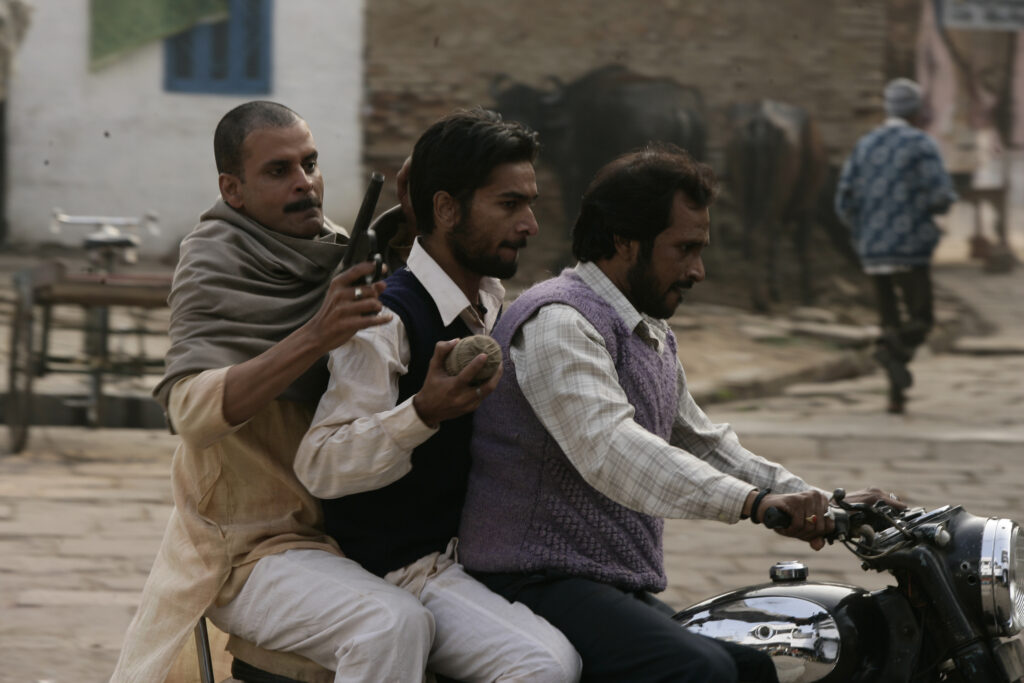
Another example I can give you is Almost Pyaar with DJ Mohabbat (2022). It was abandoned by its studio and producer. I put in whatever I had to somehow complete it. Called in favours from every filmmaker friend of mine — Raju Hirani, Imtiaz Ali, Vishal Bhardwaj. We had an easy option of selling the entire film as episodes to an OTT but we chose not to do that. We pushed for a release in theatres. We took the hit. These are the back stories. But when a film comes out, the audience sees it for what it is. They’re not interested in how long it took to make it, or how it almost did not get made.
Joshi: Does success feel elusive now?
Kashyap: Nothing that I have done since Lust Stories (2018) and Sacred Games has worked. But I am still not going to allow producers to dictate things to me, about how I should be making films. I don’t think I’ve lost my skill set. I have a lot inside me to put out on the big screen. I will find my way. I will find another language, go to Kerala and make a film in Malayalam. I’ll adapt. I can make films with absolutely fresh kids, make it like an incubator or film school-type experience for them. Like the way I made Paanch. Everybody was a newcomer. I will have to get out of my current comfort zone and go back to that self of mine who was told that it’s impossible to make Black Friday. But he went out on the streets for every single shot, travelled however far he needed to, slept in buses, and eventually succeeded in putting together the film he wanted to make.
Joshi: You are a cinephile turned filmmaker. Is that how things should be?
Kashyap: No, I know lots of great filmmakers who never watch cinema. They take things from life. One of the greatest films came out of a filmmaker who had not seen cinema, which was Citizen Kane (1941). Or take [Iranian filmmaker] Jafar Panahi — what access would he have had to films when he was under house arrest? My cinephilia and love for books came from the lack of resources to travel. I got my first passport when I was 34, when Black Friday got selected for Locarno. So my way to travel the world was through cinema and books — a lot of translated works. Cinema was my window to the world. Hindi cinema was my window to Bombay. I remember when I first came to Bombay, I was in awe. I went to every single place I’d seen in films. I made sure that I shot my first film, Paanch, at Watson Hotel because that’s where cinema started in India. Cinema is also a way to understand the world because filmmakers show the politics and culture of the society they grew up in.
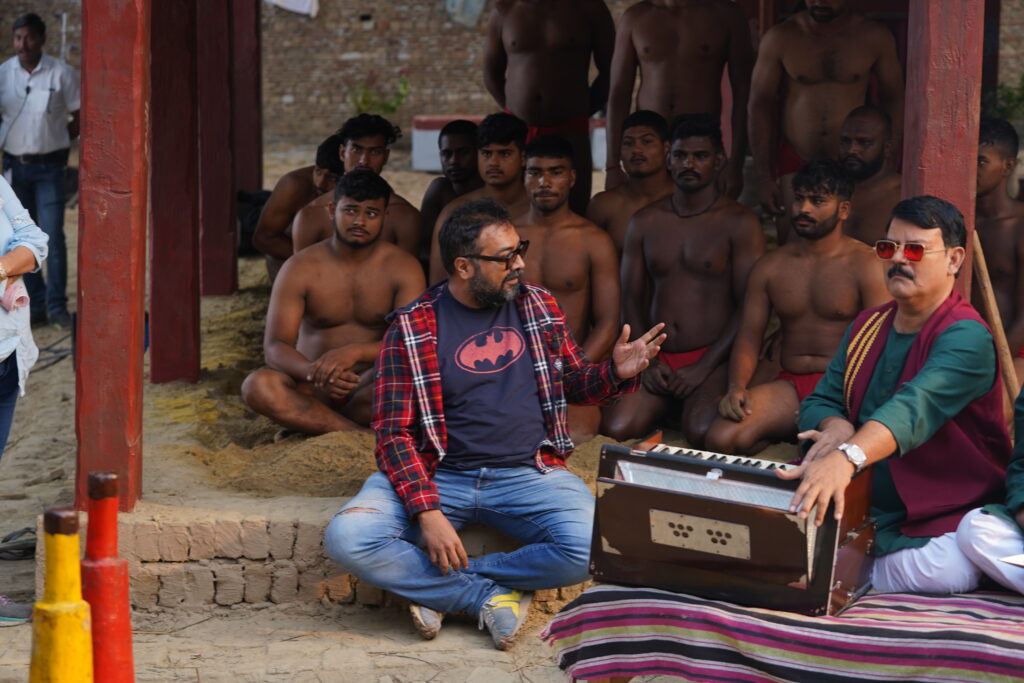
Joshi: Did you learn filmmaking by watching films as well?
Kashyap: I learned to write by reading pulp fiction — stories by James M Cain and Raymond Chandler. I used to do theatre, so I also drew a lot from the works of Harold Pinter and Noël Coward. When I’m watching a film, I’m immersed. I’m not very conscious of this or that, unless something really shakes me. I pay more attention on the second viewing. I notice more things. When I revisit a film, I learn.
Joshi: Who would you count as your strongest influences?
Kashyap: I would say, Martin Scorsese and Fritz Lang. Scorsese I saw very early on, at a very impressionable age. And then, I saw a lot of these amazing films in Locarno that I realised were all directed by Lang.
Joshi: How do you see your role as a director on a film set?
Kashyap: I adapt to the circumstances, always have. I know that as long as I have new actors, they’ll go along with me. My partnership is mostly with my first AD [Assistant Director], my cinematographer, and my production designer. We know where to go and what to do. I have now come to a point where I tell my cinematographer to pick the production designer based on the script. The cinematographer decides the palette with inputs from the costume incharge and production designer. For Gangs of Wasseypur, Rajeev Ravi had this idea that we shoot the past on film stock, and as the story moves to the present, we go digital — use a DSLR camera. I went ahead with it. I took responsibility for only the performances, the storytelling, and he went along with me. In Dev D, the heavy metal magazines and comics picked up from Janpath became wallpapers for the modern brothel. We did these things because we had no choice. Now, these things are seen as an “aesthetic.”
Lots of people ask me how I did the last scene in Gangs of Wasseypur Part 1 in which the thela [cart] goes over the gun and the gun jumps. It just happened. It is against physics and the law of gravity, but it happened. Till date I don’t know how. It could have been the bend in the road. It jumped only in that one shot in the three to four takes we filmed and we used it. We added a flair to it in post-production, gave it a sound and it became the perfect ending to the film. It wasn’t intended. It wasn’t part of the script. It has taught me that some magic will happen if you allow it to happen.
Joshi: People think your films are very male-centric and focused on crime. Or that your politically subversive plots don’t dig deep into issues. How do you respond to such critiques?
Kashyap: They’re very fair readings. It’s not that I always do crime films. I have done non-crime films too. But I come from a world where crime is part of life. For me, Nishaanchi is not a gangster film; it’s a story about a family. It is about a petty robber who makes a gang of three with his brother and girlfriend, and they are so juvenile that they get caught on their third attempt. I have seen such people in UP [Uttar Pradesh]. The second part of the film is about the consequences, the punishment.
Most of my films are based on what I understand. I have grown up in a patriarchal world, so my understanding of feminist agency is very different. It is rooted in how I’ve seen my grandmother, or my mother, or my sister behave. They have agency but they’re living in a patriarchal reality. A woman can have agency, but it is limited. Their point of view is often not articulated. Their forms of articulation are also limited, like Paro in Dev D. My films are about characters from a lower middle class, middle class, or lower class backgrounds. The feminism on ground level is very different.
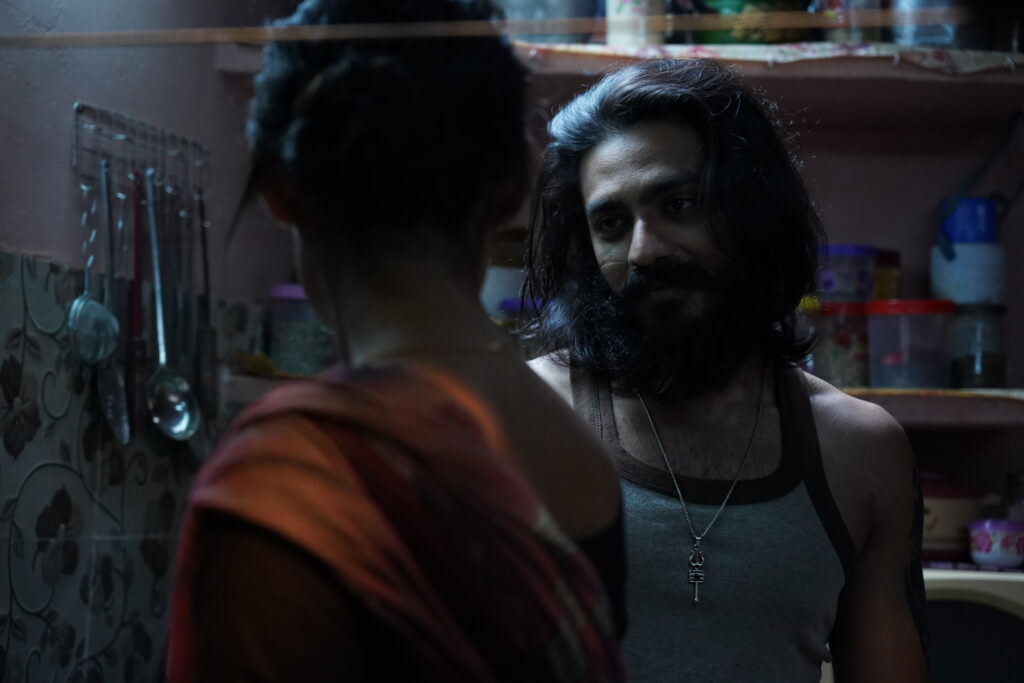
As for political films, it’s difficult to find funding for them now. My most recent political film is a short called Chaar Chappalein (2023). It played in Rotterdam as a companion piece to a Kannada film, Follower (2023), which is even more political. Only a first-time filmmaker can make a film like Follower now, just like it was a young filmmaker who once made Black Friday. Over time, I have lost that luxury of making a political film because they are immediately branded as propaganda. I don’t want to make a political film where everything is spelt out either. I also have a lot of people from the film community depending on me. I don’t even have the luxury of taking a break from films. I have to keep acting because a part of that income will go to someone making a short film. One has to constantly generate money.
Joshi: A major marker of Indian cinema is the “song-and-dance” sequence. Do you see it as a necessary commercial element to draw crowds?
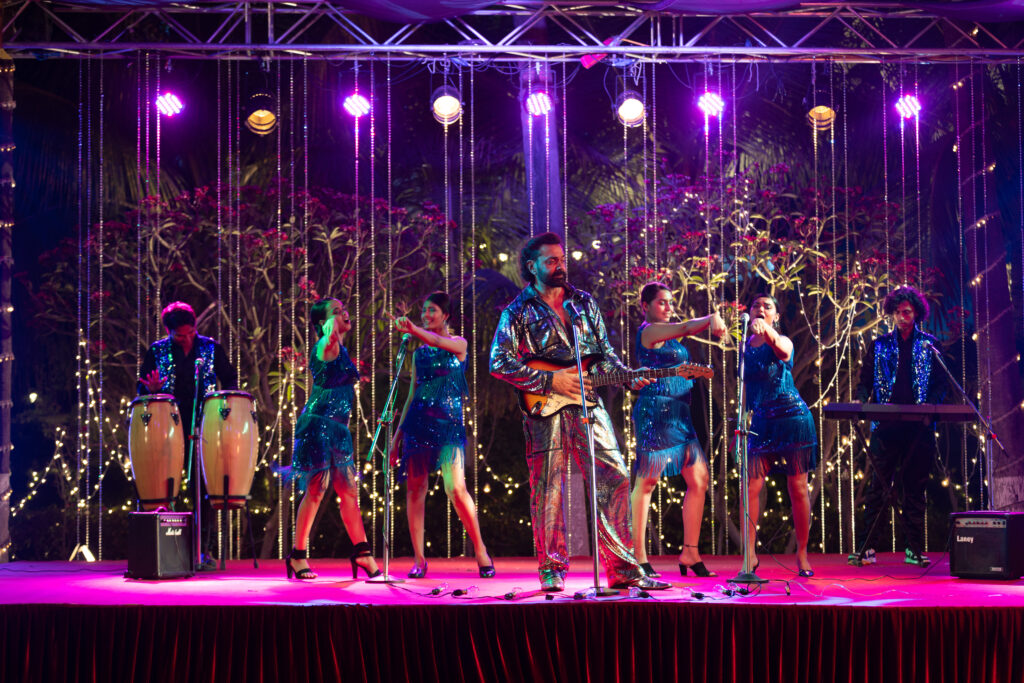
Kashyap: I “heard” cinema before I “saw” cinema. On All India Radio’s Vividh Bharati, I heard songs before I saw any films. Songs have essentially always been part of me, which is why I was confused for the longest time as a filmmaker as to where I belonged. Would people abroad think I’m “too Bollywood”? But when I’m here, people think I’m too “art house.”
Kashyap: The rules and guidelines keep changing but one doesn’t get the information on time. FCAT [Film Certification Appellate Tribunal], which was a solace to filmmakers, is now gone. Now, there’s only the revising committee if you have grievances. The problem is not the people in the Censor Board because they are only following the guidelines. The problem is the ministry [Ministry of Information and Broadcasting]. The problem is that the film industry people refuse to come together to fight censorship. Most filmmakers haven’t even read the Cinematograph Act — they do things for impact, not from conviction.
Lately, films have become an easy target. Even the government cannot do anything if somebody, somewhere “feels offended.” You have to then go to the court, and the court has to tell them to shut up. So, objections are raised randomly, like Nayantara’s film [Annapoorani, 2023] where she’s cooking beef, was taken off the platform [Netflix].
Joshi: Have you ever regretted being outspoken?
Kashyap: I haven’t regretted it. But the thing is, I have never spoken just for myself. What I have said resonated with others. That is what it means to build a community, and then, you are not alone, you don’t feel isolated. But our film community has been compromised. I’ve had people tell me to take down my posts supporting their films from Instagram because I am seen as “too political.” That affected me a lot. I started understanding why people were distancing themselves from me. On one hand, there is the ongoing political discourse, on the other is the industry discourse; of being able to tell stories that resonate.
I had called out Vijay Subramaniam — the head of KWAN, Collective Artists Network, who represents human art — for producing an AI film. I got trolled for it but I also had industry people telling me that it’s good I said what I did. Why don’t you also say that then? “Inke saath to kaam karna hain na humein” [We have to work with them] — is their excuse.
Joshi: When you look back at your career, do you feel you have been given your due for the films you have made and the risks you have taken?
Kashyap: I feel every film eventually finds its due. I could have cut Nishaanchi’s running time and the distributors would have been happy. But it wouldn’t be the film I wanted to make. I was going back to the cinema I grew up with, I was going back to Mother India (1957), I was going back to the films my dad used to show me. I wanted to preserve that world, create a Dostoevskyian fable on Mother India. Everybody thought it would work. It didn’t.
But the world has been very unfair to lots of filmmakers and artists. Michael Powell became an outcast, and his Peeping Tom (1960) was buried. So many films have been buried. Kafka never got published in his lifetime. Sylvia Plath went through a lot. I think I have got much more than what I came for in comparison.
First published: March 31, 2026