-
ChicagoImpart Encyclopedia of Art. "Achkan." April 21, 2022. https://imp-art.org/articles/achkan/.
-
MLA"Achkan." Impart Encyclopedia of Art, Apr. 21, 2022, https://imp-art.org/articles/achkan/.
-
HarvardImpart Encyclopedia of Art (2022) Achkan. Available at: https://imp-art.org/articles/achkan/ (Accessed: 16 October 2026).
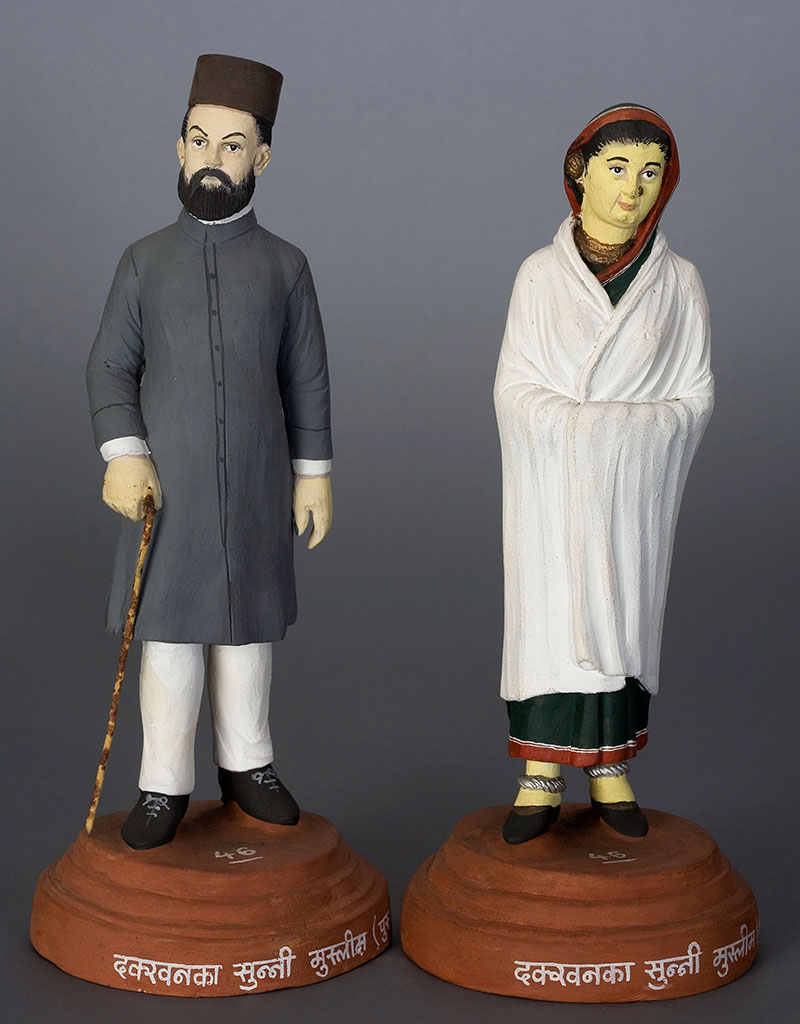
An evolution of the angarkha and the chapkan, the achkan is a knee-length upper garment with long sleeves, side slits and a standing collar that originated in the middle of the 19th century. It is significant for being the first Indian garment for men to prominently feature buttons and buttonholes.
According to some scholars, the invention of the achkan can be credited to the court of Oudh in Lucknow. It is likely to have evolved as a result of the European stitching popularised in the royal courts by British officers, resulting in a garment which was a hybrid of the angarkha and the European coat. The achkan is similar to an angarkha, with a waist seam, cloth panels and an extension called the balabar, which fits under the right hand side of the skirt of the garment and holds it in place. However, unlike the angarkha, its bodice is front-open and fastened over the torso using buttons.
Another garment closely linked and often confused with the achkan is the sherwani. However, the achkan is different from the sherwani in several aspects. As compared to the sherwani, it varies in length, has no lining and features a waist seam as well as gussets at the sleeves. Furthermore, the achkan was popular in the northern states as compared to the sherwani, which was more prevalent in South India, where the Mughal influence still lingered. Both the achkan and the sherwani have been credited with inspiring the Nehru jacket.
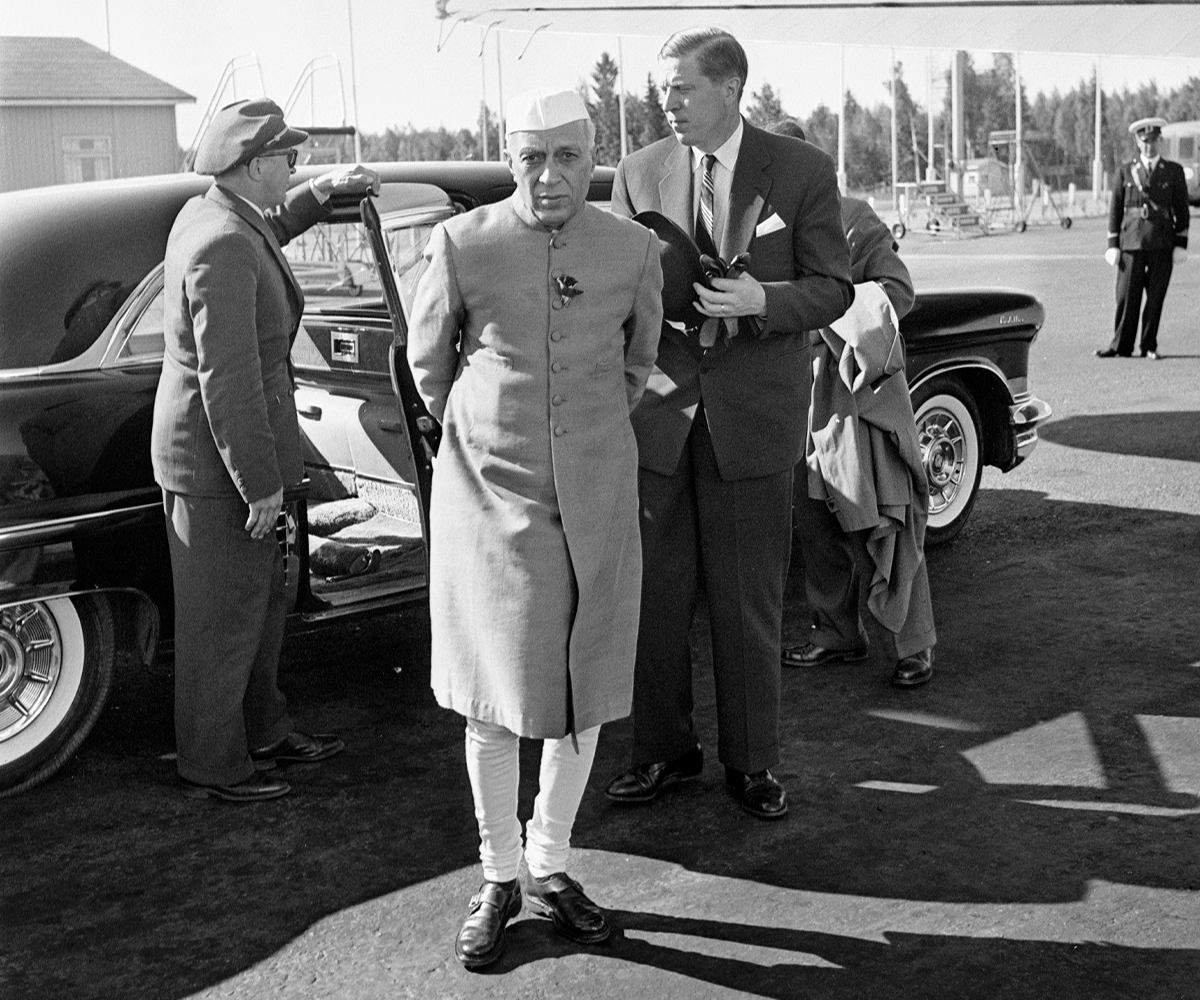
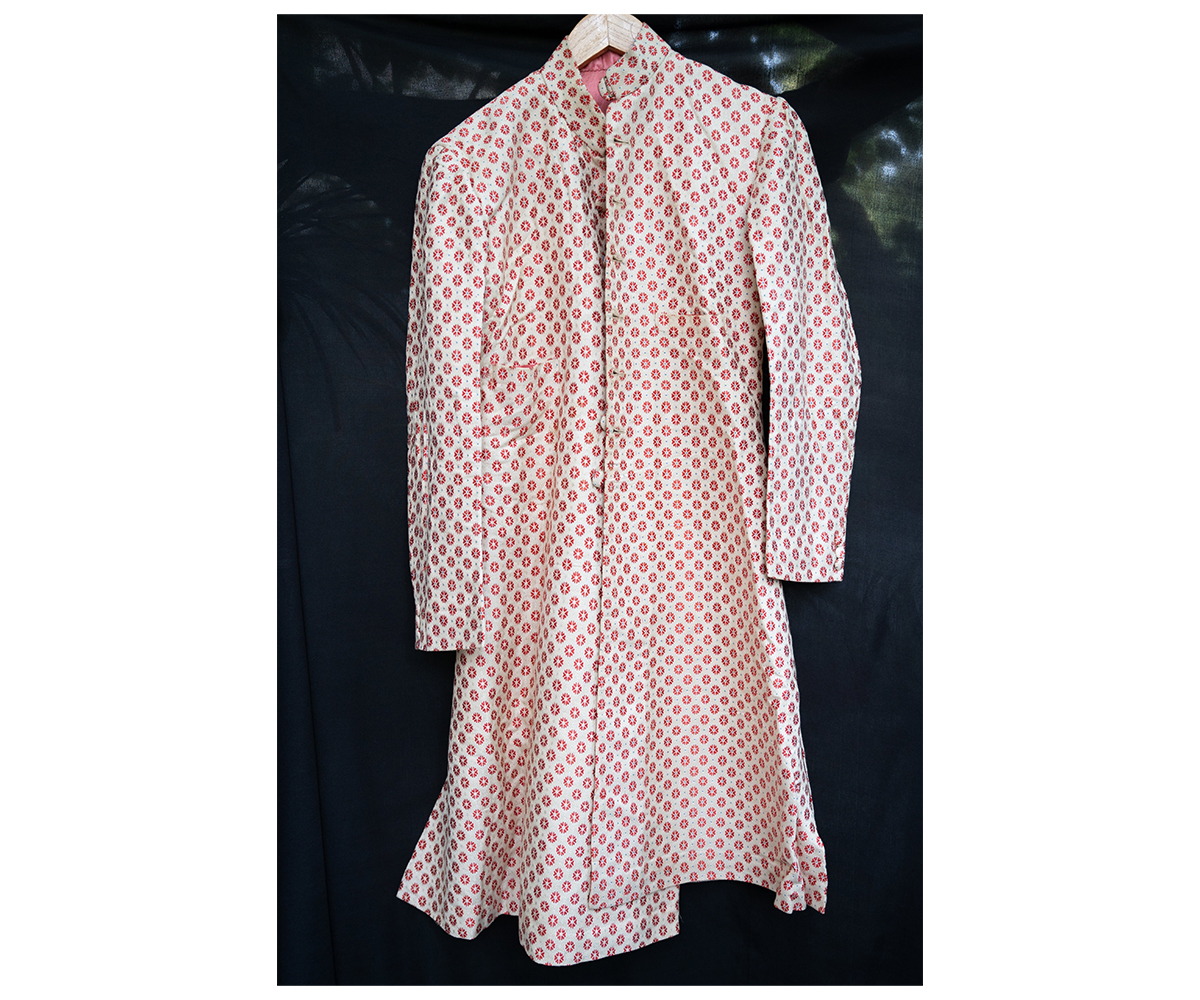
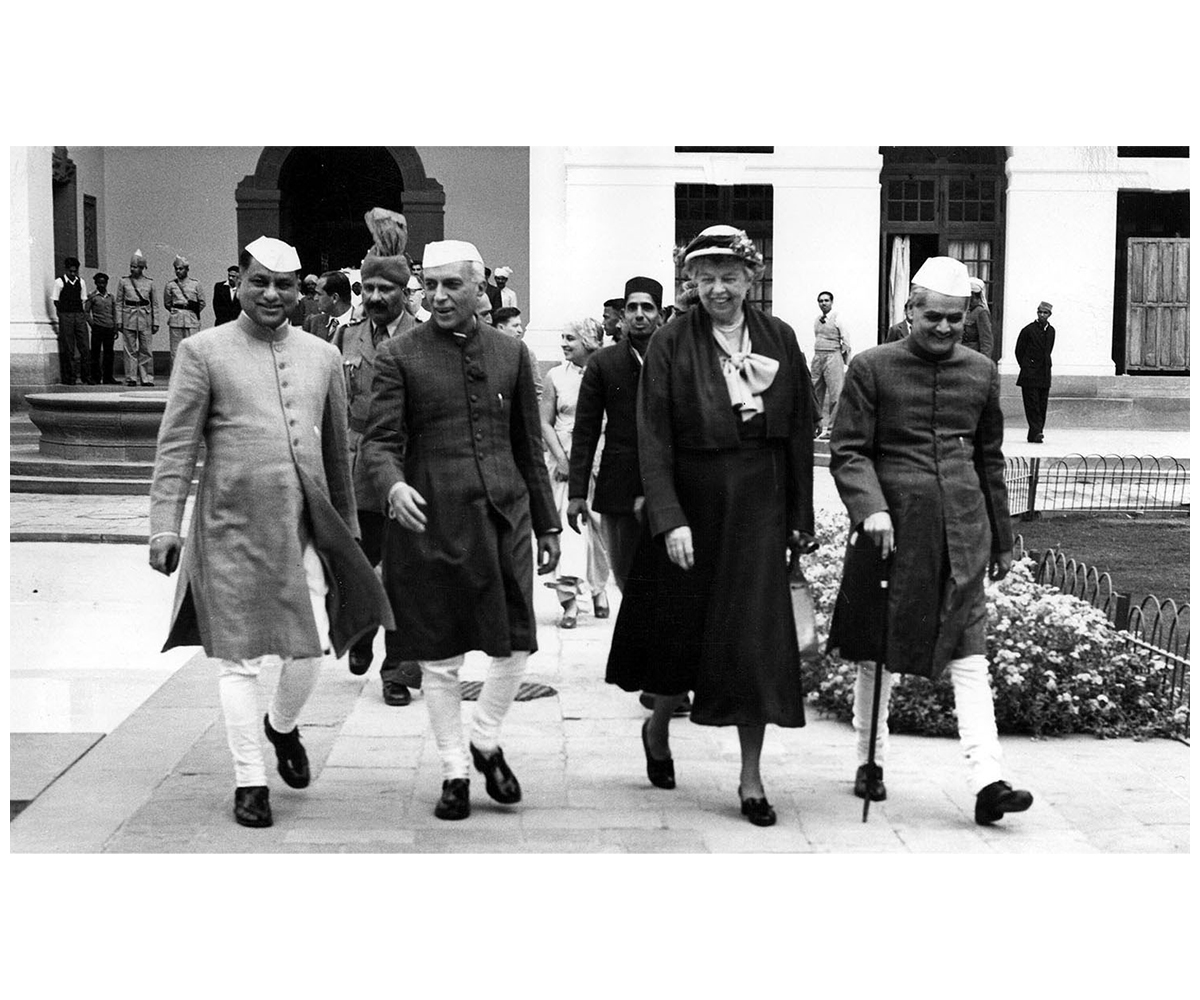
The achkan can be worn with either a chudidaar or pyjama as the lower garment. Over time, it has become a garment that is primarily worn at formal events, especially weddings, in northern and western India.
First published: 21 April 2022
Image Gallery
Bibliography
Gupta, Toolika. “The Influence of British Rule on Elite Indian Menswear: The Birth of the Sherwani.” Ph.D diss., University of Glasgow, 2016. http://theses.gla.ac.uk/7809/1/2016Guptaphd.pdf.
Nanisetti, Serish. “How the fashionable sixth Nizam helped in the evolution of the ‘sherwani’.” The Hindu. March 10, 2018. https://www.thehindu.com/society/history-and-culture/how-the-sartorially-savvy-sixth-nizam-helped-in-the-evolution-of-the-sherwani/article23033545.ece.
Raghavendra Rathore. “Achkan or Sherwani.” Accessed August 13, 2021. https://www.rathore.com/blogs/homepage/achkan-or-sherwani.
Saar. “ACHKAN, SHERVANI AND CHOGA – THE INDIAN SILHOUETTES.” Accessed August 13, 2021. https://blog.marasim.co/achkan-shervani-and-choga-the-indian-silhouettes/.
Utsavpedia. “Achkan.” Accessed August 13, 2021. https://www.utsavpedia.com/attires/the-royalty-of-fashion-achkan/.
Feedback