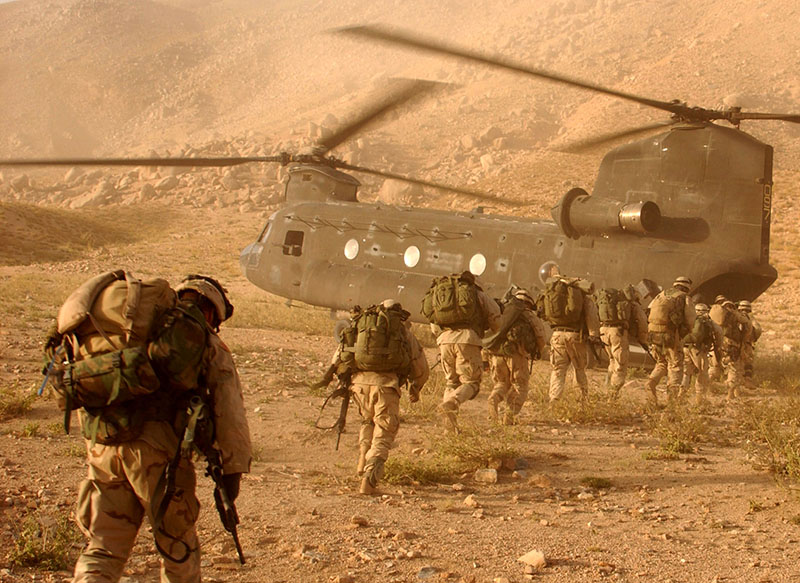
Two-decade-long conflict in Afghanistan between US-led forces and the Taliban. In retaliation to the al-Qaeda’s terrorist attacks in the US on September 11, 2001, and the Taliban’s refusal to surrender al-Qaeda leaders, American and British military forces launched an assault in Afghanistan on October 7, 2001. This followed two weeks of covert operations on ground in which the Central Intelligence Agency worked with local anti-Taliban groups to help target Taliban strongholds across the country — collaborations that would lead to the dismantling of Taliban power in coming years. Over the years the US helped establish new government administrations and initiate rebuilding efforts in the country; however, by the time international troops withdrew in 2021, anti-American sentiment in Afghanistan had grown and the Taliban also regained power.
More Definitions
Kshatrapas
The title given to local governors who administered territories in several parts of north-western, northern, western and central India during…
Tributary State
A form of pre-modern state which had a subordinate relationship to a superior state and maintained its sovereignty by making…
Bidar Sultanate
Small Muslim kingdom of the Deccan in India, founded in 1531 by Qasim Barid I, whose family had been serving…
Sivama Sada
Sivamaka Sada (b. n.d.; d. n.d.) was a ruler of the Sada dynasty, which governed a part of present-day Andhra…
Peshwa
The head of the advisory council of the Maratha kingdom. While it was originally an appointed role, the office of…
Dutch East India Company
Founded in 1602, the United East India Company or Vereenigde Oost Indische Compagnie was a commercial organisation comprising several trading…
Chamunda Raya
Chamunda Raya (b. n.d.; d. n.d.) was a general and minister of the Ganga kingdom in medieval southern India. He…
Pala Dynasty
A dynasty that ruled over Bengal and Bihar from the eighth to the twelfth century CE, it was established by…