-
ChicagoImpart Encyclopedia of Art. "Almirah." December 26, 2023. https://imp-art.org/articles/almirah/.
-
MLA"Almirah." Impart Encyclopedia of Art, Dec. 26, 2023, https://imp-art.org/articles/almirah/.
-
HarvardImpart Encyclopedia of Art (2023) Almirah. Available at: https://imp-art.org/articles/almirah/ (Accessed: 17 October 2026).
A free-standing wardrobe or cabinet, the almirah is a piece of household furniture popular in South Asia since the nineteenth century. Anglicised from the Hindustani word almari — derived via Portuguese from the Latin armarium, meaning ‘cabinet’ or ‘closet’ — the word typically refers to the double-door wardrobe introduced in the Indian subcontinent during colonial rule and used to store both clothes and valuables. Differing from built-in closets or wall cupboards, the almirah is a heavy but movable wardrobe made of wood or steel, typically furnished with shelves and a hanging space for clothes, as well as a mirror and often an internal safe.
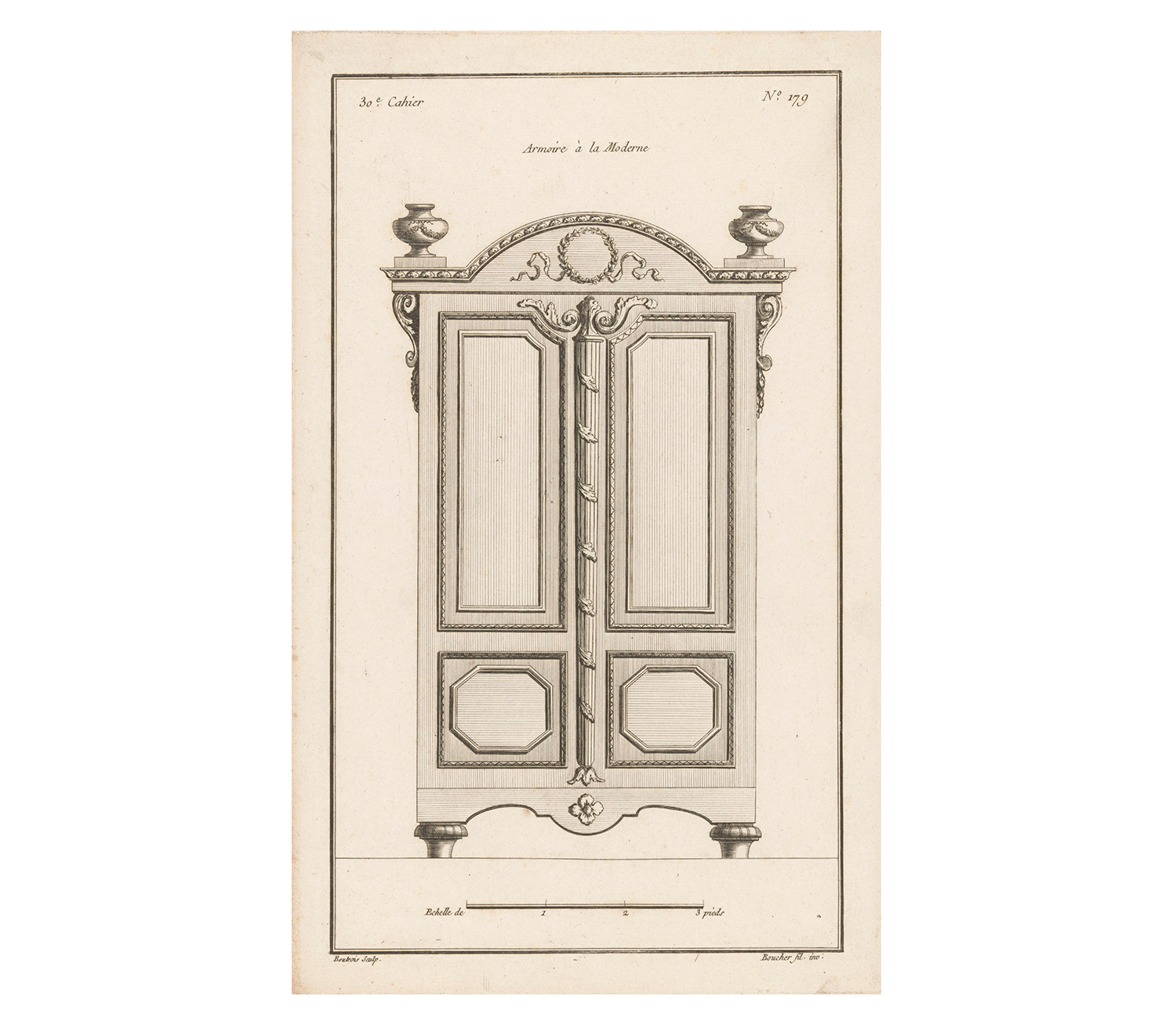
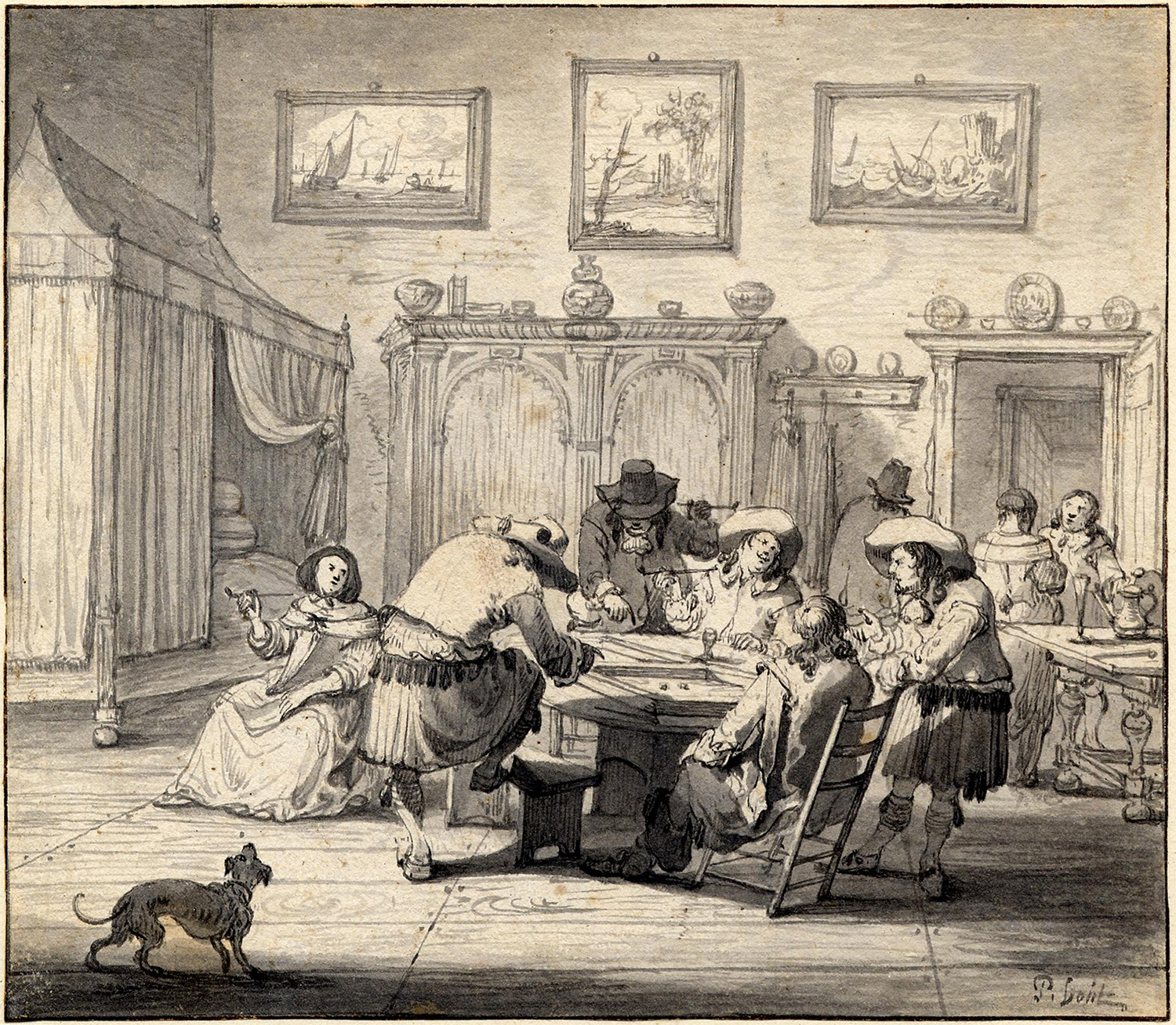
Precursors of the almirah include wooden storage furniture such as the original ‘cupboard’ — a stepped sideboard used to store and display cups since the European Middle Ages; chests such as the sandook; and integrated bedroom units that were mass-produced in the seventeenth and eighteenth centuries in the West. These units featured separate spaces in which clothes could be hung or laid out, in addition to elements such as a chest of drawers, a dresser and a wash-stand, and a mirror fitted on one of the doors.
The almirah was introduced in the Indian subcontinent presumably during colonial rule in the nineteenth century. Until the mid-twentieth century almirahs were made of wood, often featuring carving and artisanship that reflected local traditions as well as the status of those who commissioned them. Like the sandook, they formed an important household commodity associated with the safekeeping of heirlooms and other valuables, and were an essential component of daaj, or the bridal trousseau.
In 1923 the Godrej & Boyce company, which had established itself as an indigenous maker of high-quality locks in India, introduced the steel almirah. It contained shelves and a safe within an unassuming grey body, with a mirror installed on the outside of one of the two doors. In 1934, they also patented a fire-resistant version with asbestos cladding and ‘water-generating material’ in their wall chambers, and material innovations that made the unit lighter and more portable than conventional safes. Unlike their wooden predecessors, these steel almirahs required little maintenance and protected their contents from pests, dust, tropical humidity and fire; their innovative steel construction and the quality of the locking mechanism also rendered them largely burglary-proof.
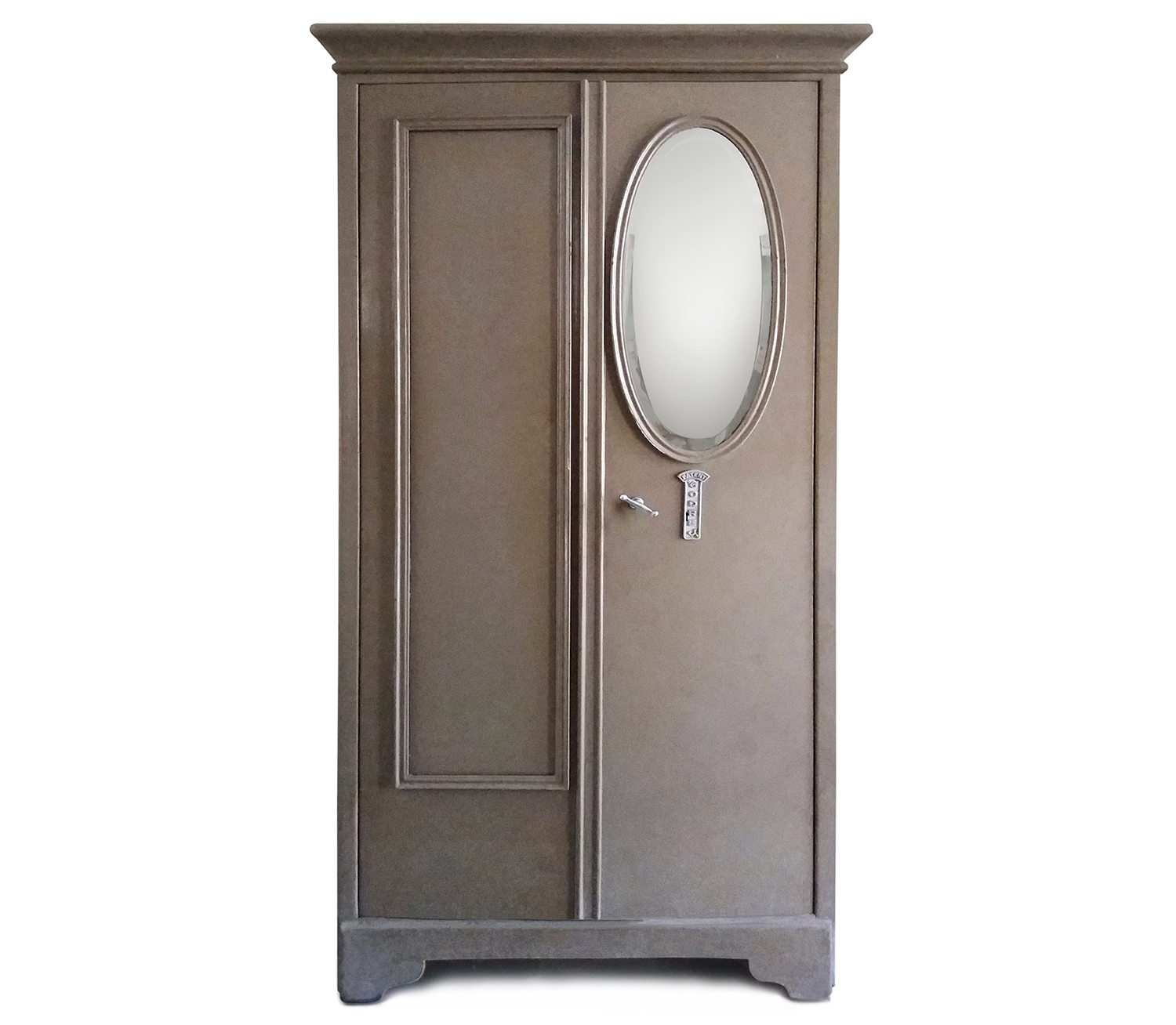
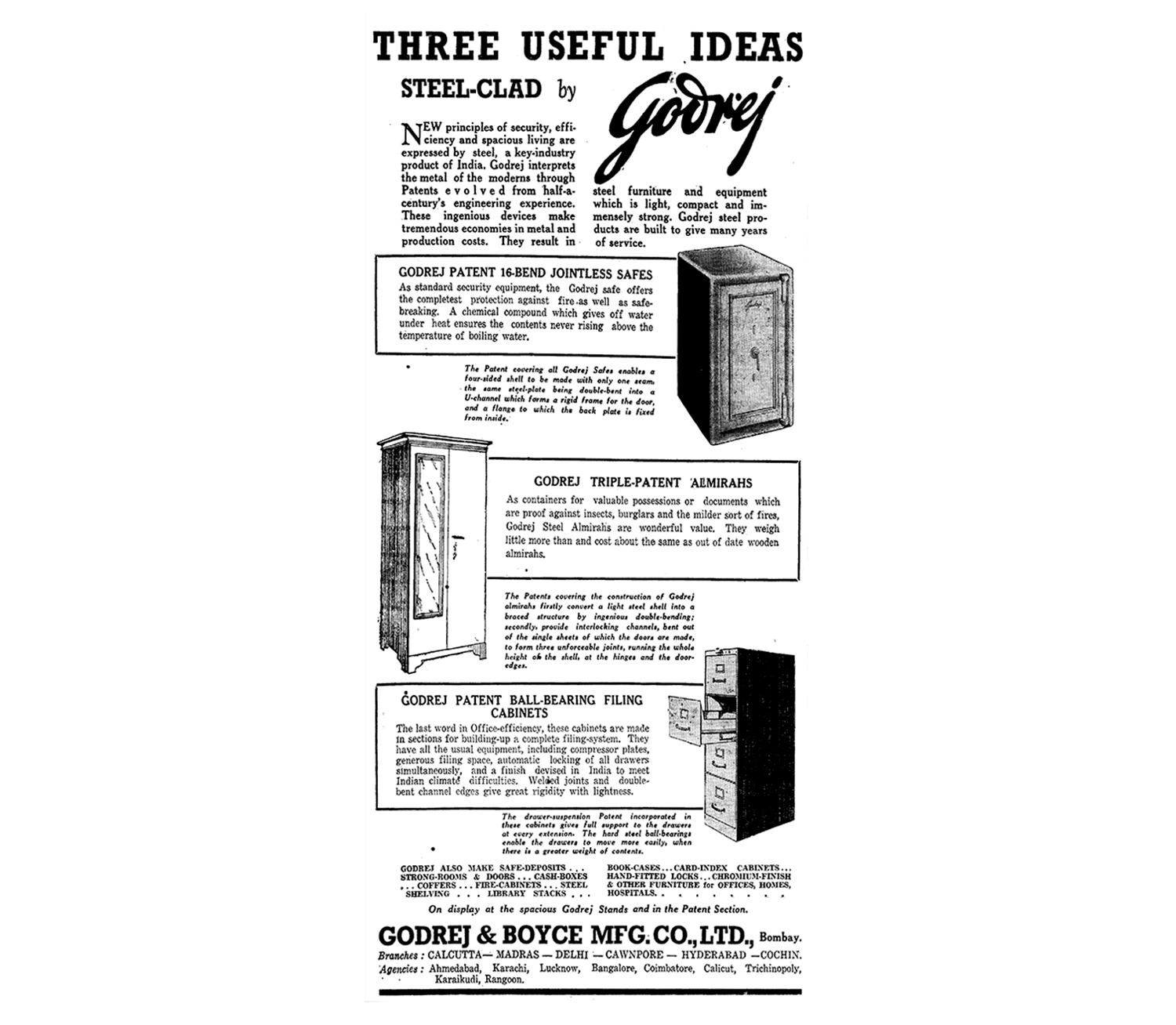
Marketed as the Storwel line, Godrej almirahs became a staple in Indian middle-class households by the 1960s, supplanting their wooden counterparts even in bridal trousseaus. Colloquially called a ‘bureau’, or simply a ‘Godrej’, the steel almirah became closely associated with personal and familial history in modern times. Often shared by multiple members of a household, it held not only clothes but also important documents and the family’s most valuable possessions, such as jewellery. In a popular trope, the household’s power was said to be concentrated in the keys to the almirah, which were often held by the matriarch.
While the earliest steel Godrej almirahs followed the layout of the wooden cabinets that preceded them, they have continually evolved to suit contemporary needs. The Storwel was modified to offer expansive storage space with adjustable shelves and hanger-rods to accommodate Western garments that needed to be stored vertically rather than laid flat; a new model called the Slimline used sliding doors to make the almirah conducive to tight spaces.
Godrej almirahs have been widely imitated and replicated in other branded and unbranded versions that are cheaper. Meanwhile, Godrej and other manufacturers have introduced almirahs in a variety of designs, colours and materials (including plastic) into the South Asian market. Contemporary urban homes are now commonly designed with built-in wardrobes to eliminate the need for almirahs. In older architecture, however, almirahs continue to serve an important function, besides being a ubiquitous symbol of shared domestic life in the twentieth century and beyond. Projects like the Godrej Archives are working to document and preserve a popular history of pre- and post-independence India as mediated through the company and its products.
First published: 26 December 2023
Image Gallery
Bibliography
Britannica, T. Editors of Encyclopaedia. “Wardrobe.” Encyclopedia Britannica, October 7, 2012. Accessed May 23, 2023. https://www.britannica.com/topic/wardrobe-furniture.
Godrej Archives. “Double Protection from Fire and Theft.” Document of the Month. June 2023. Accessed December 13, 2023. https://archives.godrej.com/DOM-Lectures/dom_June2023_index.html.
Narayanan, Chitra. “Product History. Godrej Unlocks Memories from the Almirah to Share Its Biz History.” The Hindu Business Line, May 15, 2023. Accessed May 23, 2023. https://www.thehindubusinessline.com/catalyst/godrej-unlocks-memories-from-the-the-almirah-to-share-its-biz-history/article66849845.ece
Museum of Design Excellence. “On the Trail of Chests, Safes and Cabinets.” Google Arts & Culture. Accessed May 23, 2023. https://artsandculture.google.com/story/dAUhCzIRAqhTIQ?hl=en.
Parakala, Vangmayi. “How Daily Objects Tell the History of India.” LiveMint, August 13, 2022. Accessed May 23, 2023. https://lifestyle.livemint.com/news/big-story/how-our-everyday-objects-speak-of-the-history-of-the-country-111660287664243.html.
Feedback