-
ChicagoImpart Encyclopedia of Art. "Chakrasamvara." November 22, 2023. https://imp-art.org/articles/chakrasamvara/.
-
MLA"Chakrasamvara." Impart Encyclopedia of Art, Nov. 22, 2023, https://imp-art.org/articles/chakrasamvara/.
-
HarvardImpart Encyclopedia of Art (2023) Chakrasamvara. Available at: https://imp-art.org/articles/chakrasamvara/ (Accessed: 16 October 2026).
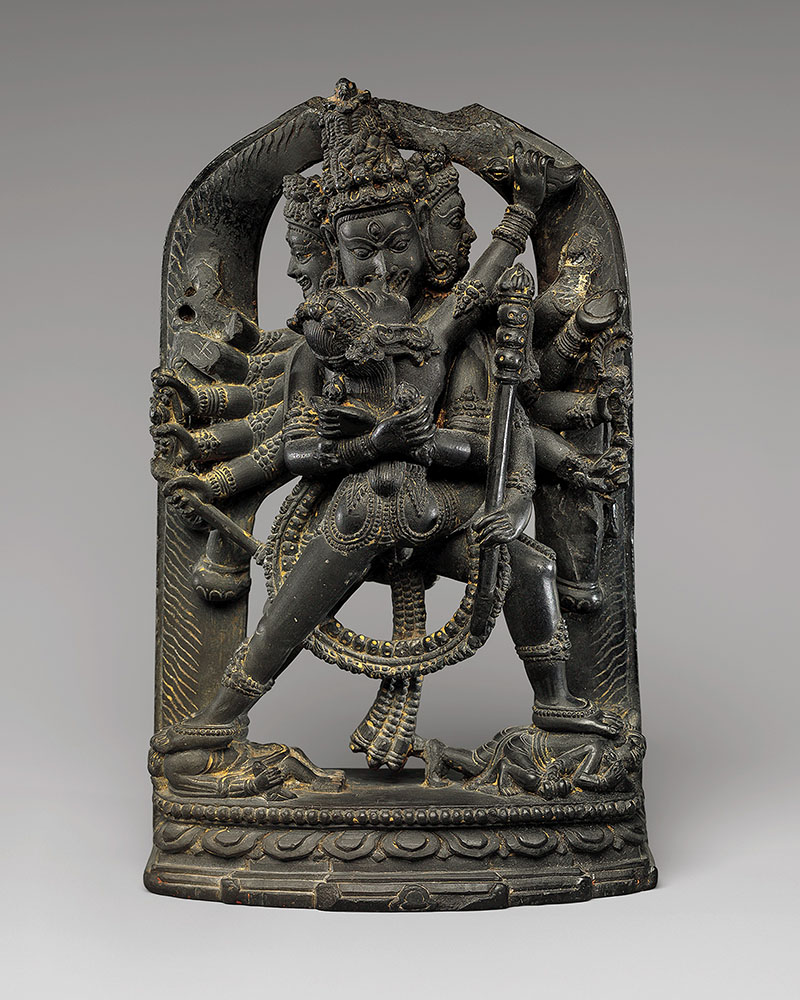
A primary Tantric meditation and yogic deity or yidam of Vajrayana and esoteric Buddhism, Chakrasamvara is also known as Heruka. In Tibetan he is known as khor-lo-dem-chog and in English as the ‘Wheel of Bliss’. The deity is a popular feature in Himalayan monasteries, thangkas, mandalas and statues especially in Kagyu, Sakya and Gelugpa schools of Tibetan Buddhism, as well as Newari Buddhism. While there are several traditions of the Chakrasamvara, the three most famous traditions are known as Luipa, Krishnacharin and Ghantapa.
The Chakrasamvara icon is usually seen in a sexual embrace with his yogini consort Vajravarahi. The two together are key deities in the Vajrayana sect that unite two powerful tenets of esoteric Buddhism, wisdom (as embodied by Vajravarahi) and compassion (as embodied by Chakrasamvara).
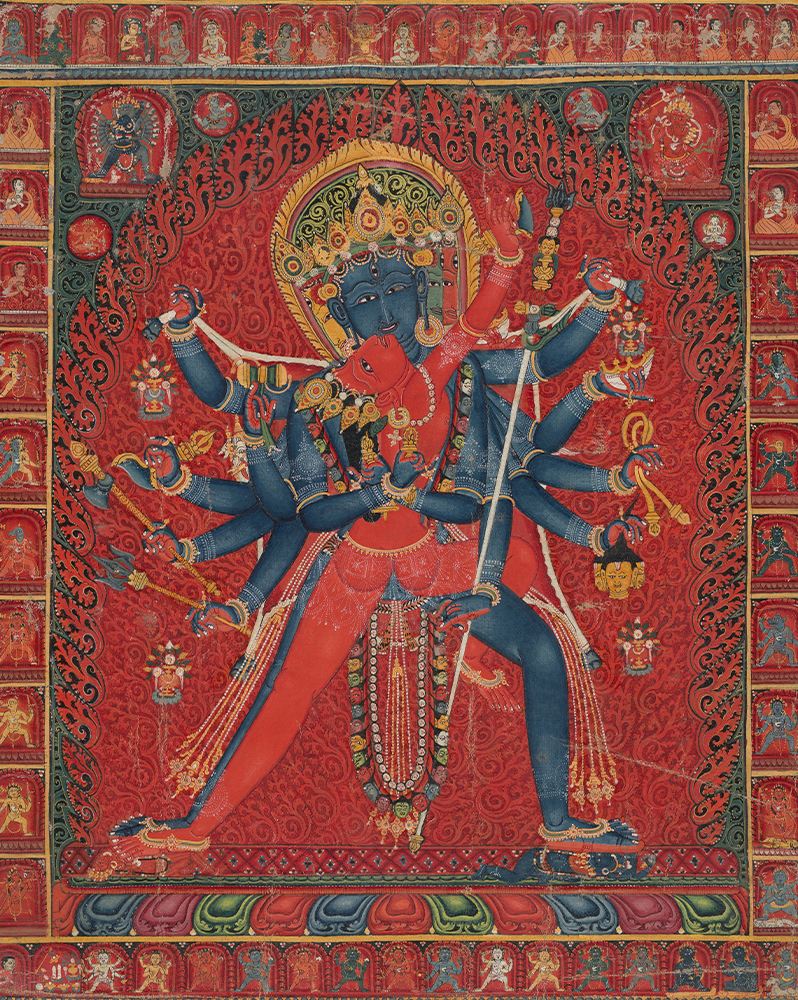
As mentioned in the Chakrasamvara Tantra and other Sanskrit and Buddhist texts, Chakrasamvara is usually considered a semi-wrathful deity. Despite its pervading presence, the Chakrasamvara mandala has limited visual imagery in the public. The ritual practices and visual depictions surrounding the Chakrasamvara and Vajravarahi remain open secrets restricted to selected groups of Buddhist practitioners. In murals in lhakhangs, paintings and mandalas, Chakrasamvara is typically depicted as a blue-skinned figure with four faces and twelve arms in alidhasana, embracing a red-skinned Vajravarahi, who faces him, with one or both of her legs wrapped around his waist. Each face of the multi-headed deity has three eyes and bared fangs, and he is shown wearing a necklace of skulls while holding various attributes in his many arms. The central arms — which are visually presented as the frontmost, and embrace Vajravarahi — are crossed at the wrist, and hold a vajra and a bell, while the uppermost hold the ends of a tiger skin which he drapes over his back. The duo is surrounded by four Dakinis and a circle of flames, outside which is a charnel ground populated by various spirits, demons, mahasiddhas and other retinue figures.
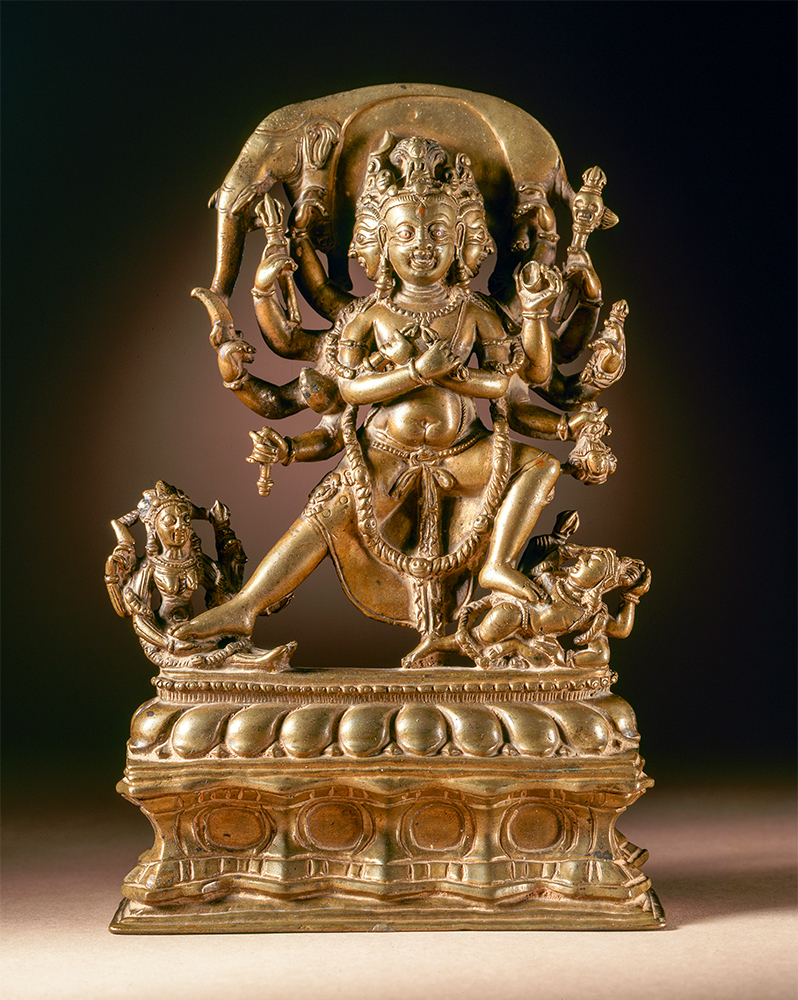
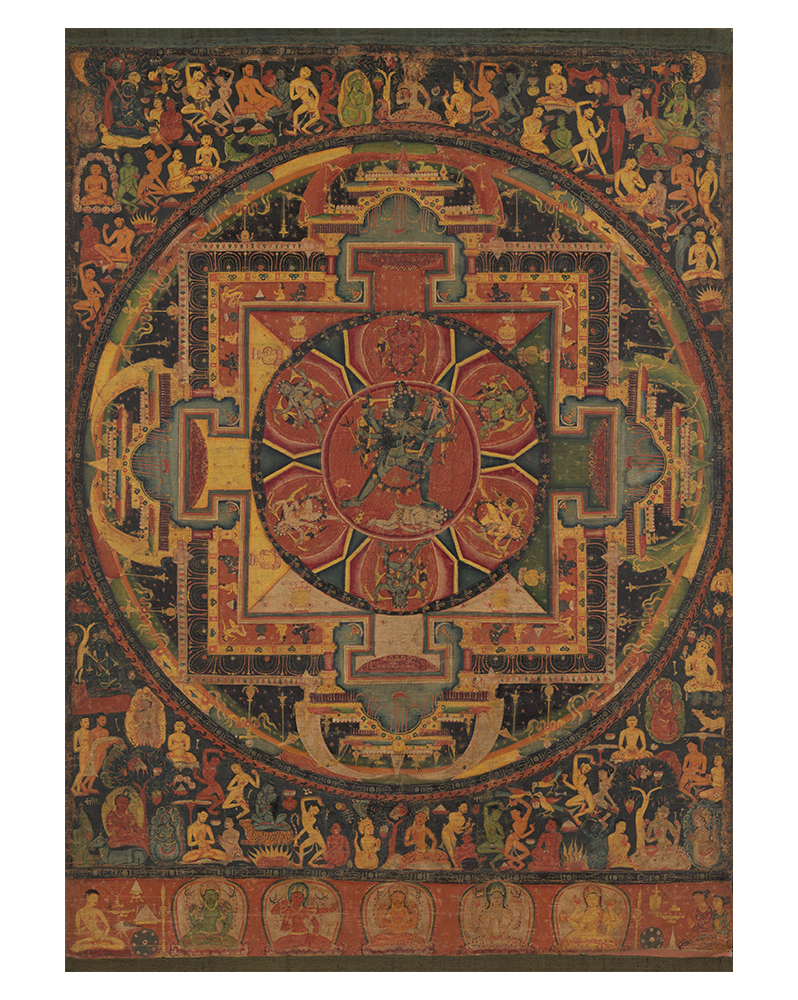
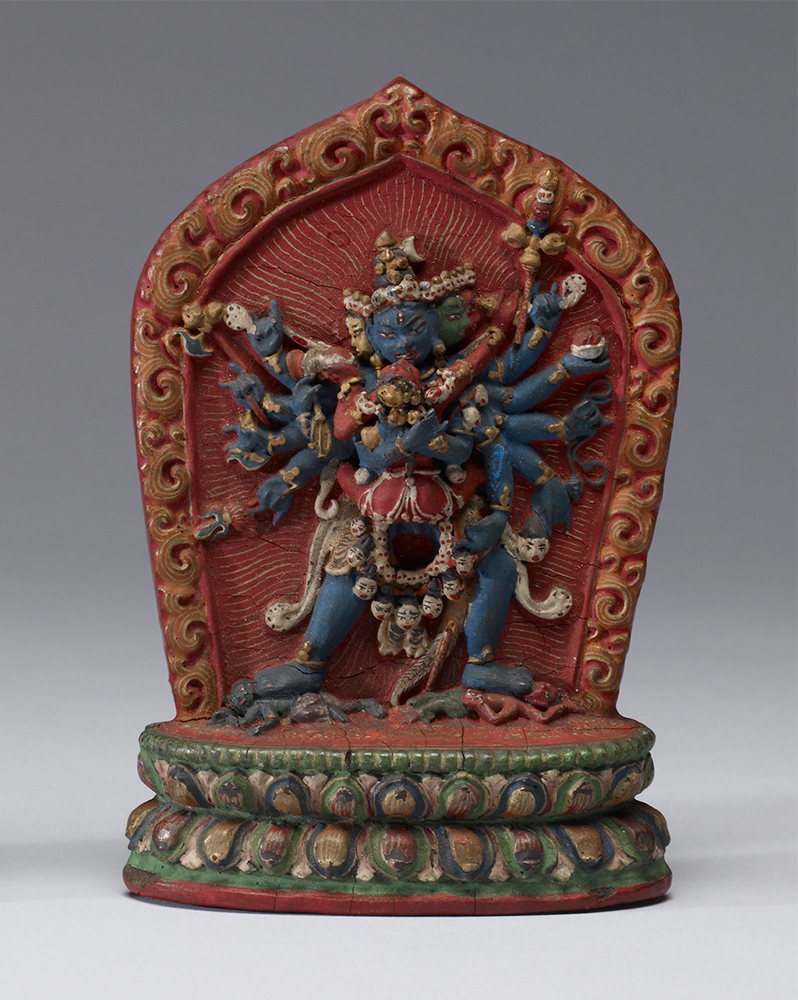
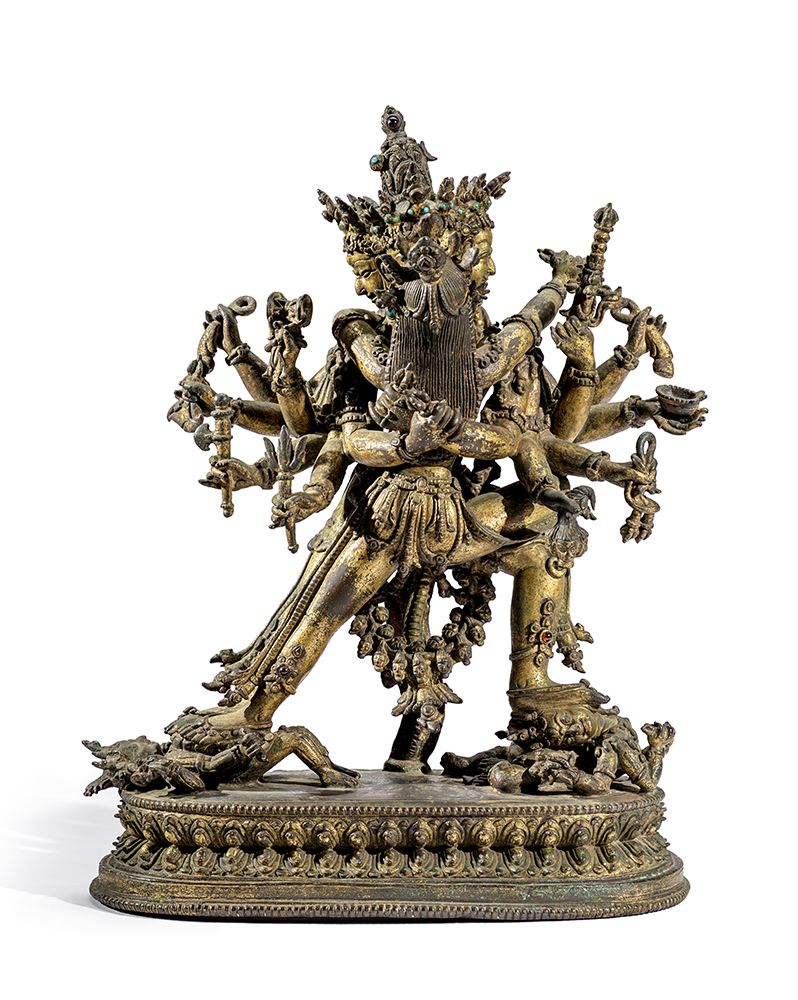
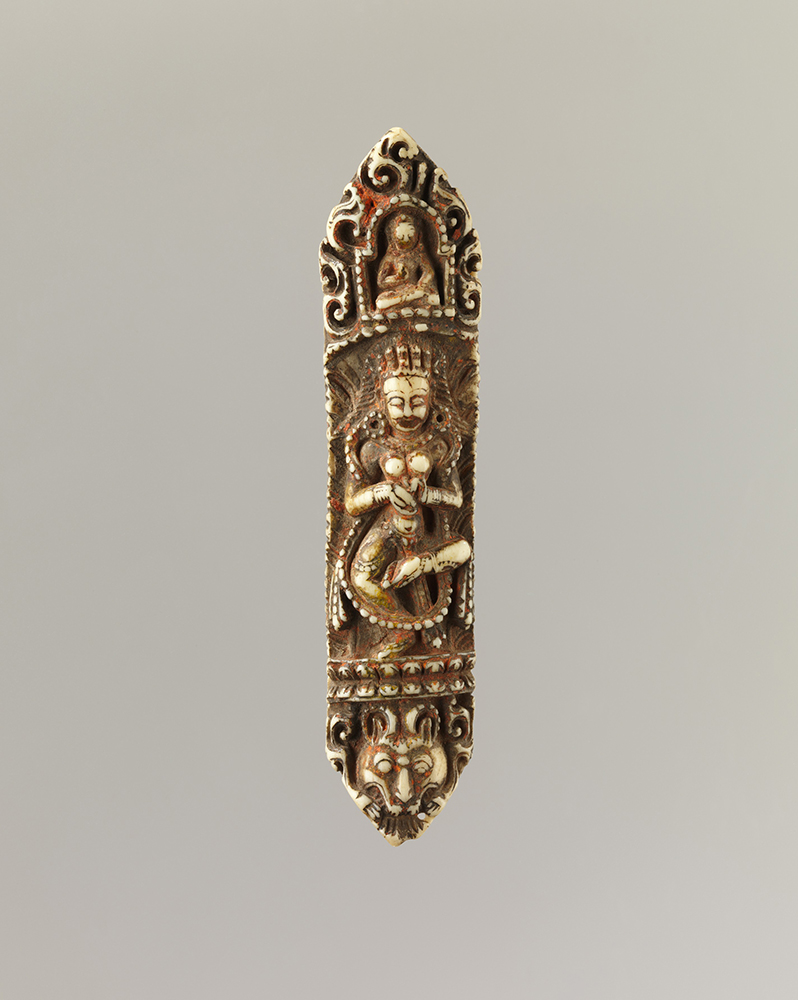
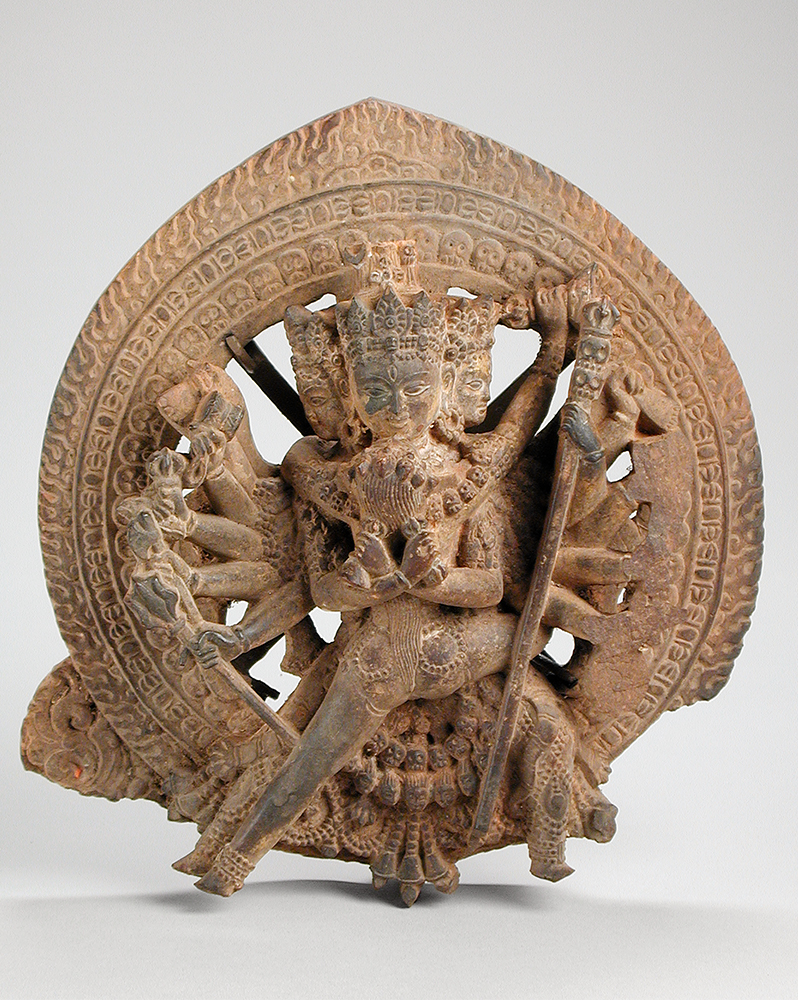
The three traditions of the Chakrasamvara have certain variations in the depictions of the iconography, however several details remain similar. In the Luipa and Krishnacharin traditions there are sixty two deities in mandalas while in the Ghantapa school there are only five figures. Sometimes, the dark blue figure is represented with just two arms. Another rendition of the deity is the white Chakrasamvara who is primarily a meditational deity also associated with prolongation of one’s lifespan.
In sculpture, especially from Tibet, Nepal and Mongolia, the deity is usually depicted in bronze with Vajravarahi, and they both trample the deities Bhairava and Kalaratri, wrathful manifestations of the Shiva and Parvati.
Chakrasamvara is a popular deity in the Himalayan region and Tibetan plateau since the second diffusion of Buddhism in the eleventh century and remains a tutelary figure in many schools of Vajrayana Buddhism and appears in the murals of several monasteries in the region.
First published: 22 November 2023
Image Gallery
Bibliography
Dina Bangdel, “Art in the Ritual Context: The Chakrasamvara Tradition in Newar Buddhism.” Orientations. Vol 34, No 8, 2003.
“Buddhist Deity: Chakrasamvara.” Himalayan Art Resources. Accessed 18 January 2023. https://www.himalayanart.org/search/set.cfm?setID=161
“The Buddhist Deity Chakrasamvara.” Google Arts and Culture. Accessed 18 January 2023. https://artsandculture.google.com/asset/the-buddhist-deity-chakrasamvara/4gHbUnr9W9uXwQ?hl=en
“Chakrasamvara in Union with Vajravarahi.” Rubin Museum. Accessed 18 January 2023. https://rubinmuseum.org/collection/artwork/chakrasamvara-in-union-with-vajravarahi
“Chakrasamvara and Vajravarahi in Sexual Embrace.” Philadelphia Museum of Art. Accessed 18 January 2023. https://philamuseum.org/collection/object/88549
Feedback