-
ChicagoImpart Encyclopedia of Art. "Saptamatrikas." November 22, 2023. https://imp-art.org/articles/saptamatrikas/.
-
MLA"Saptamatrikas." Impart Encyclopedia of Art, Nov. 22, 2023, https://imp-art.org/articles/saptamatrikas/.
-
HarvardImpart Encyclopedia of Art (2023) Saptamatrikas. Available at: https://imp-art.org/articles/saptamatrikas/ (Accessed: 21 September 2026).
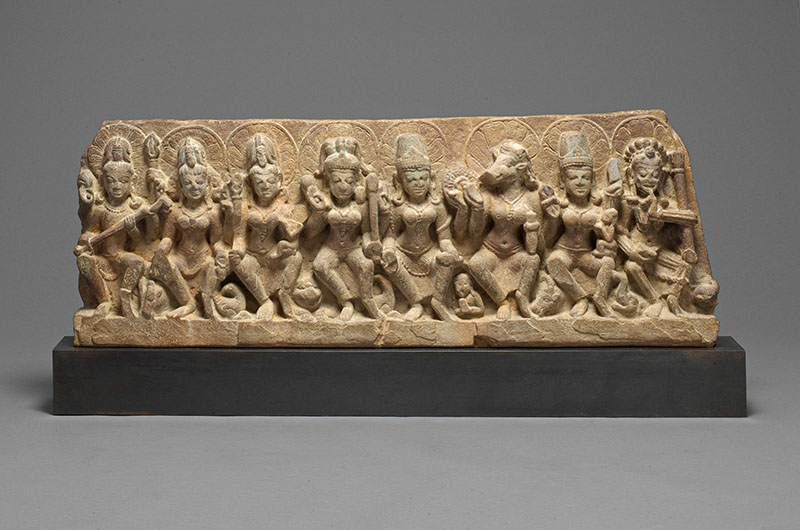
A group of goddesses usually depicted together, the Saptamatrikas, meaning ‘seven mothers’ in Sanskrit, are believed to be emanations of Devi, or the Great Goddess, and symbolise different aspects of the divine feminine energy, or shakti. The goddesses are ascribed a number of qualities, which include protection, destruction, and benevolence.
Six of the seven goddesses are also considered emanations of a god, who can be considered the divine male counterpart or purusha, and they are depicted with the same weapons and mounts as the gods. The goddesses, listed in the order they are typically depicted in, are Brahmani, the four-headed counterpart of Brahma; Maheswari, the counterpart of Shiva, who is also known as Maheshwar; Kaumari, the counterpart of Kumara, also known as Kartikeya, Skanda or Murugan; Vaishnavi, or Narayani, the counterpart of Vishnu, also known as Narayana; the boar-headed Varahi, counterpart of Varaha; Indrani or Aindri, the counterpart of Indra; and Chamunda, the only goddess who is not the counterpart of a male god, but represents a female form of Shiva’s power. Occasionally, the goddesses are depicted as a larger group of eight or nine, with the presence of Maha Lakshmi, Chandika, Narasimhi or Vinayaki.
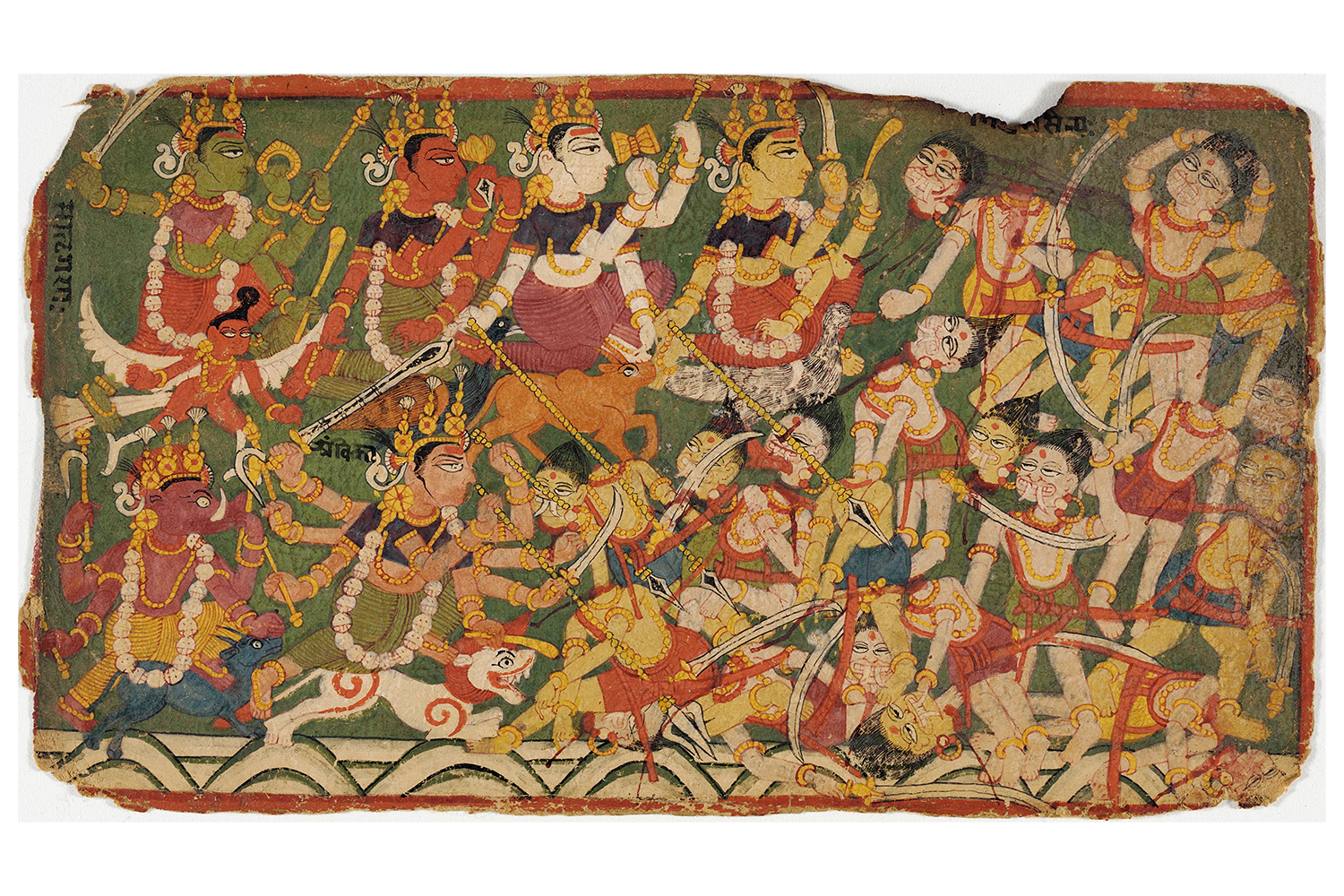
The Saptamatrikas hold great significance in the goddess-oriented sects of Hinduism and Tantrism. In Shaktism, they are believed to have aided Shakta Devi in her fight with the asuras. In Puranic literature, they appear in order to aid Shiva in his battle against the demon, Andhaka. In the Devi Mahatmya, the Saptamatrikas perform a similar function and help Durga vanquish the demon, Raktabija. The seven goddesses are also connected with the worship of the warrior god Kartikeya.
In most early references, the Saptamatrikas are cited as inauspicious and associated with diseases and the protection of children. It was believed that the seven goddesses had to be appeased in order to ensure the health of a child. In later mythology, however, they came to be seen primarily as protectors, though some of their early inauspicious characteristics persist.
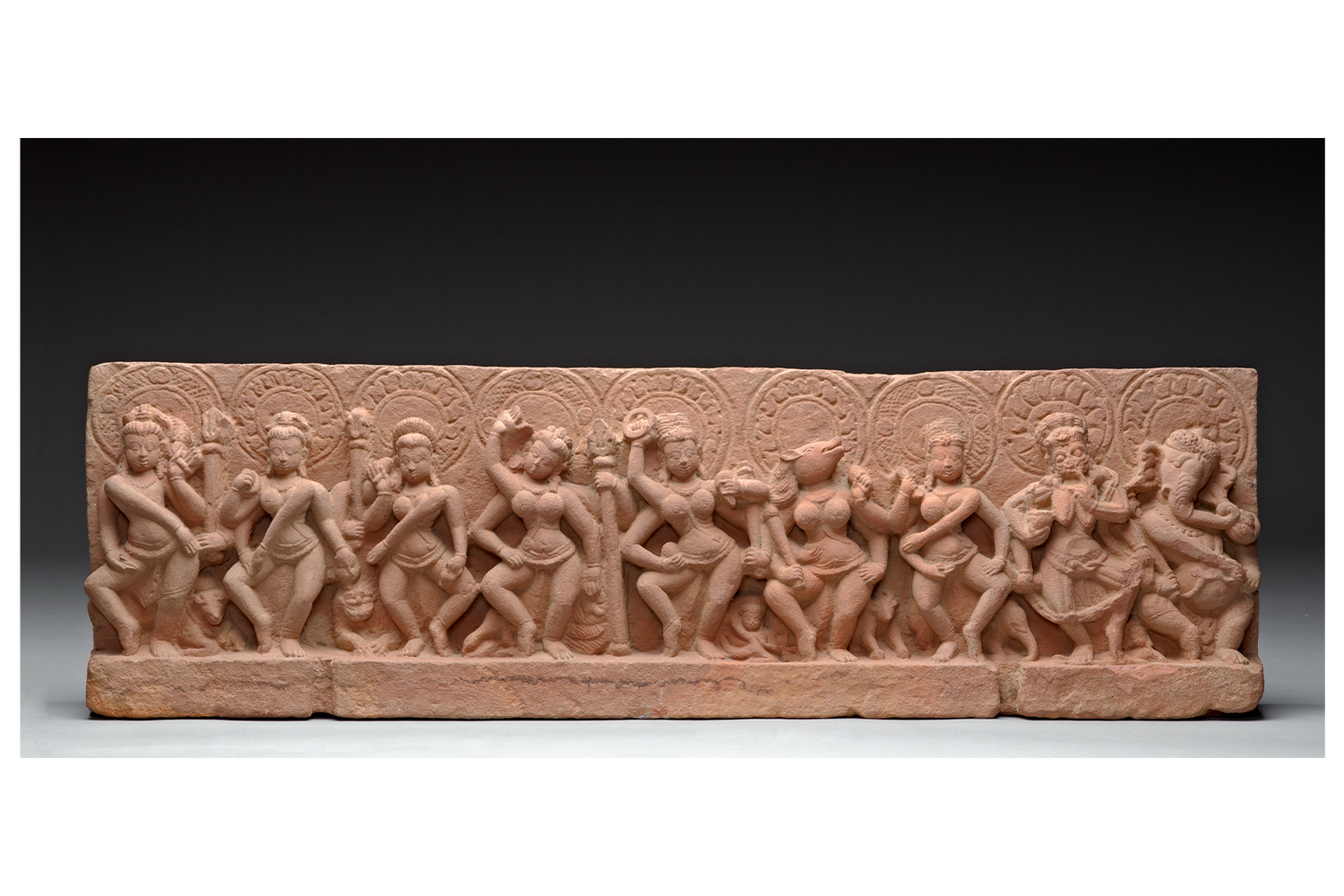
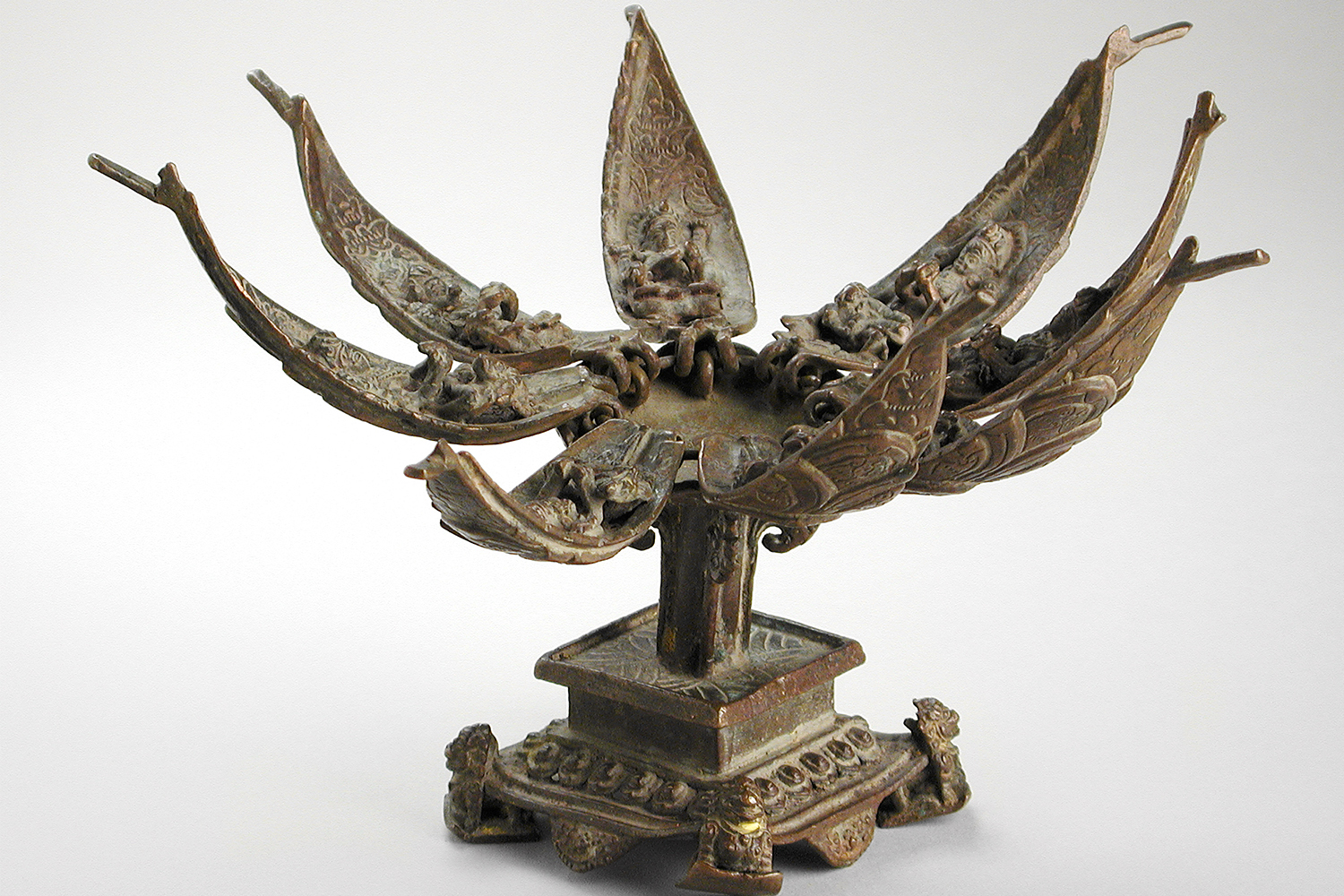
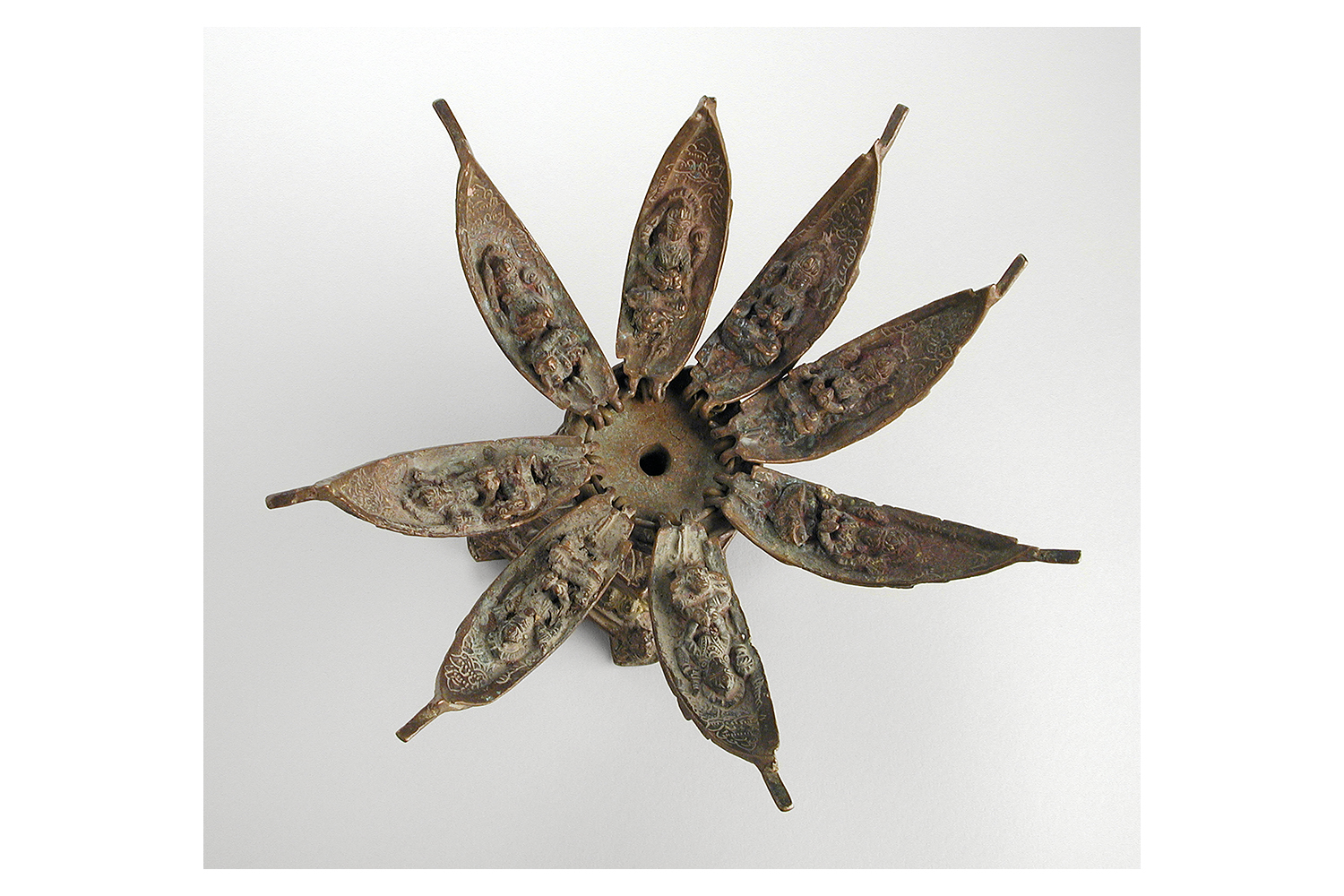
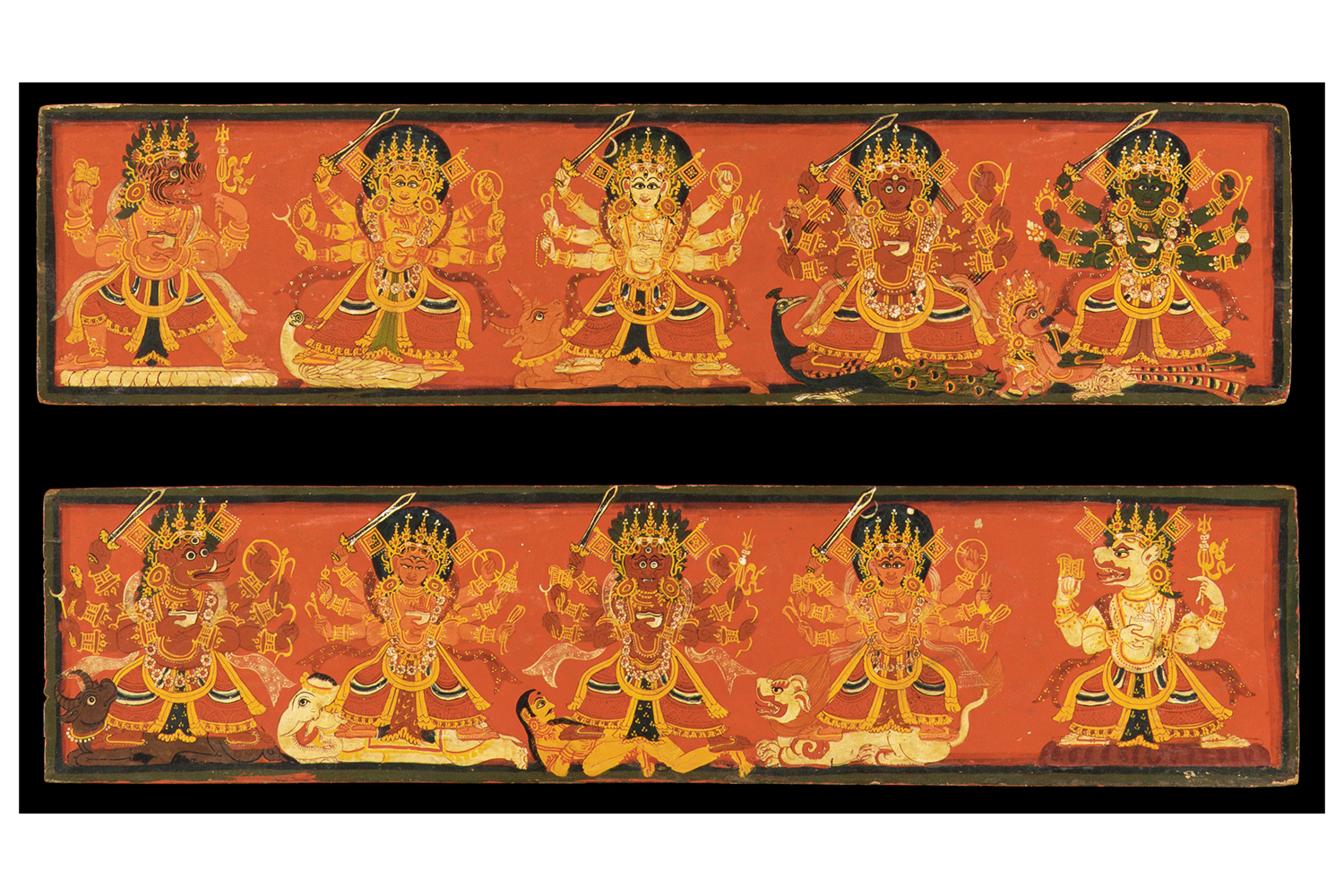
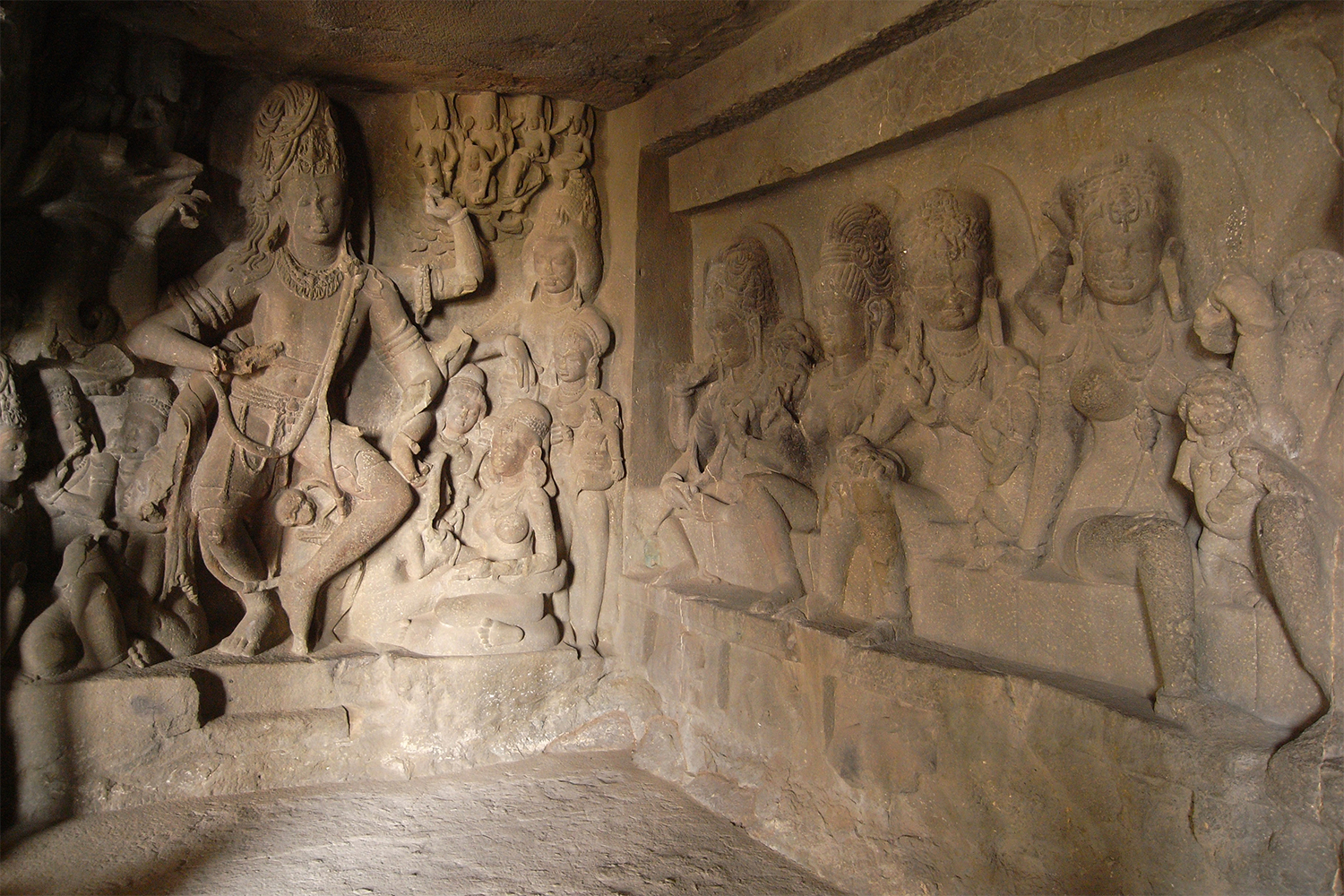
The earliest mention of the Saptamatrikas appears in the Markandeya Purana, dated to between the fourth and sixth centuries, and their iconographic features have been described in several Puranic and Agamic texts, the Devi Mahatmya and also the in the Mahabharata. The earliest sculptures of the Saptamatrika are from the Kushana period, dating back to the third century BCE. These figures emphasise the maternal as well as destructive characteristics of the Saptamatrikas. A more complex iconographic representation of the group became common during the early medieval period, between the fourth and sixth centuries. During this time, the Saptamatrikas were recognised as goddesses who patronised the royal courts and the Gupta rulers had them carved on royal monuments in order to strengthen the loyalty and adherence of their armies. Other dynasties that commissioned Saptamatrika imagery include the Gurjara-Pratiharas, the Chandellas, and the Chalukyas.
The Saptamatrikas are generally carved in relief stone slabs in their sequential order. They are typically flanked by two male figures: a malevolent form of Shiva as Virabhadra, and his son Ganesha. The Saptamatrikas are popularly considered Shaivite goddesses, as evidenced by their image at the Rameshwara Cave, Ellora, a cave dedicated to Shiva,one of four depictions in Ellora.
In Tantrism, the Saptamtrikas are part of the sixty-four or eighty-one yoginis that are worshipped. The eighty-one yoginis are believed to have evolved from a group of nine matrikas, instead of seven, with the other two goddesses being Chandika and Mahalakshmi. According to the Natyashastra, the Saptamatrikas are to be worshipped before a dance performance. The Saptamatrikas also appear in artwork from the eleventh century, including in Rajasthani miniature paintings, as well as in paintings from regional schools of Nepali art.
First published: 22 November 2023
Image Gallery
Bibliography
Dehejia, Vidya. Yogini Cult and Temples: A Tantric Tradition. New Delhi: National Museum (1986)
Google Arts and Culture. “The Seven Mother Goddesses (Saptamatrika).” Accessed January 11, 2023. https://artsandculture.google.com/asset/the-seven-mother-goddesses-saptamatrika-unknown/OQH5DG9lnWkEEw?hl=en.
Goswami, Meghali, Ila Gupta and P Jha, “Sapta Matrikas In Indian Art And Their Significance In Indian Sculpture And Ethos: A Critical Study.” Anistoriton (2005). Accessed January 11, 2023. https://www.researchgate.net/profile/Pashupati-Jha/publication/242217256_Sapta_matrikas_in_indian_art_and_their_significance_in_indian_sculpture_and_ethos_a_critical_study/Links/5a8bb4b20f7e9b1a9555beed/Sapta-Matrikas-In-Indian-Art-And-Their-Significance-In-Indian-Sculpture-And-Ethos-A-Critical-Study.pdf.
Kinsley, David. Hindu Goddesses: Vision of the Divine Feminine in the Hindu Religious Traditions. India: Motilal Banarsidass (1988).
Feedback