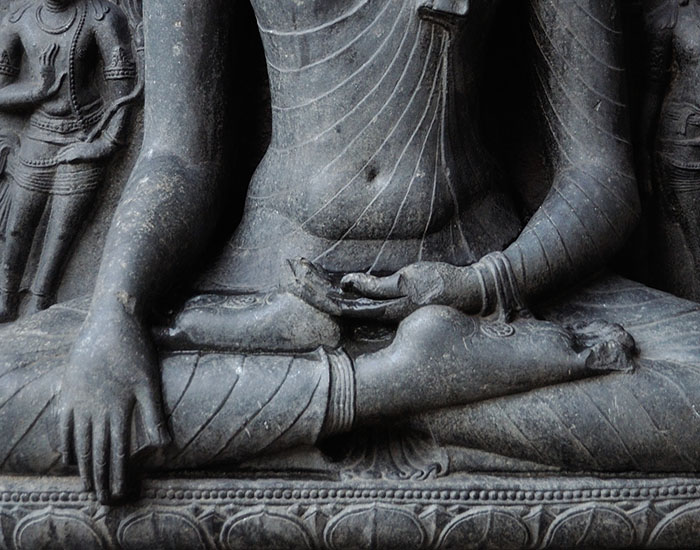
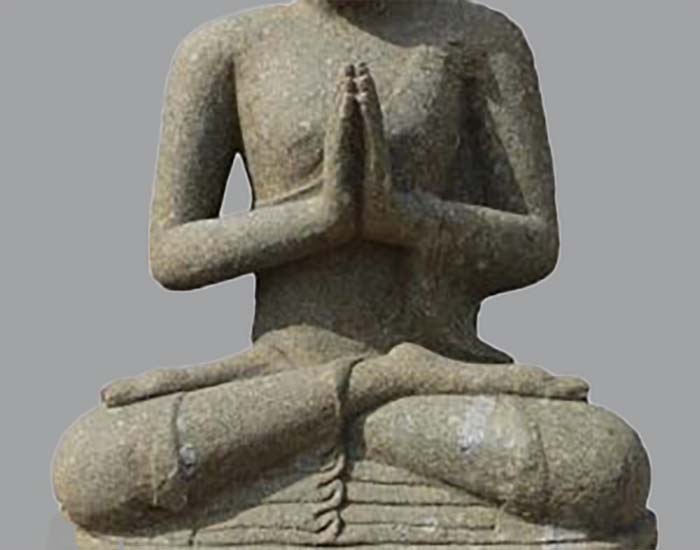
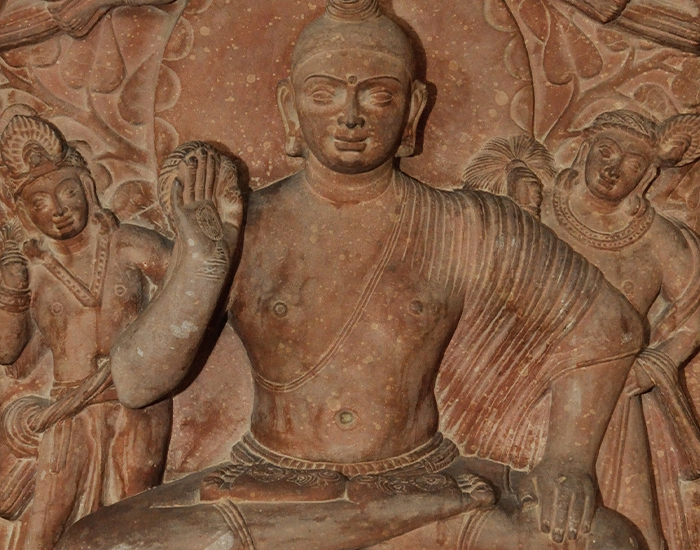
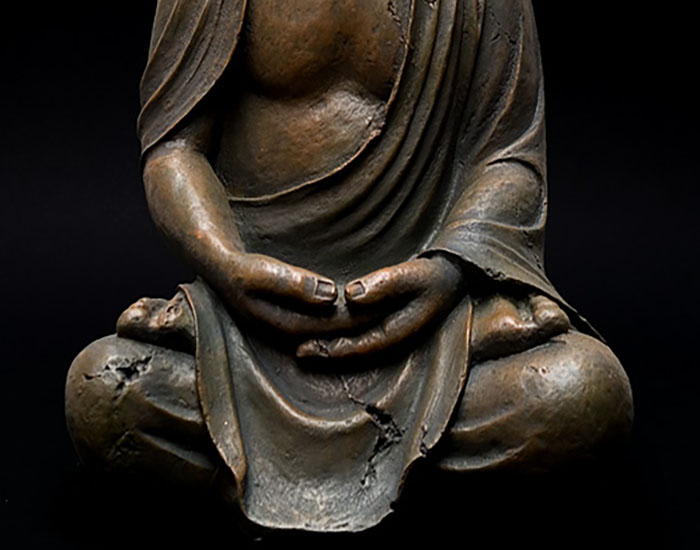
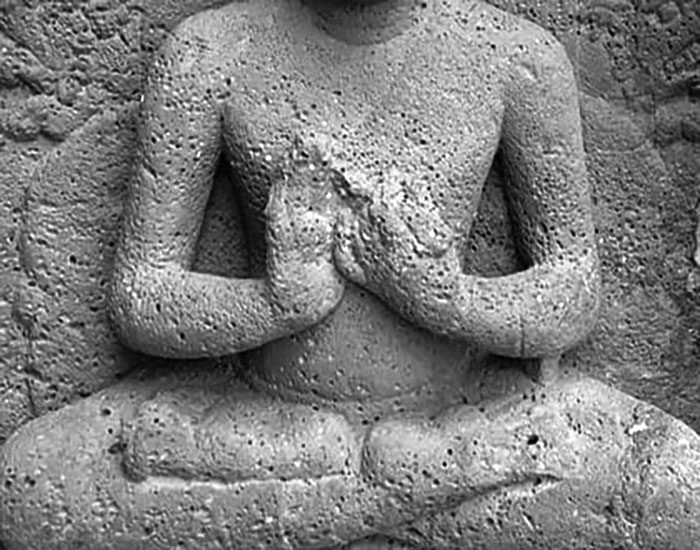
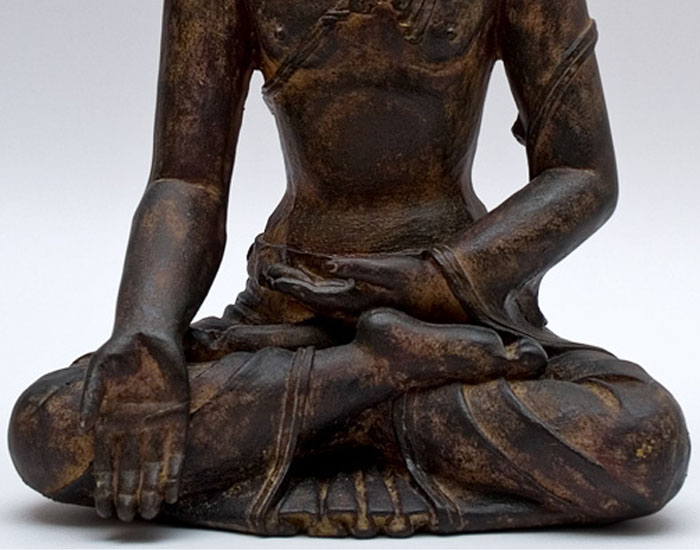
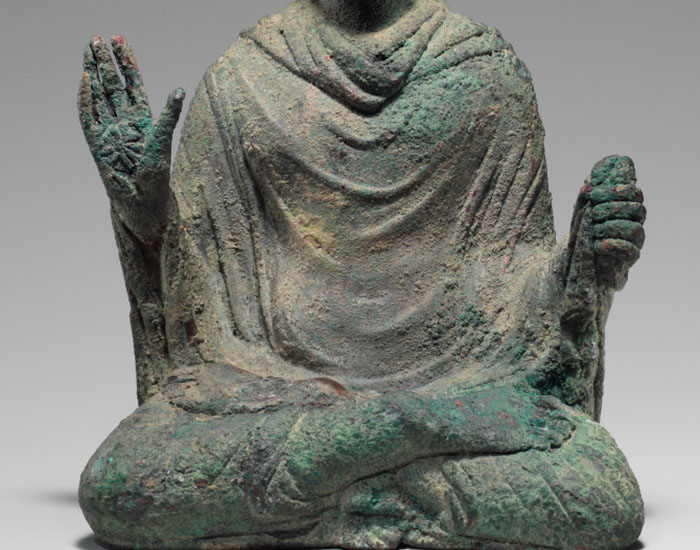
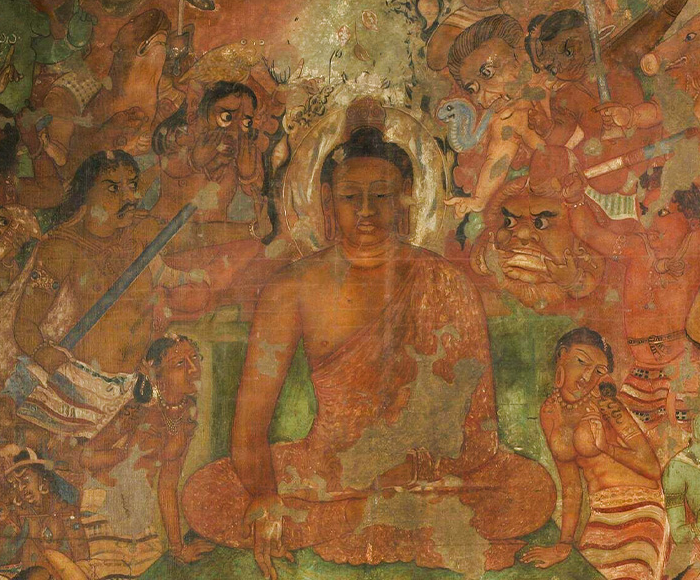
Mudras are a set of hand gestures that serve as symbols in Buddhist art and iconography, representing the Buddha’s various roles and states of mind. Their earliest instances are seen in sculpture from Gandhara in the first century CE, and they appear to have been codified by the third century CE.
The fingers of the hand are thought to represent five levels of consciousness needed to attain Buddhahood, therefore various gestural configurations are seen as syntheses of these factors. Mudras also represent the dominant themes in particular episodes of the Buddha’s life, making the gestures useful as narrative and pedagogical devices for viewers familiar with the symbolism. They are typically shown being performed by figures of religious authority such as the Buddha and bodhisattvas.
Of the large number of such gestures, the five primary mudras are the abhaya mudra (the most common), the dharmachakra mudra, the bhumisparsha mudra, the varada mudra and the dhyana mudra. They are also associated, respectively, with the five celestial Buddha-aspects known as the Tathagata or Dhyani Buddhas, and accordingly form part of their iconography.
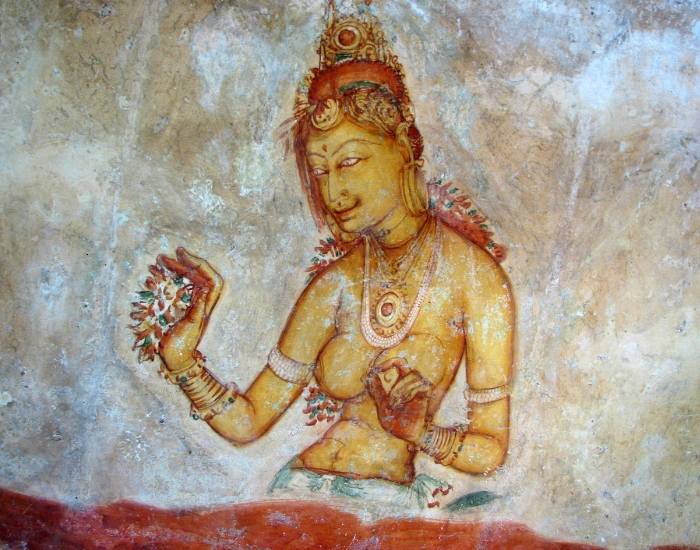
Mudras are also found in Hindu and Jain iconography, albeit to a lesser extent and only after being established in Buddhism. Classical dance forms, particularly those in India that have emerged in association with religion, also feature a repertoire of mudras.
Learn more about the common mudras through these articles.