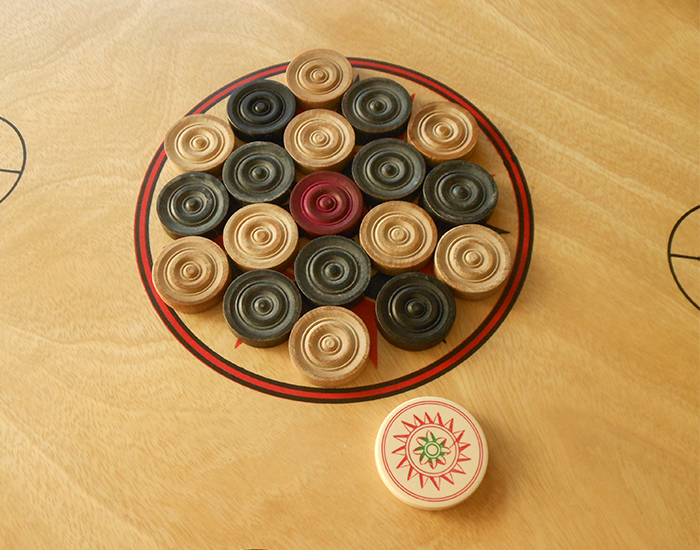
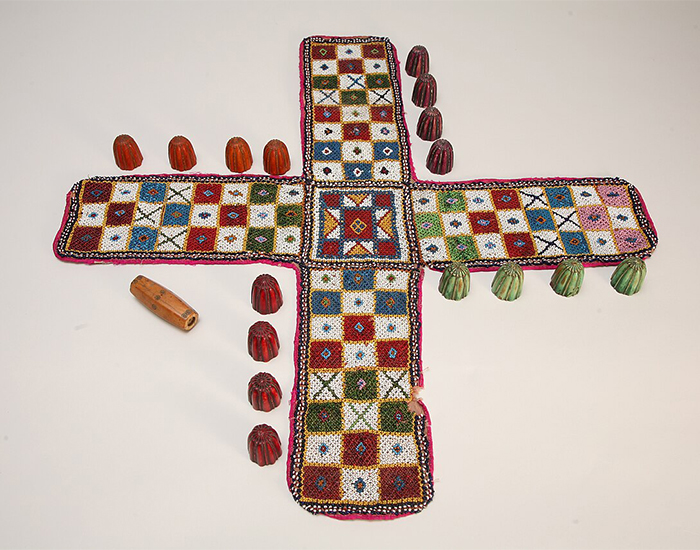
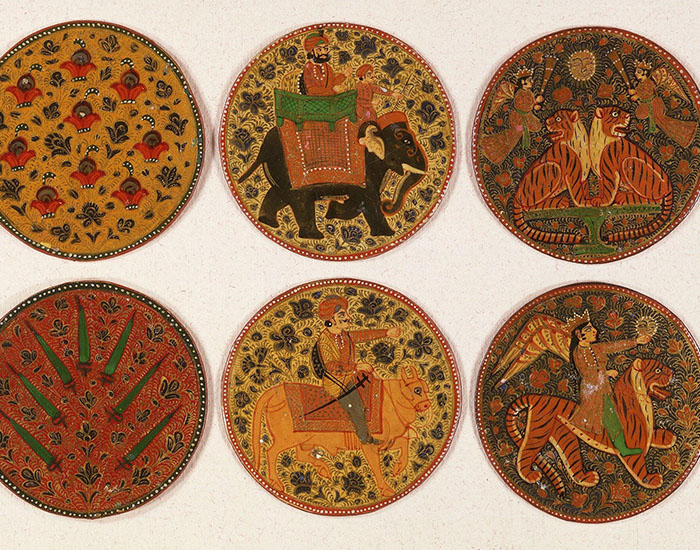
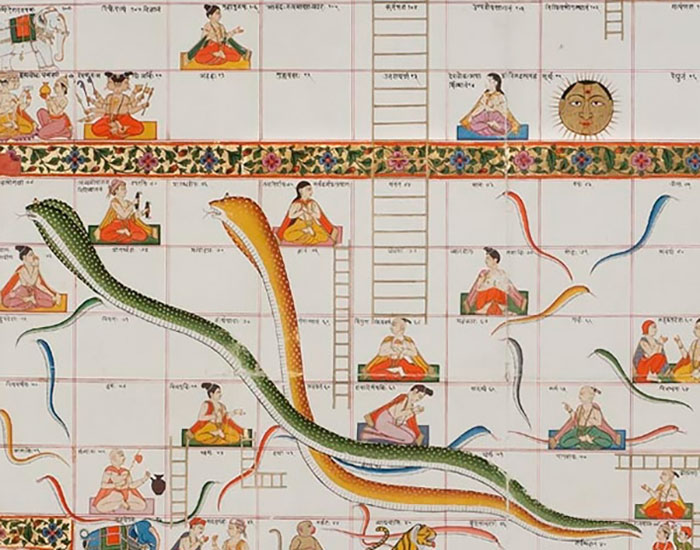
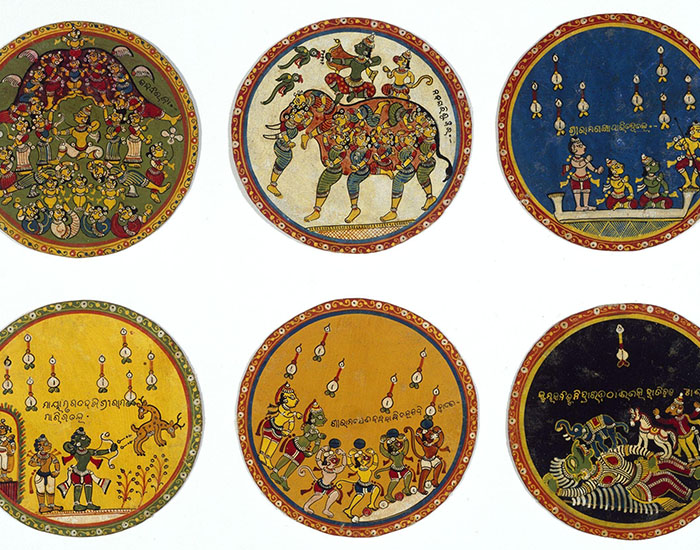
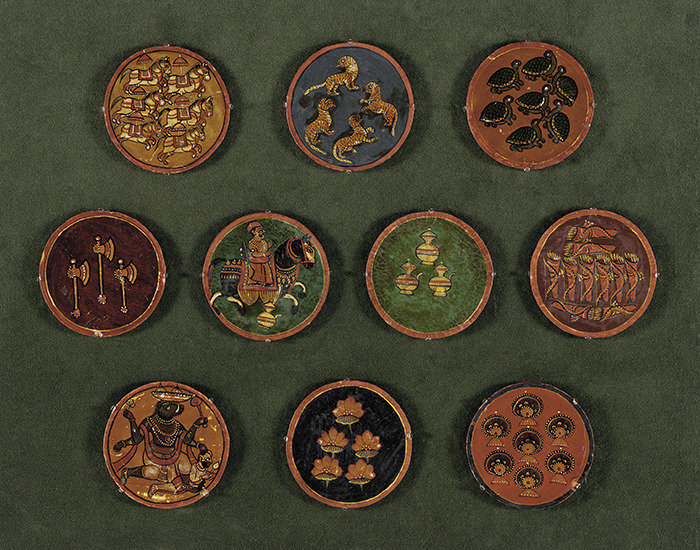
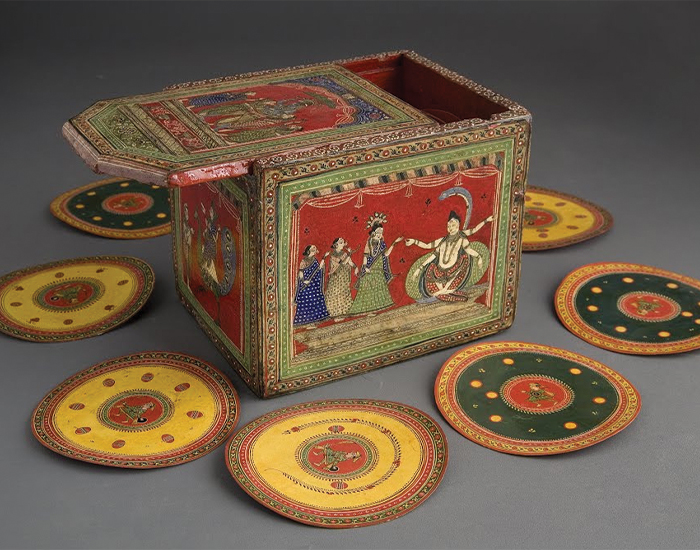
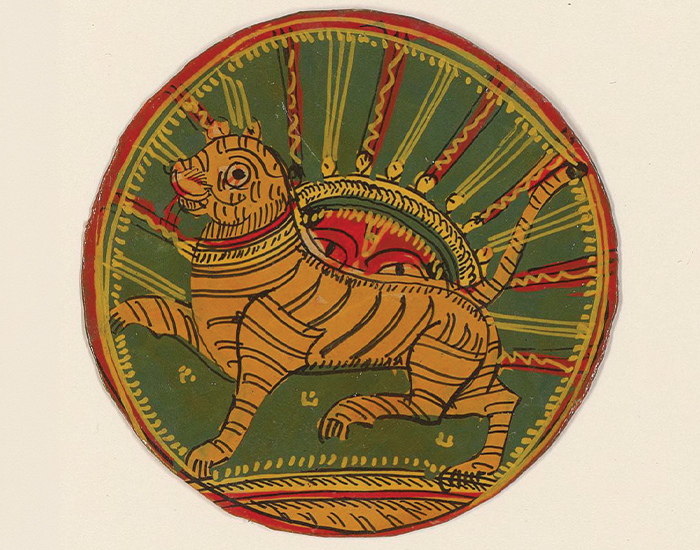
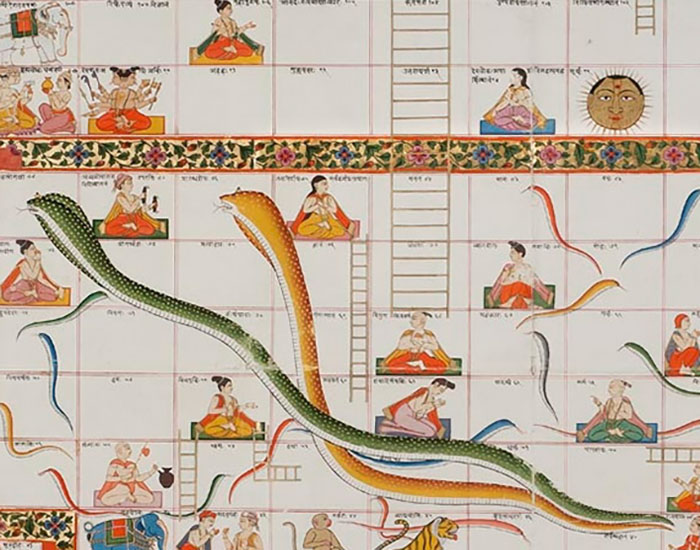
The Indian subcontinent is home to several traditional tabletop games, including some that have come to be known by other names today, such as Snakes and Ladders (originally known as Moksha Patam) and Ludo (Pachisi). Games and game ideas moved to and from India along trade routes: Ganjifa was brought to India by the Mughals, Naqsh was a confluence of Ganjifa and card games played by Portuguese sailors, and Pallanguzhi arrived through trade with eastern Africa, where its ancestor mancala was invented. Games like Moksha Patam, Carrom and Pachisi travelled to Europe, UK and USA through colonial agents.
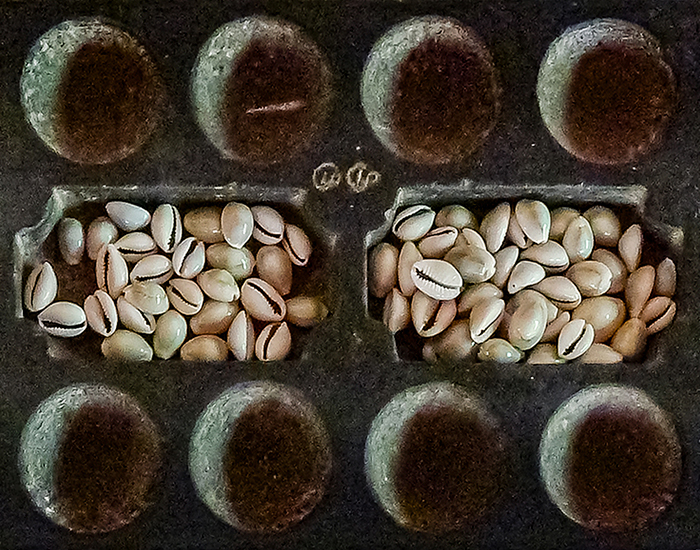
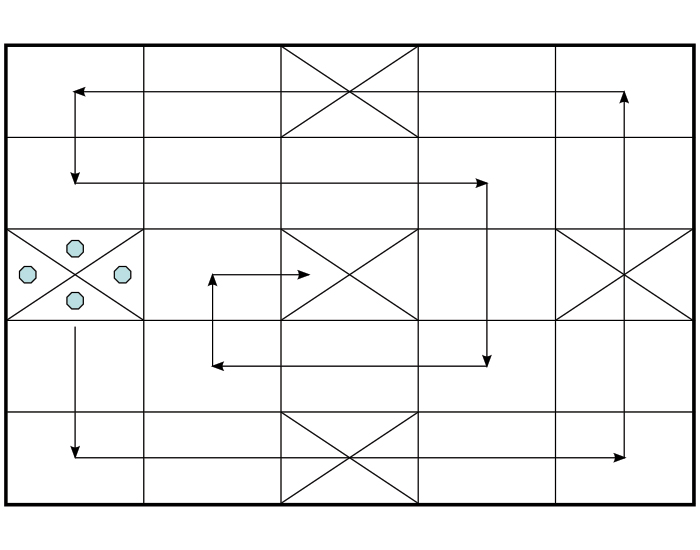
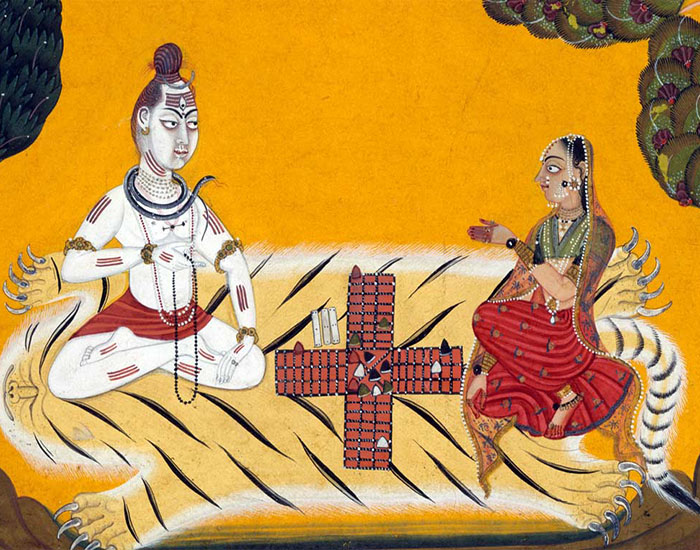
Indian board games are typically cross and circle games with randomisers, played by two to four players. The players’ status was reflected in the choice of game or the type of board, with emperors like Akbar playing a life-sized version of Chaupar. At one time considered talismans and even a form of currency, cowrie shells were used as an affordable randomiser or token for board games by most people, while wealthier classes used ivory dice.
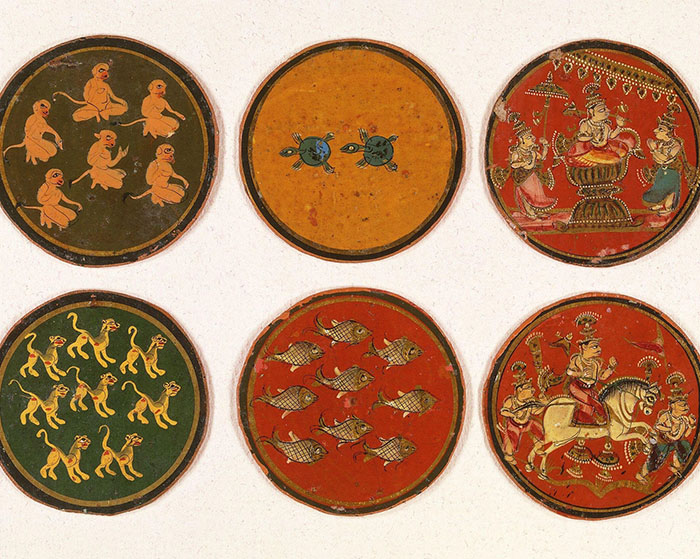
The idea of luck in games, extrapolated as divine play, is a recurring theme in Indian mythology, notably in the Mahabharata and the Skanda Purana. Most Indian tabletop games contain underlying moral commentary and heavy symbolism. Among variations of Ganjifa, the images on the cards and the suit divisions are indicative of the social and religious context from which they emerged.