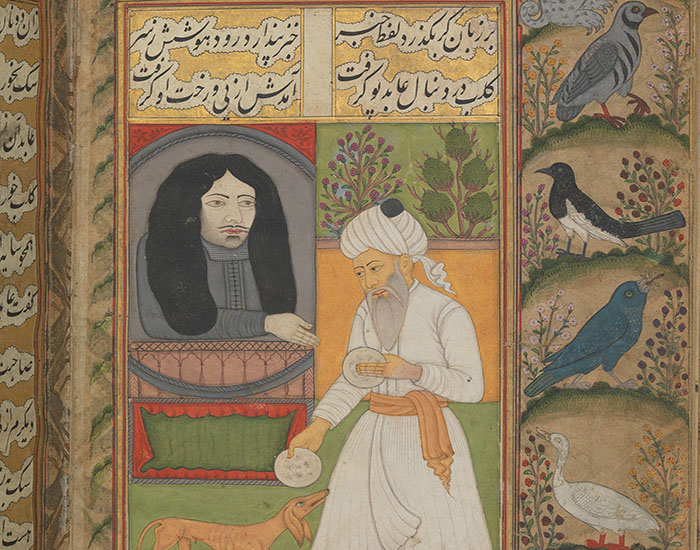
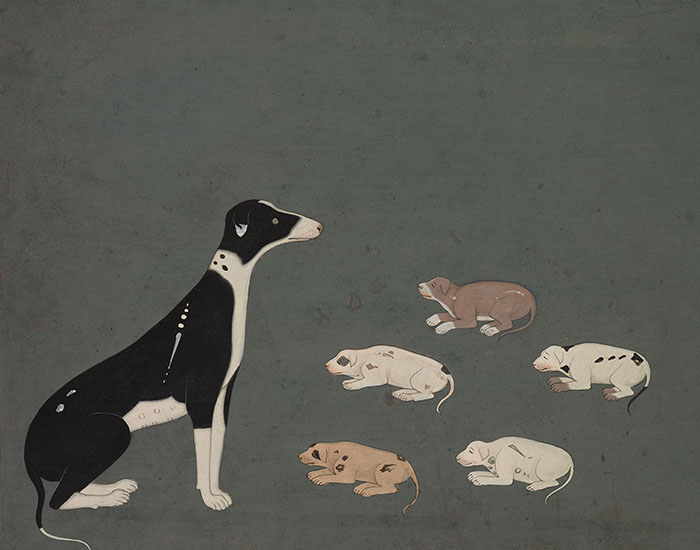
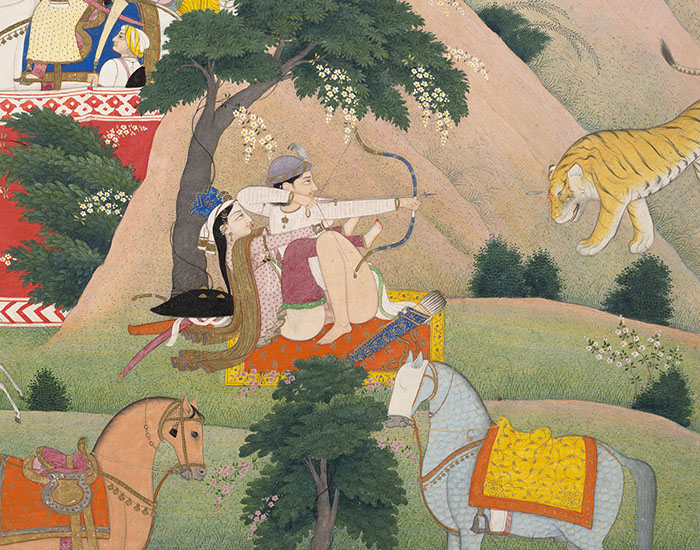
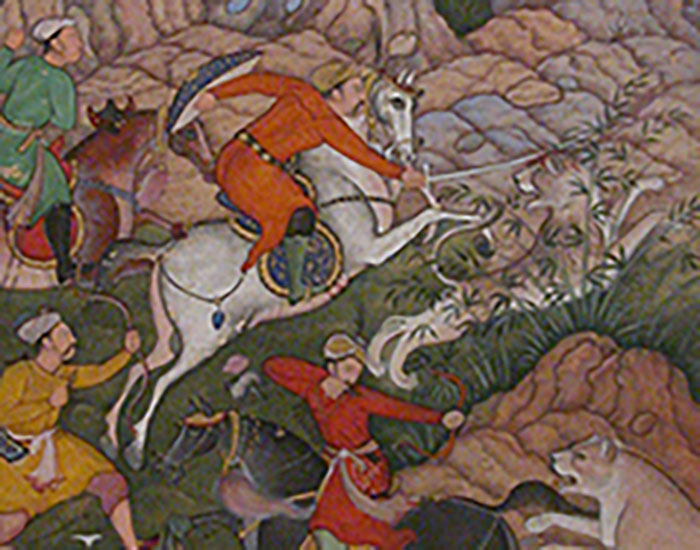
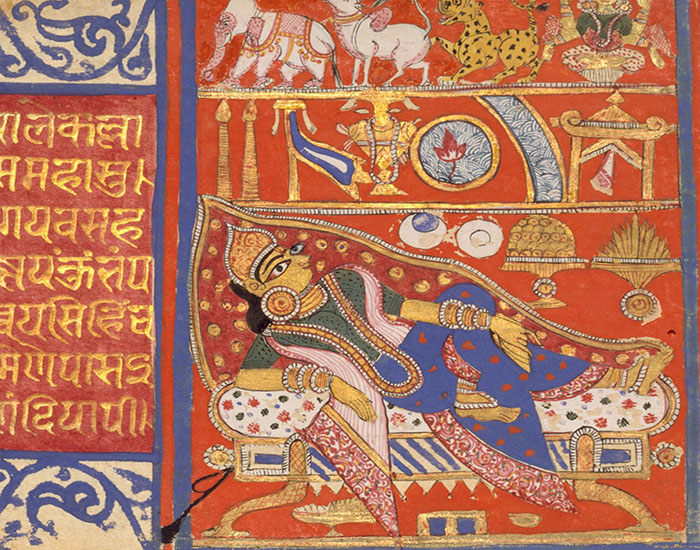
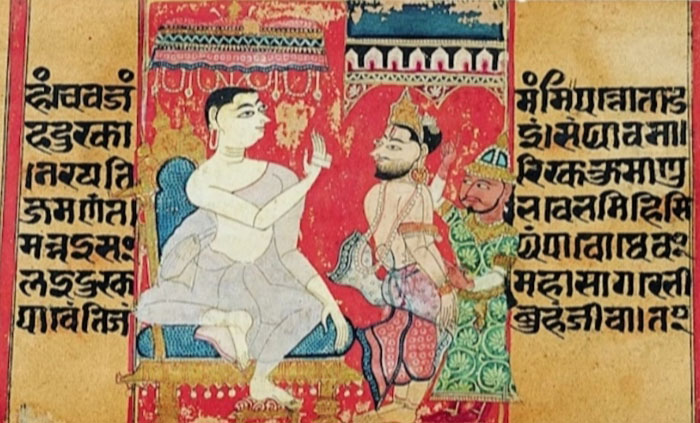
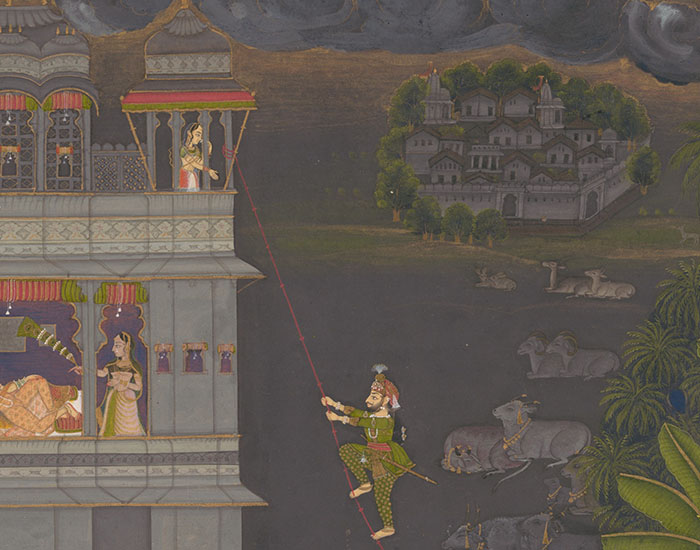
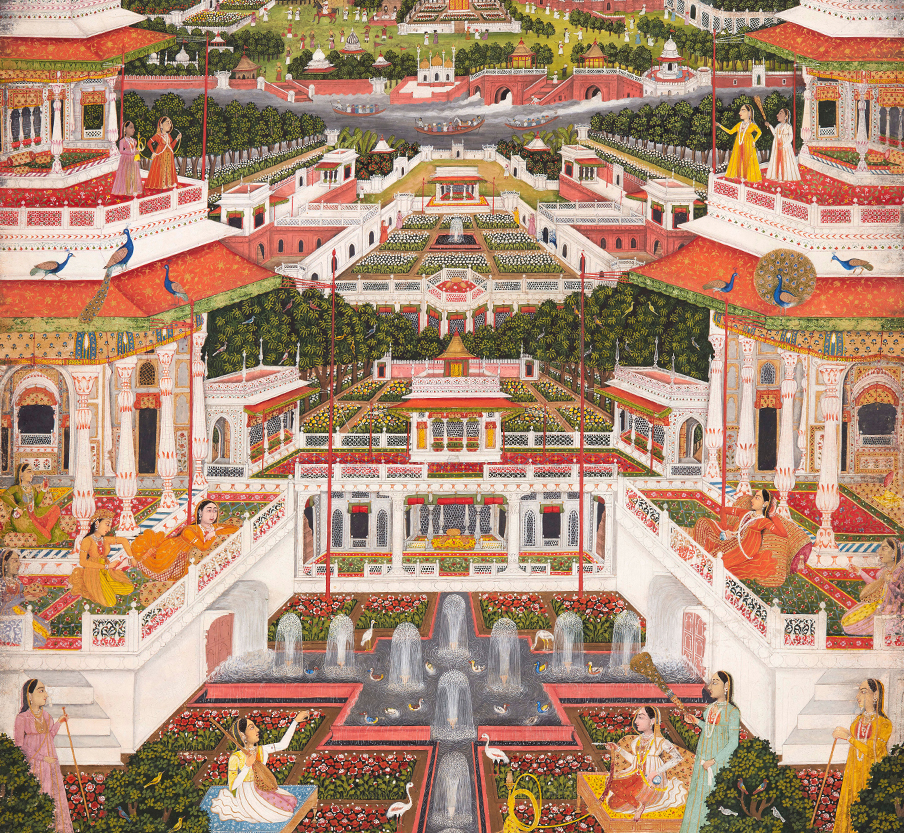
Known for their intricacy and small scale, miniature paintings in medieval India were composed into personal albums (or muraqqas) and manuscripts where they illustrated the accompanying text. Such manuscripts largely consisted of romances, epics, works of fantasy, travel literature, religious texts and biographies.
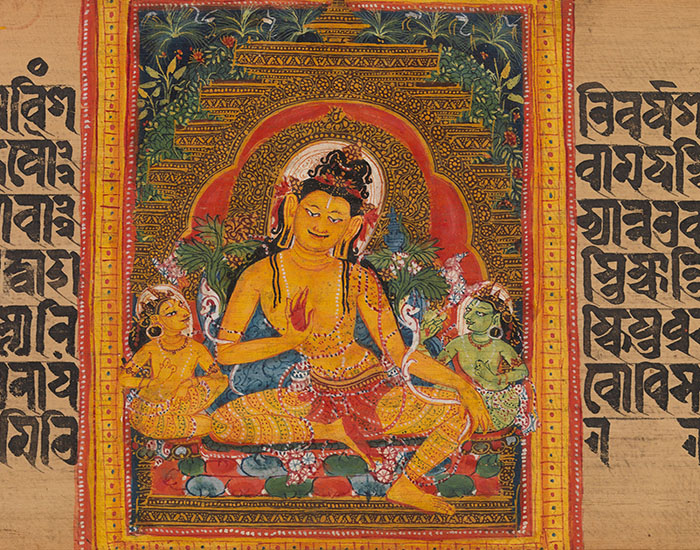
The tradition of miniature painting in the Indian subcontinent has been traced to palm leaf manuscripts made in the ninth century under Pala patronage in eastern India and Nepal. From the eleventh century onwards, Jain manuscript painting began to be practised in the west and central India, first on palm leaf and then, with the introduction of paper from West Asia in the fourteenth century, in large paper codices as well. These palm leaf paintings had a limited but bold colour palette and used innovative compositions to pair the text with images.
The painting style of the Safavid court in Persia exerted a heavy influence on Mughal and Deccan miniature painting in the late sixteenth century. Mughal painting was especially influential due to the empire’s political power, and this naturalistic, restrained and yet heavily ornamented style was often imitated by smaller kingdoms. Rajasthani, Deccan, Maratha and Pahari courts often employed artists who had trained in the Mughal style, although these schools eventually came to be known for their own unique styles, techniques and subject matter.