-
ChicagoImpart Encyclopedia of Art. "Dhokra." March 27, 2023. https://imp-art.org/articles/dhokra/.
-
MLA"Dhokra." Impart Encyclopedia of Art, Mar. 27, 2023, https://imp-art.org/articles/dhokra/.
-
HarvardImpart Encyclopedia of Art (2023) Dhokra. Available at: https://imp-art.org/articles/dhokra/ (Accessed: 16 October 2026).
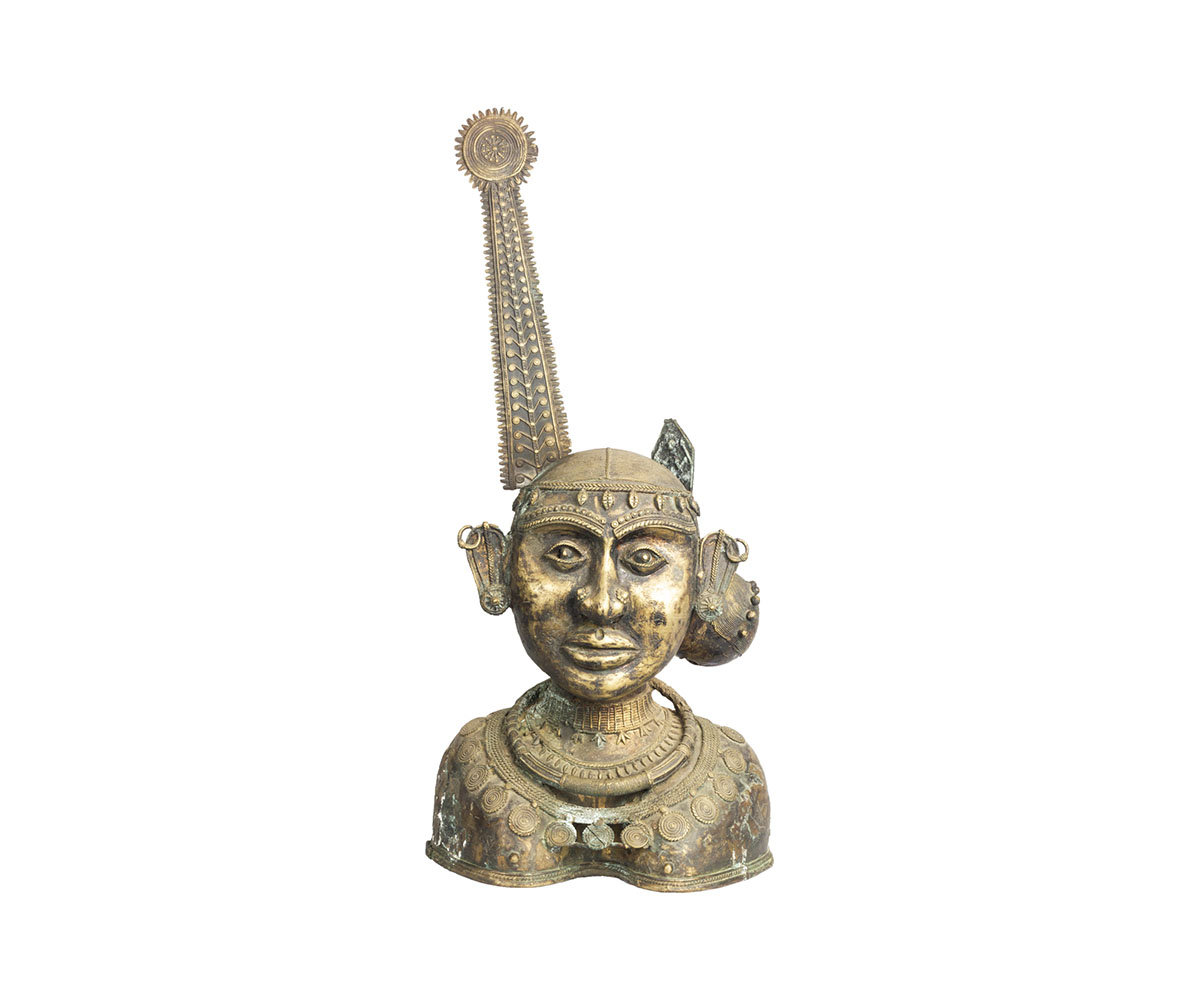
The process of casting brass, bronze and bell-metal objects using the lost-wax technique, Dhokra is a living tradition practised by various artisan communities across the present-day states of Chhattisgarh, Jharkhand, West Bengal, Telangana, Odisha and Madhya Pradesh. The use of the lost-wax technique results in the finished object featuring distinct surface decoration, such as parallel and spiral lines, latticework and pellets.
While the origins of the craft are unknown, it is likely that it was practised by nomadic communities in central and eastern India and received patronage from rulers of the kingdom of Bastar. The craft tradition derives its name from the Dhokra Damar community of metal artisans, who practise the craft in West Bengal. It was also historically practised by the Malar and Kaser communities in central and eastern India. Artisans of the Santhal community, known for their Jadupatua paintings, are also involved in Dhokra casting. Other communities involved in the craft include artisans of the Ghadwa or Gharua community in Chhattisgarh and West Bengal; the Ghontana, Chitraghasi and Ghasi communities in Odisha; the Woj or Ojari community of Telangana; and the Bharewa community of Madhya Pradesh. Major centres of the craft include Bastar and Kondagaon in Chhattisgarh; Ranchi in Jharkhand; Bankura, Birbhum and Bardhaman in West Bengal; Dhenkanal, Koraput and Mayurbhanj in Odisha; Adilabad in Telangana; and Betul in Madhya Pradesh.
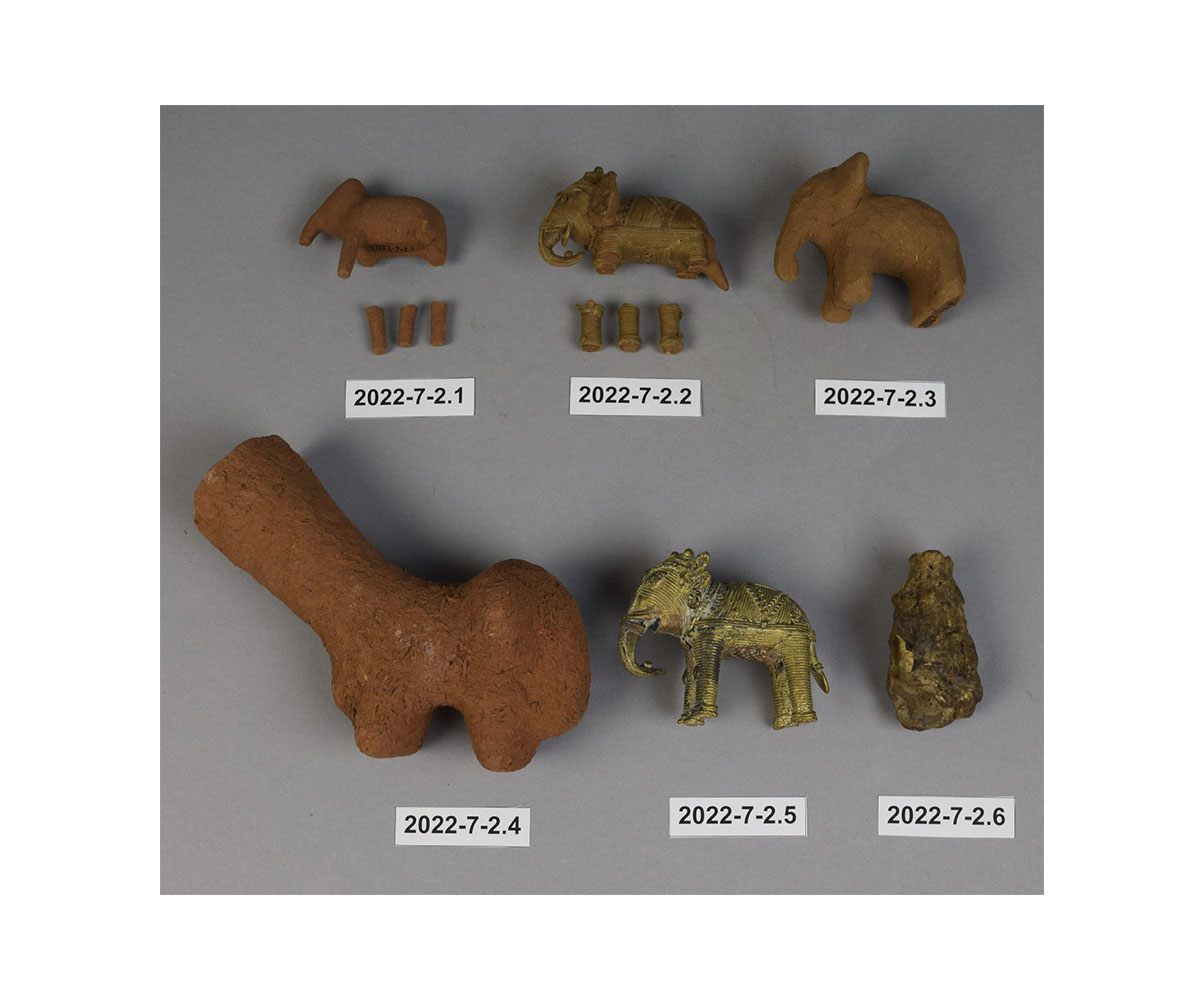
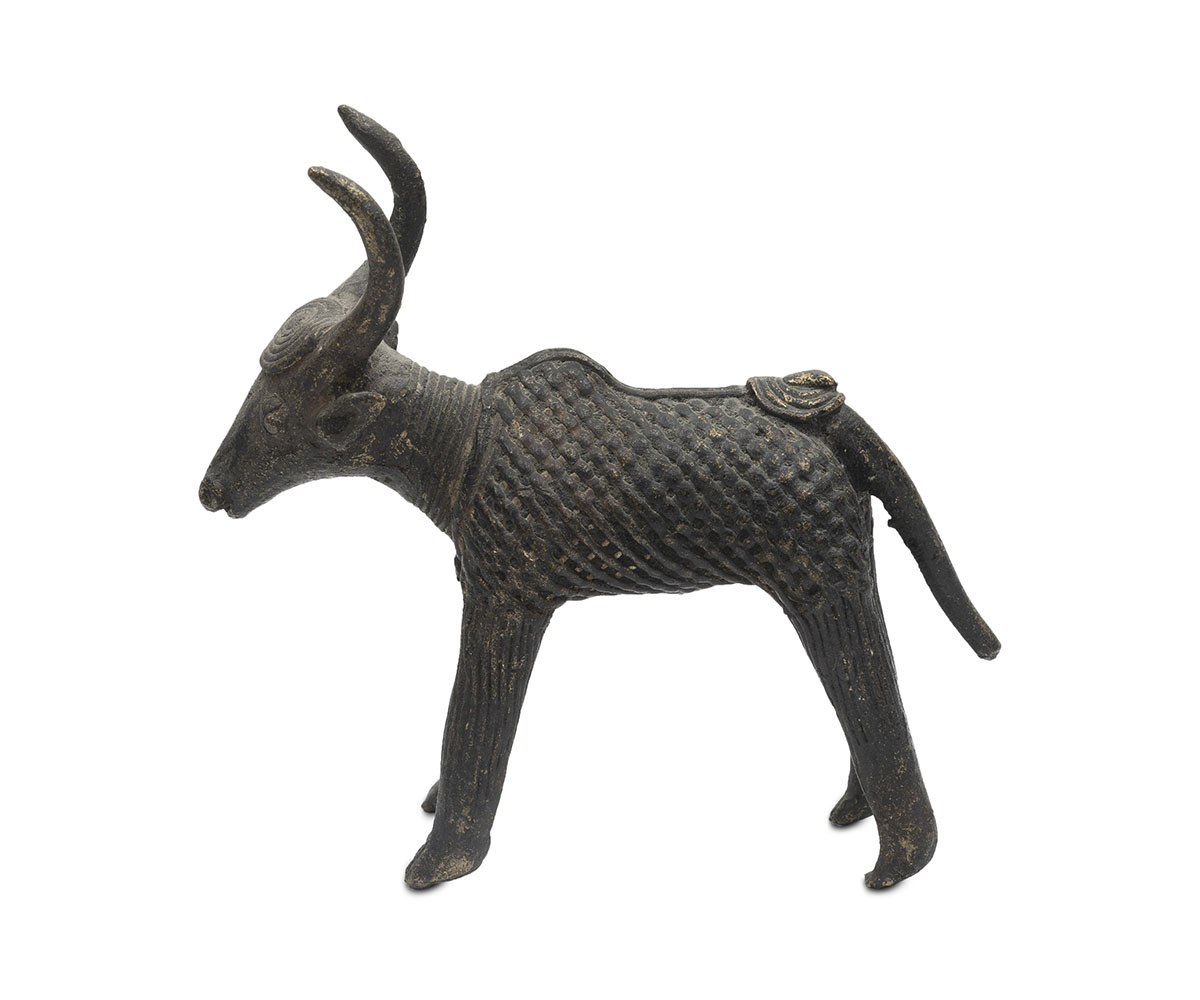
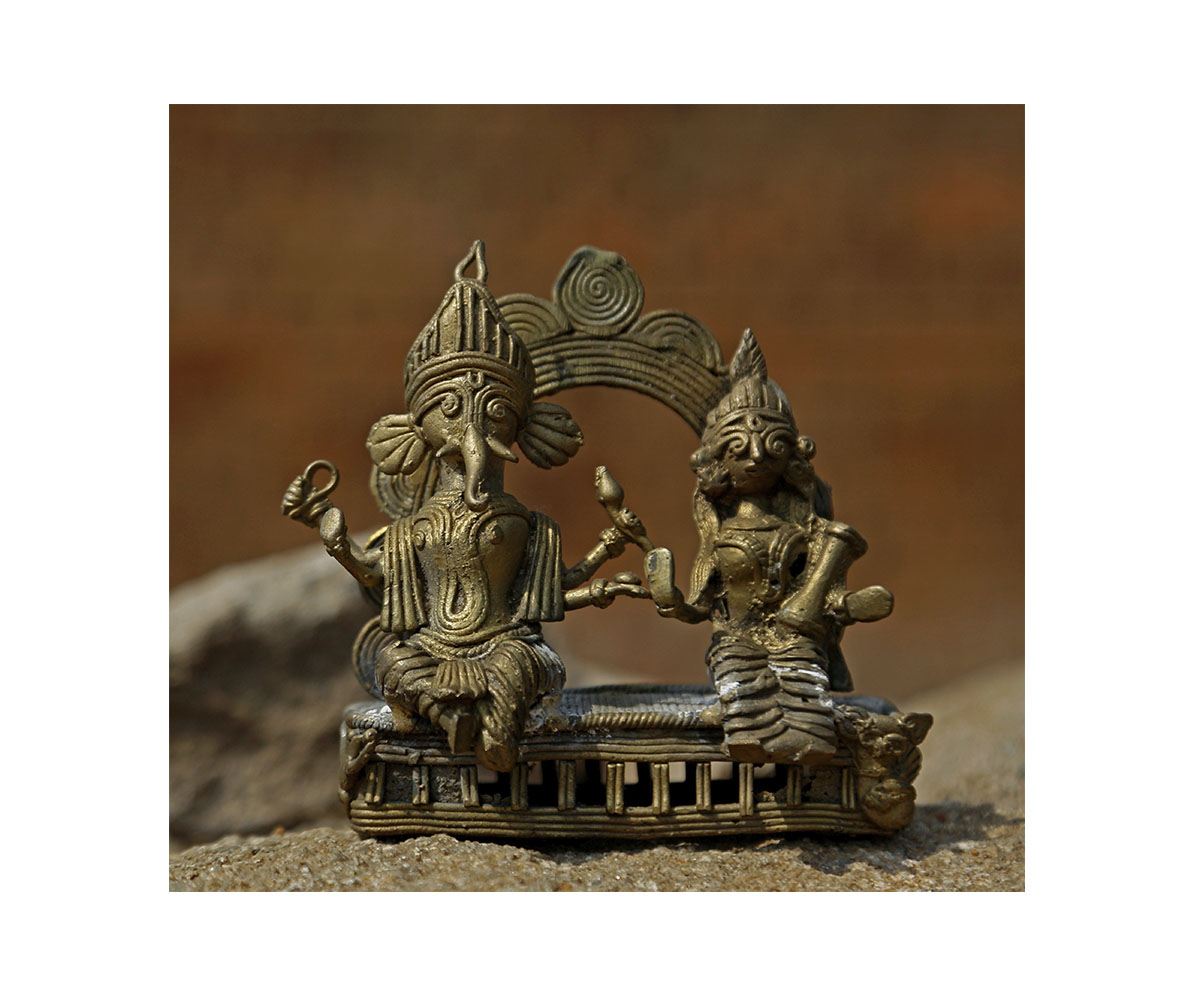
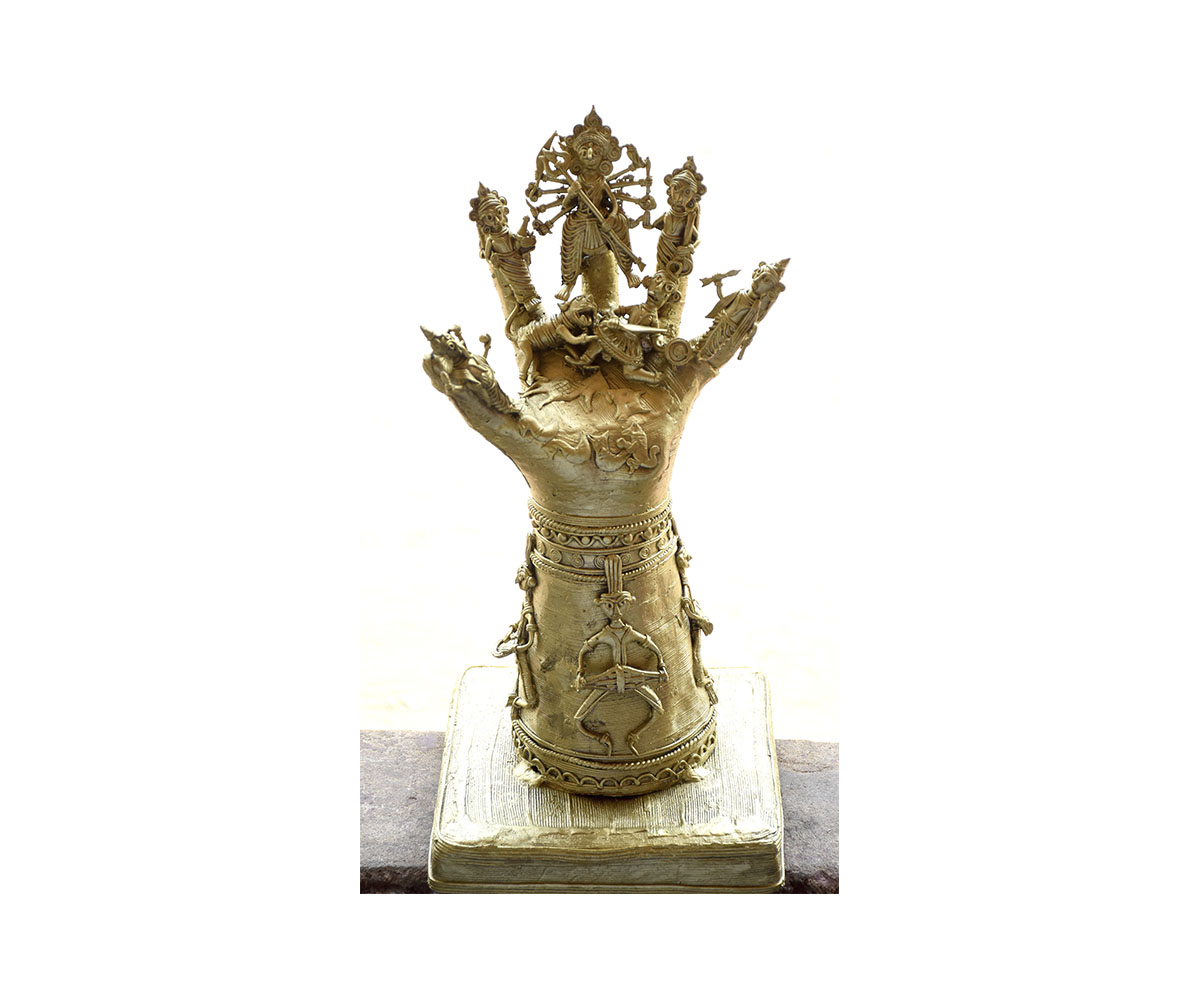
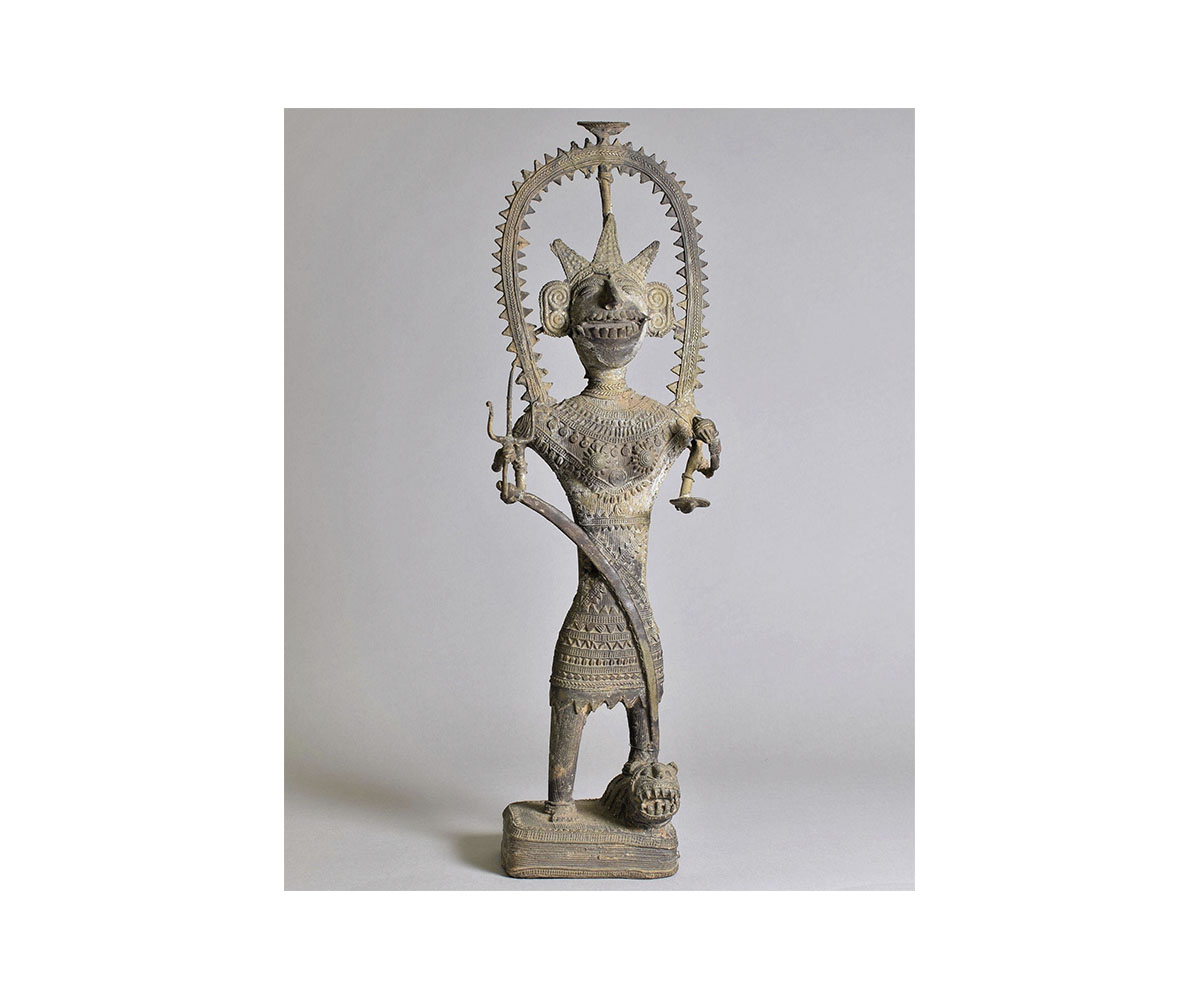
The raw materials required for Dhokra casting include clay, rice husk, beeswax or paraffin wax, coal, tree resin, nut oil and metal, which is derived from discarded scraps, including those found at utensil shops. The tools used in the process include hammers, chisels, files, pliers, knives, a wire brush and a tool for extracting wax threads from a block of wax. This tool is usually in the form of a press which extrudes wax threads of different diameters.
The casting process begins with a craftsperson making a core that bears a rough resemblance to the object but is smaller in size. The core is moulded using a mixture of clay, rice husk and water. Once ready, it is left to dry in the sun. Meanwhile, the beeswax is melted and strained to filter out impurities and mixed with tree resin to be shaped into wax threads, which are then applied to the outer surface of the core. The wax threads are also used to add design and ornamentation. Once the wax model of the intended object is ready, it is coated with a fine layer of clay. This layer is superimposed with more layers of clay, with inlets and outlets to divert the molten wax.
Once the model is ready, the dewaxing and casting stages are done, which are often done simultaneously, although some Dhokra artisans may carry out the processes in separate steps. In this step, bowls made of clay and dried rice husk are filled with metal scraps and attached to the model. The prepared model is then placed in a furnace, which is usually dug in the ground to a depth of 0.3–0.6 metres and encircled by bricks. Once the wax melts, the mould is turned over so that the molten metal fills the cavity previously occupied by the wax. The metal takes the shape that the wax originally formed, and is held in place by the outer layers of clay. Scholars suggest that this method of casting may have evolved due to the shallow depth of the furnace as well as the need to control the costs of wood fuel.
After the metal has cooled, the clay mould is broken and the metal object is polished. An iron brush is used to remove remnants of the original clay core and mould. Depending on the design of the object, the initial core clay layer may be retained or removed. In solid casting, the core consists entirely of wax, which is replaced by metal. In conventional practice, Dhokra objects are small in size and are cast and moulded individually, but in the case of large objects, the segments are cast separately, then soldered together.
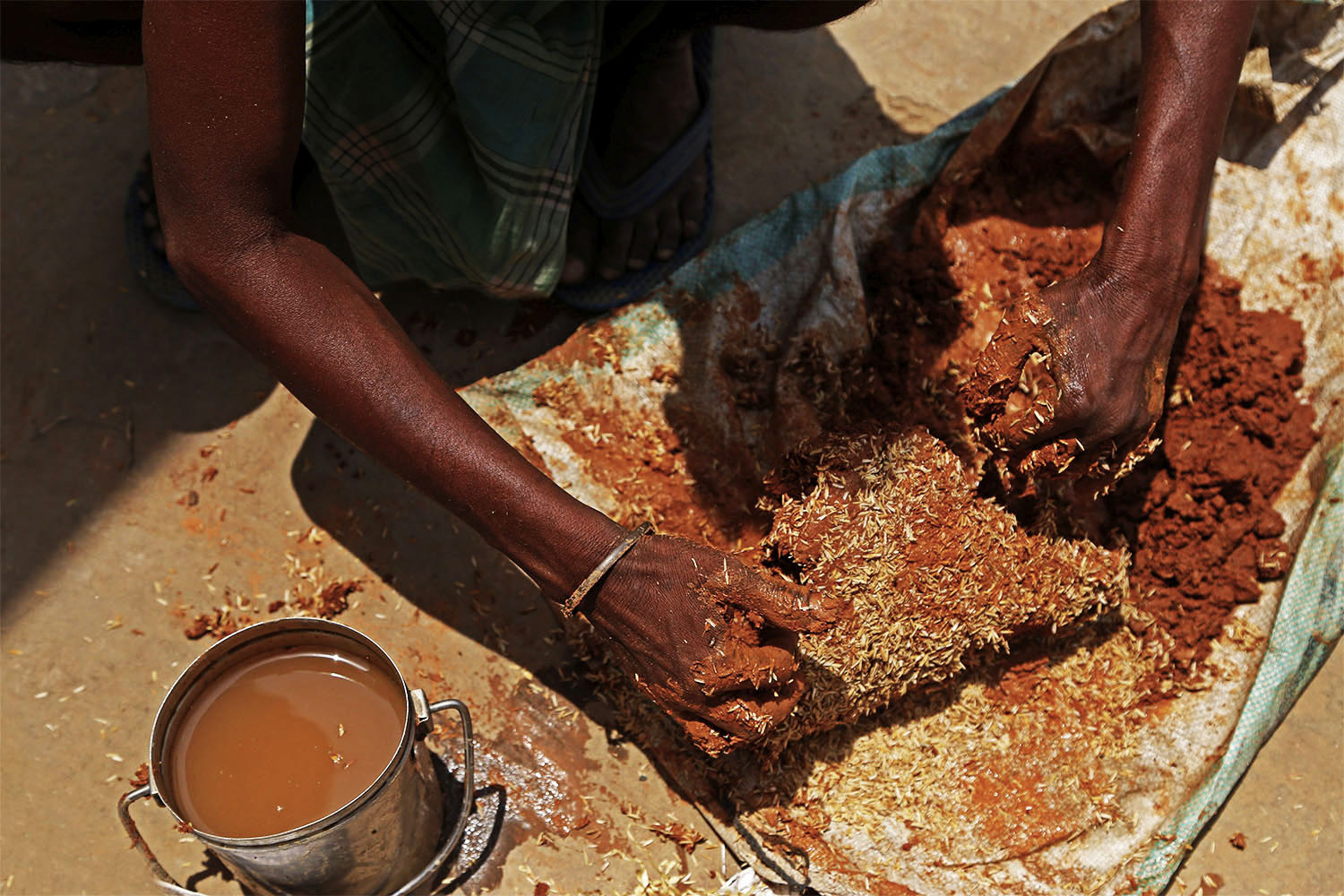
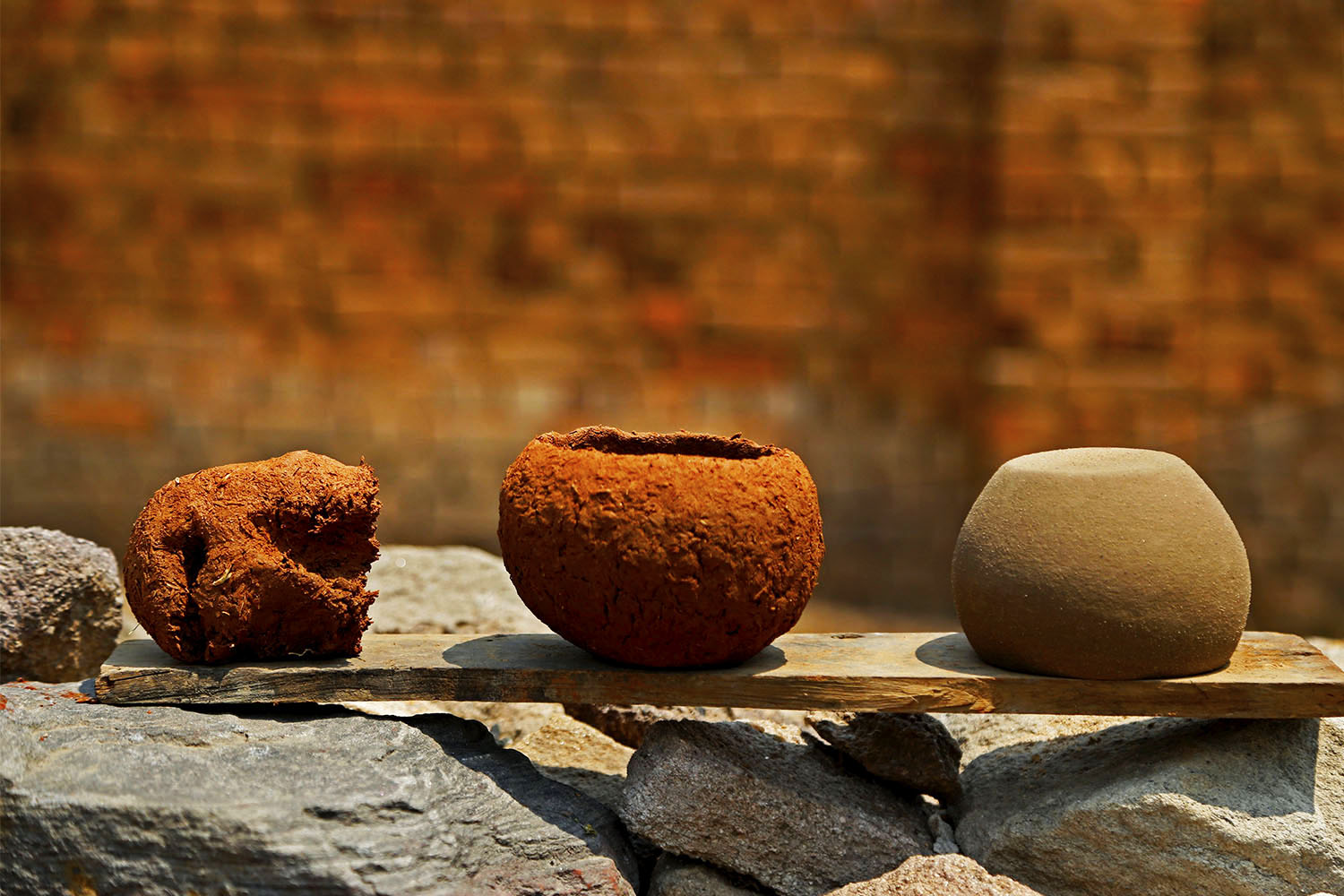
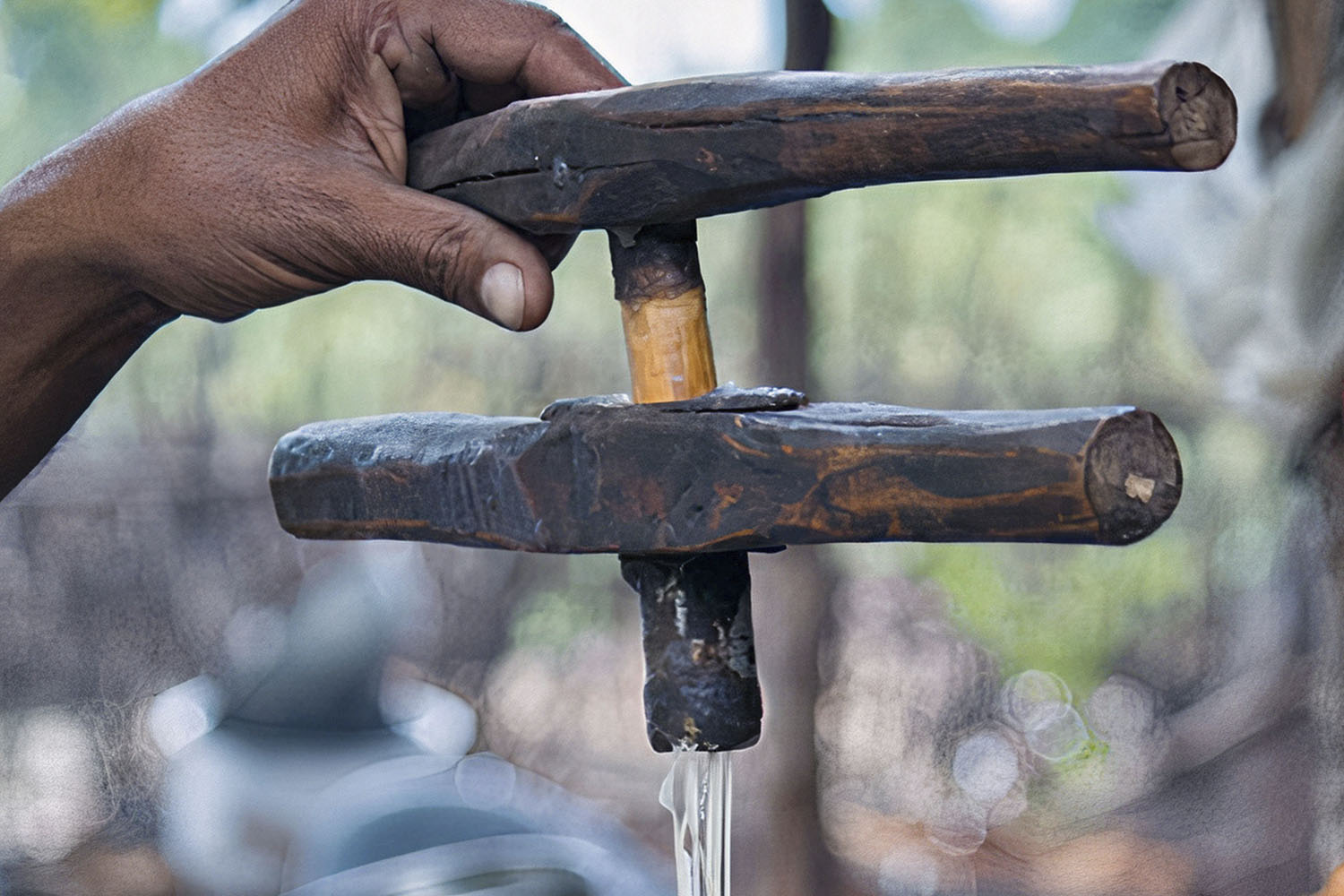
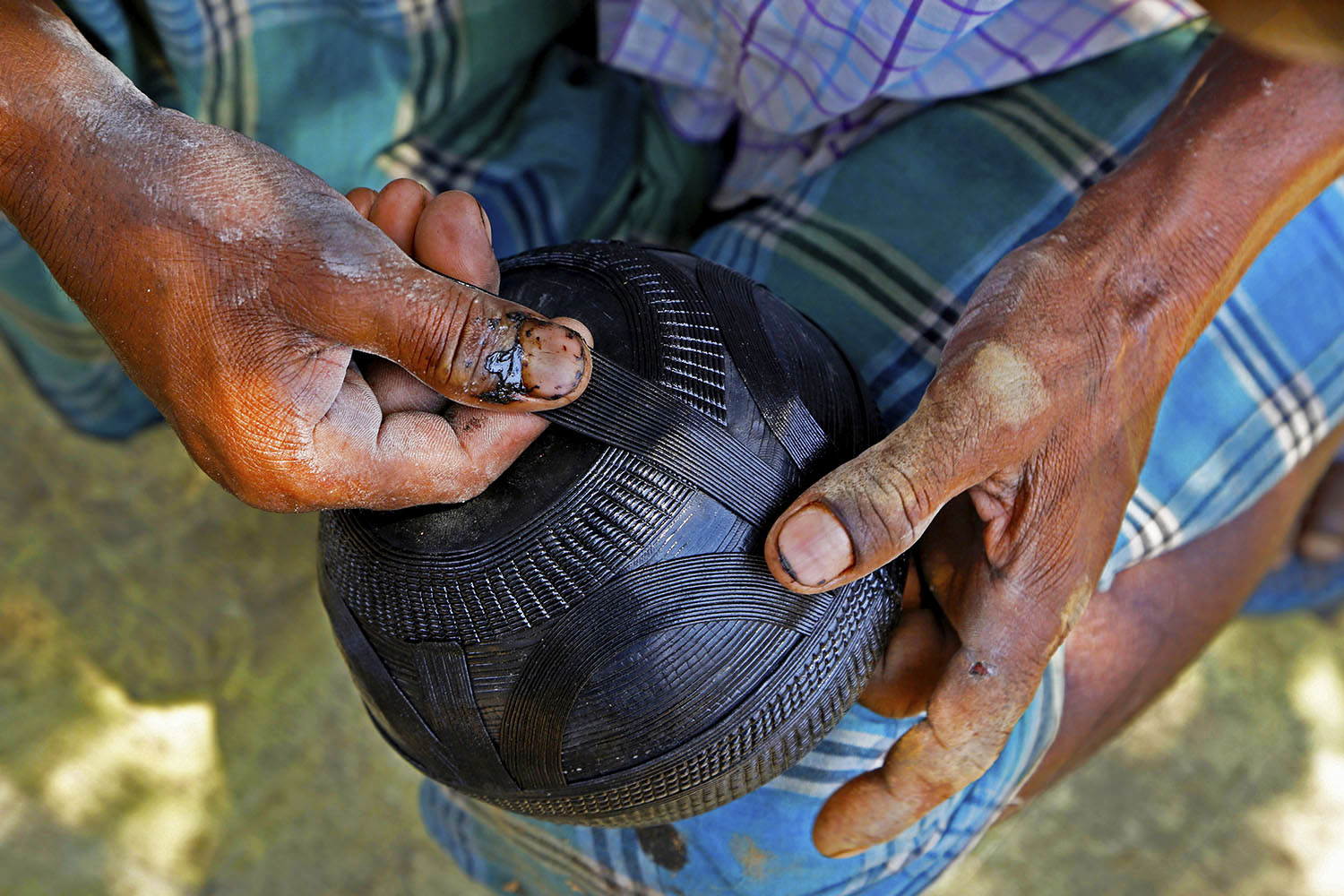
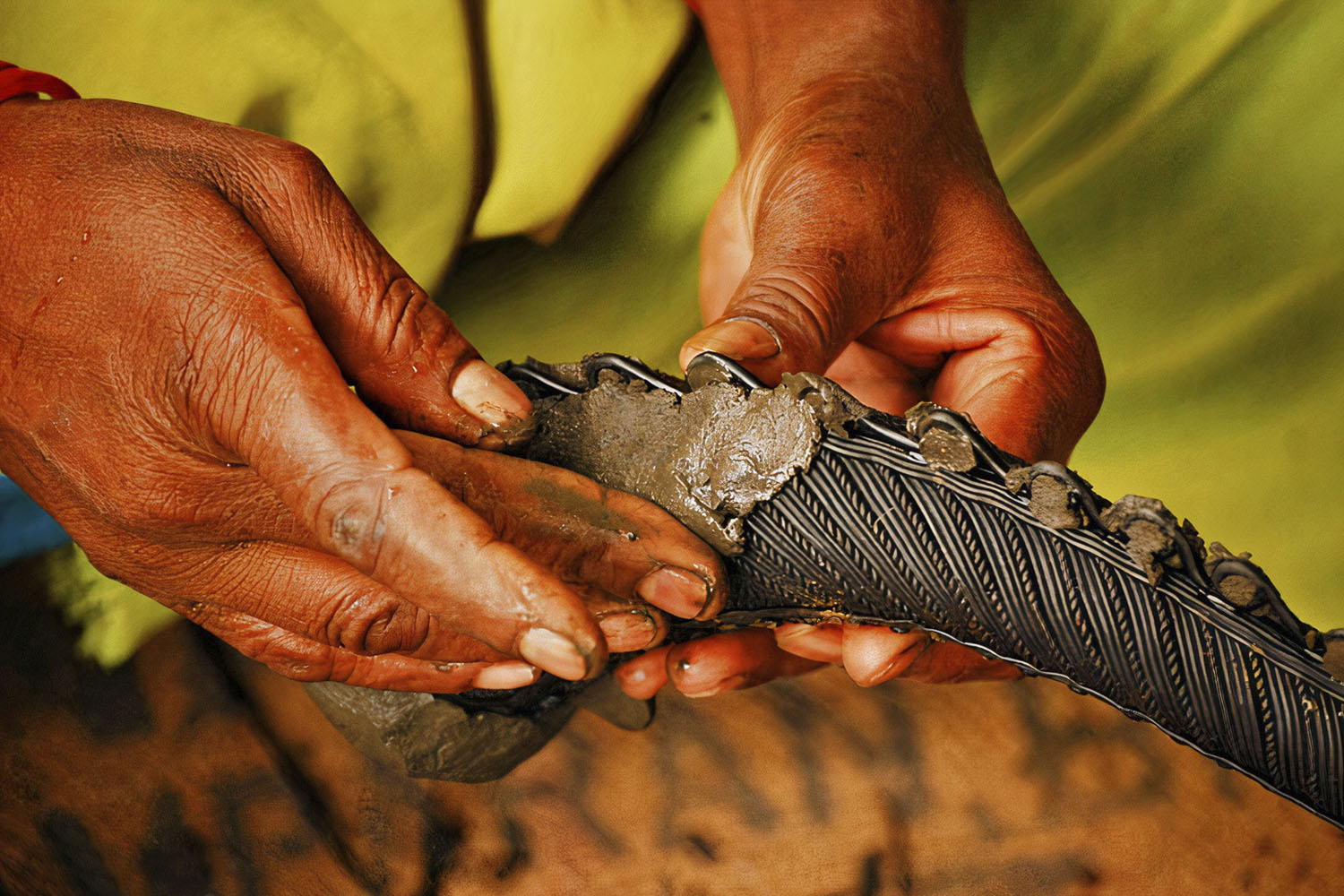
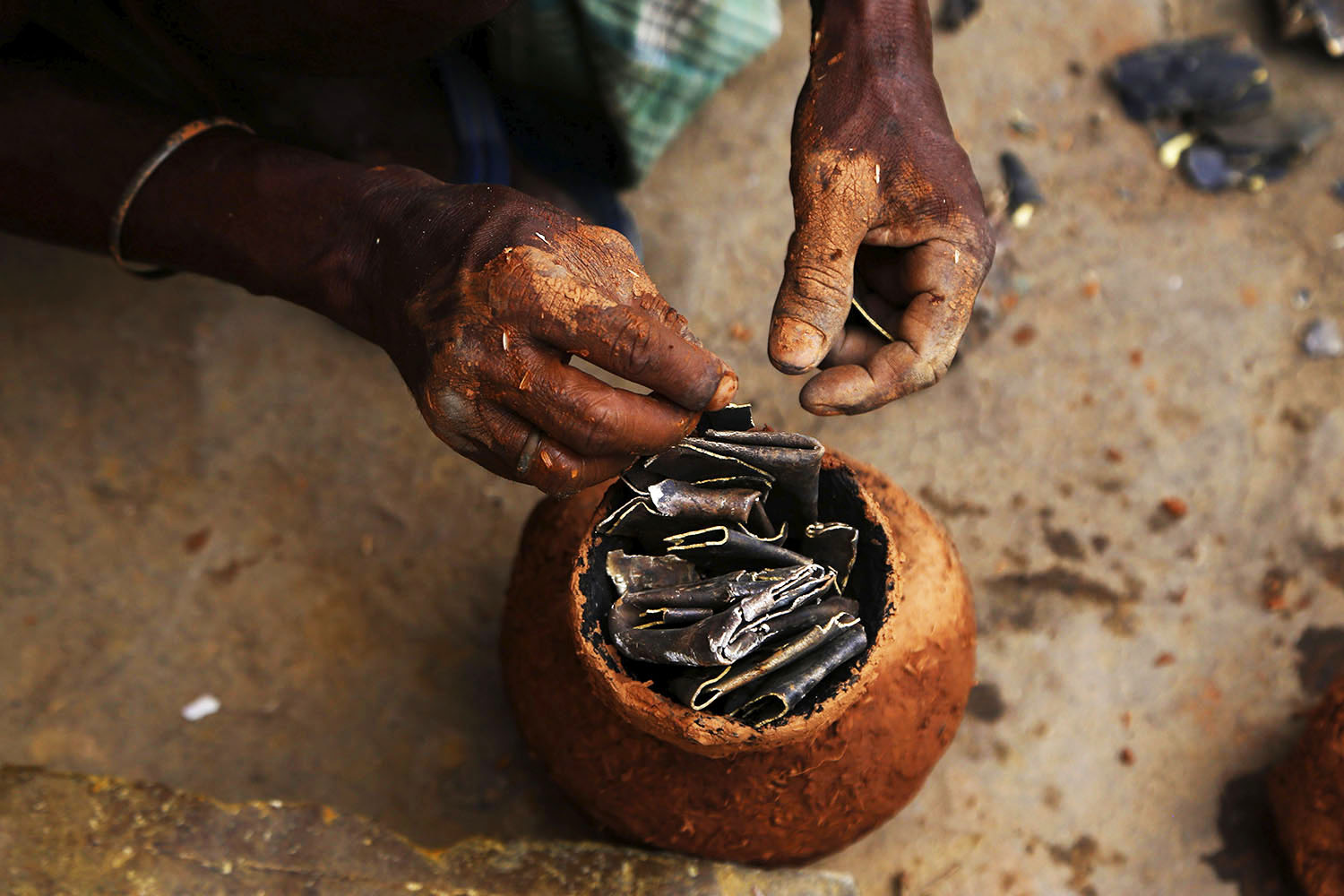
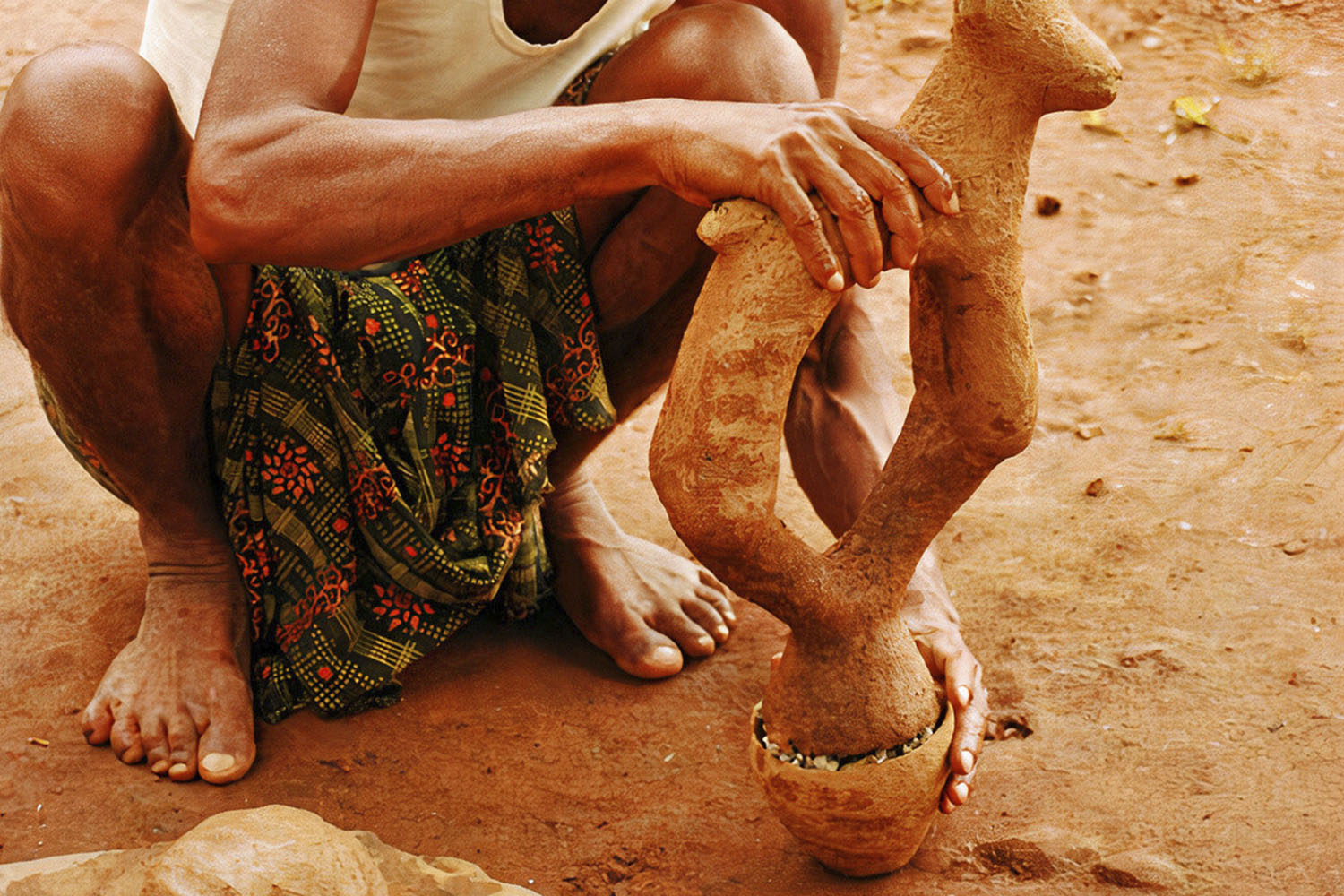
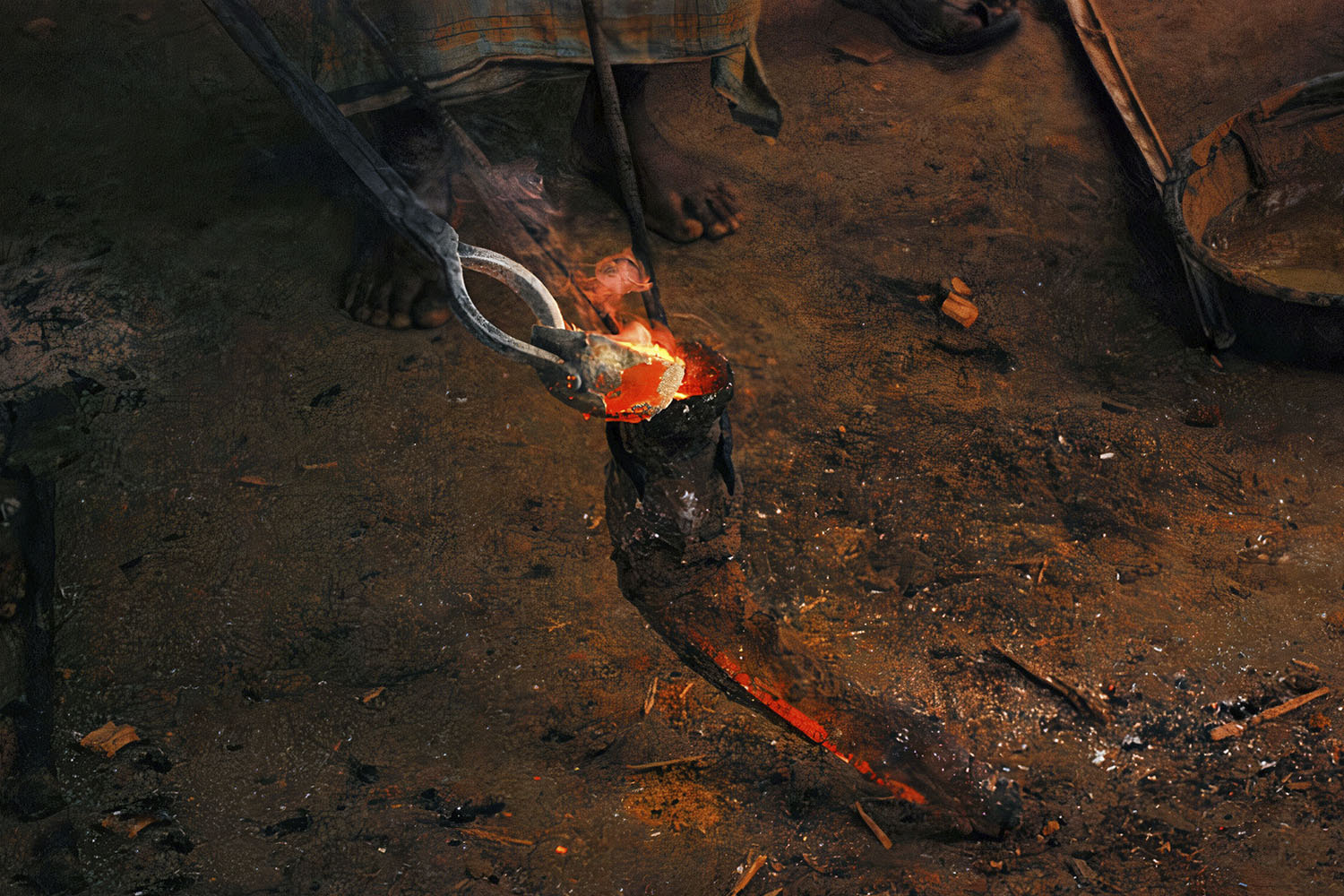
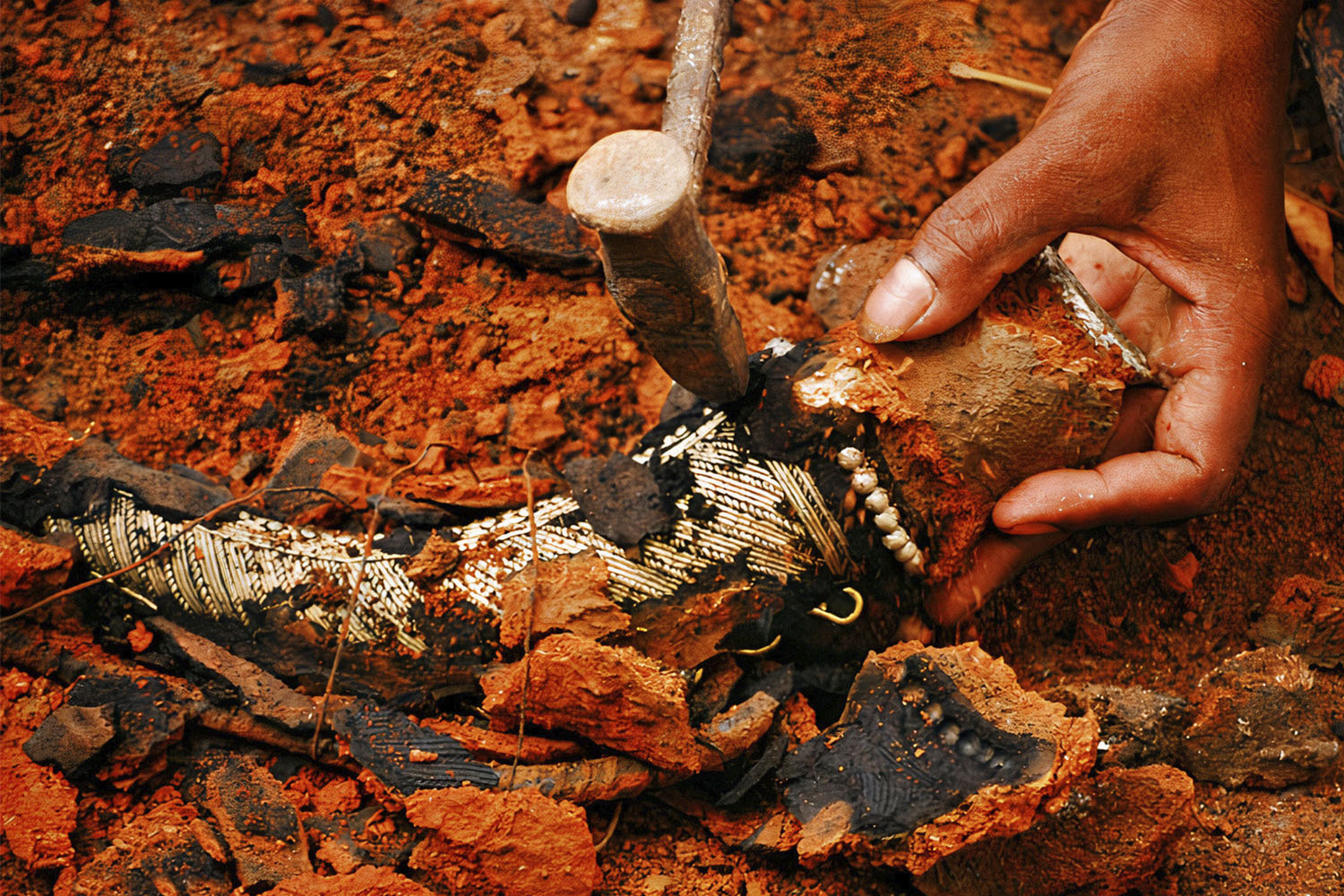
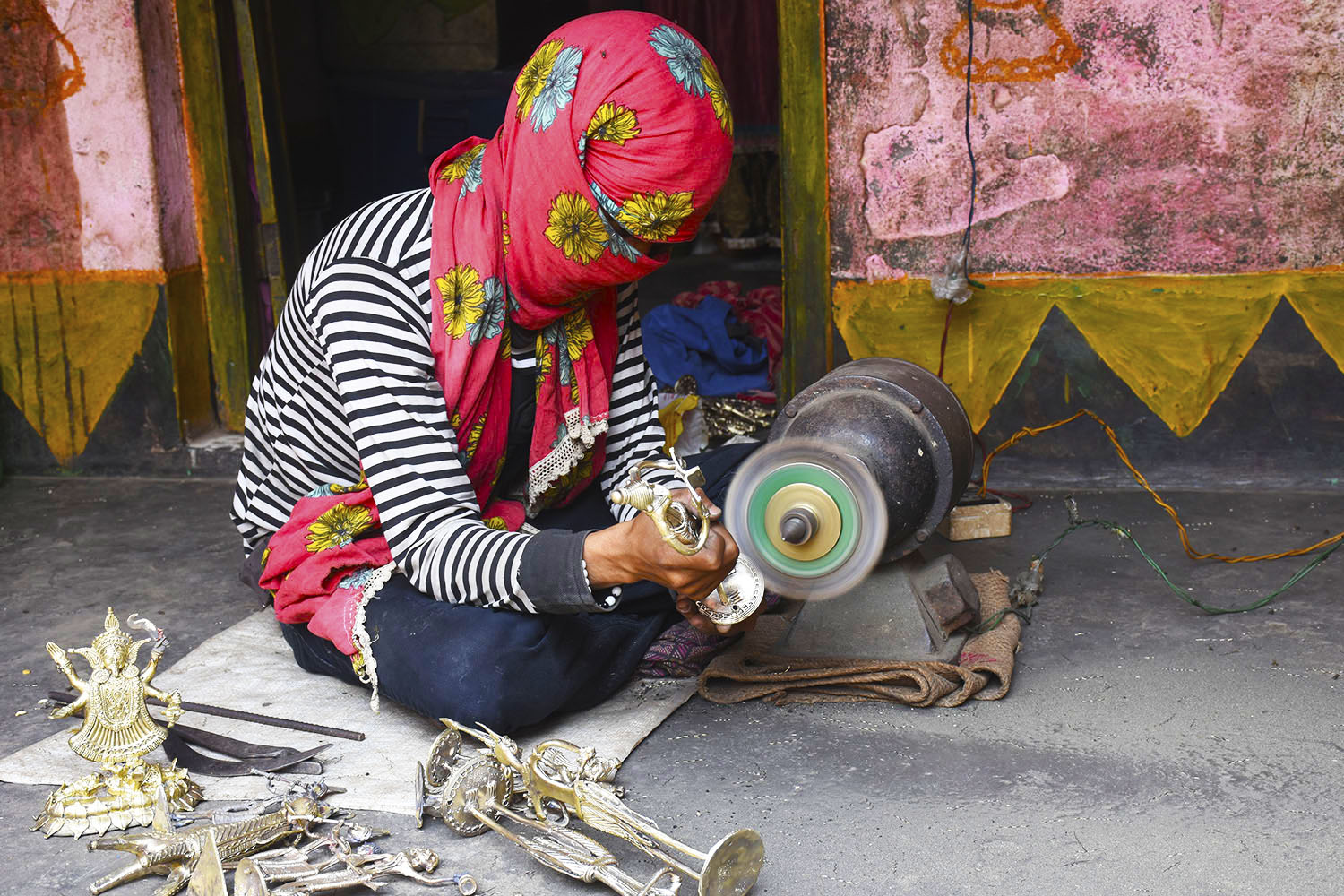
There are minor variations in the processes and resources used in Dhokra casting across states. For instance, in Jharkhand, tar collected from roadworks is used as a substitute for wax. In Odisha and Bengal, the wax mixture contains resin of the sal (Shorea robusta) tree, and in the Mayurbhanj region of Odisha, when making large idols of deities, artisans smear the surface of the wax model, giving it a smoother finish than the conventional textured surface of a Dhokra object.
Today, the Dhokra technique is primarily used to create curios, wall art and decorative items. Dhokra products for the local market also include utilitarian and ritual objects, ranging from lamps and items of jewellery such as amulets, anklets, pendants and bracelets, to purses, nutcrackers, knives, measuring cups of varying sizes, seed-holders used, cattle-bells and spoons. Craftspersons also make idols of Hindu deities as well locals deities, such as Jangubai, Bheemdev and Persa Pen, which are used in ritual worship.
Dhokra art began to be promoted through displays and sales at handicrafts outlets at national and international levels, including Festivals of India, from the 1960s onwards. The craft is also represented at institutions such as the National Crafts Museum & Hastkala Academy and Bharat Bhavan. Notable Dhokra artists include Jaidev Baghel, who won a National Award in 1977, and his nephew Rajendra Baghel.
Bastar Dhokra received a Geographical Indication tag in 2014, while Bengal Dokra and Adilabad Dokra received the GI tag in 2018. However, the economic effects of the COVID-19 pandemic have led to rising prices for procurement of resources, and therefore, higher costs of finished goods. There has also been a marked decline in the number of active Dhokra artisans.
First published: 27 March 2023
Image Gallery
Bibliography
Asia InCH. “Jadupatua Scroll Painting of the Santhal Tribes of West Bengal.” Accessed March 10, 2023. https://asiainch.org/craft/jadupatua-scroll-painting-of-the-santhal-tribes/.
Dastkari Haat Samiti. “The Process of Making Dhokra Products.” Google Arts & Culture. Accessed March 09, 2023. https://artsandculture.google.com/story/kAUBNhtpqUgiIg?hl=en.
Geographical Indications Registry. “Application Number 387 – Bastar Dhokra.” Accessed March 09, 2023. https://search.ipindia.gov.in/GIRPublic/Application/Details/387.
Geographical Indications Registry. “Application Number 521 – Adilabad Dokra.” Accessed March 09, 2023. https://search.ipindia.gov.in/GIRPublic/Application/Details/563.
Geographical Indications Registry. “Application Number 563 – Bengal Dokra.” Accessed March 09, 2023. https://search.ipindia.gov.in/GIRPublic/Application/Details/563.
Grant, Nikita, Teresa Zhang, and Reem Makhoul. “How metal artists in India are keeping the 4,500-year-old craft of Dhokra alive.” Business Insider, September 28, 2022. Accessed March 09, 2023. https://www.businessinsider.com/dhokra-art-india-metal-craft-2022-9?IR=T
Hacker, Katherine F. “Traveling Objects: Brass Images, Artisans, and Audiences.” RES: Anthropology and Aesthetics, no. 37 (2000): 147–65. http://www.jstor.org/stable/20167498
Horne, Lee. “The Brasscasters of Dariapur, West Bengal.” Expedition Magazine 29 no. 3 (1987): 39–46. http://www.penn.museum/sites/expedition/?p=14488
Kramrisch, Stella. Unknown India: Ritual Art in Tribe and Village. Philadelphia: Philadelphia Museum of Art, 1968.
Madhya Pradesh Tourism. “Dhokra – An embodiment of tribal beliefs.” Accessed March 09, 2023. https://www.mptourism.com/mp-betul-dhokra-art-work.html
Ranjan, Aditi, and MP Ranjan. Handmade in India: Crafts of India. New Delhi: Mapin, 2007.
Udayakumar, S. “Investigating Causes Of Technological Difference And Similarity Between Chola Bronze Casting And Dhokra Casting.” Bulletin of the Deccan College Research Institute 74 (2014): 133–40. http://www.jstor.org/stable/26264692
Feedback